PALMA DE MALLORCA PROPERTY GUIDE
Blend of civilizations & mix of cultures in a modern multicultural region
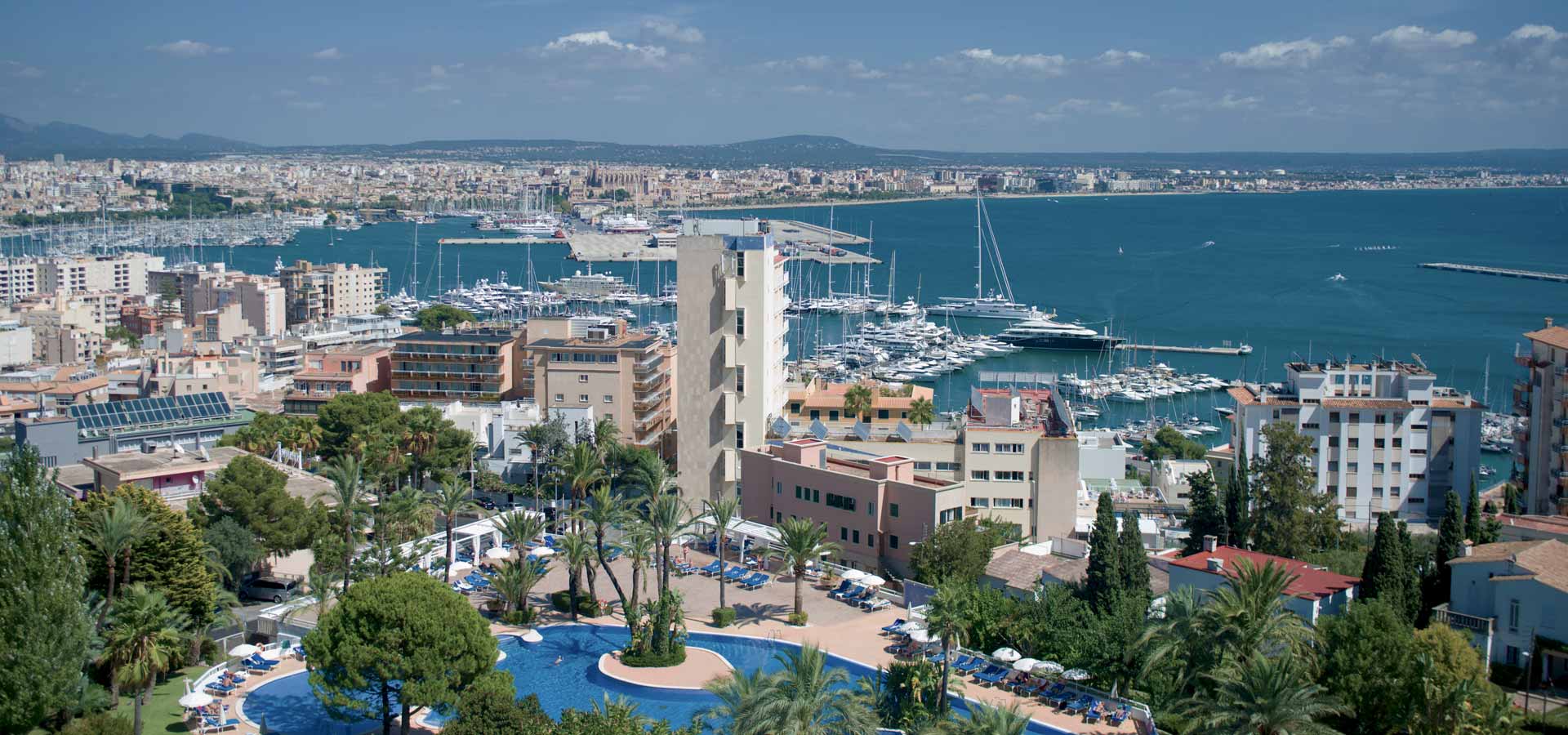
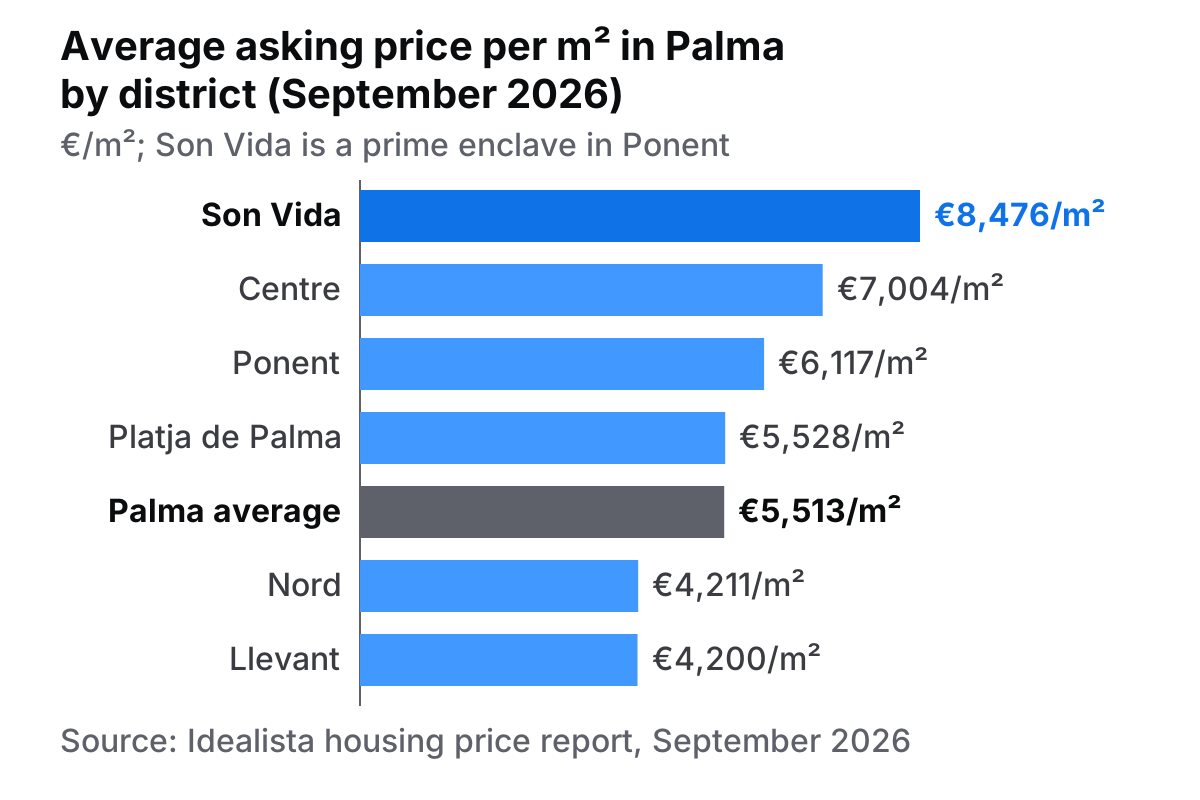
Palma de Mallorca is a thriving Mediterranean capital with 443,833 resident inhabitants as of January 2026, according to the Instituto Nacional de Estadística (INE). The municipal residential property market recorded average asking prices of €5,513/m² for sale and €19.80/m² per month for rent in Idealista’s Palma de Mallorca price report (September–October 2026). Across its five administrative districts, asking prices span from €3,541/m² in La Soledat to €8,476/m² in Son Vida.
Why is Palma de Mallorca a year-round European property market?
Unlike purely seasonal resort towns across the Balearic archipelago, Palma de Mallorca functions as a robust, year-round economic hub. The municipality’s registered population stood at 434,786 inhabitants in January 2025, reaching 443,833 resident inhabitants in January 2026 (INE). This permanent residential base sustains steady housing demand across all seasons, supported by major public infrastructure investments completed between 2025 and late 2026.
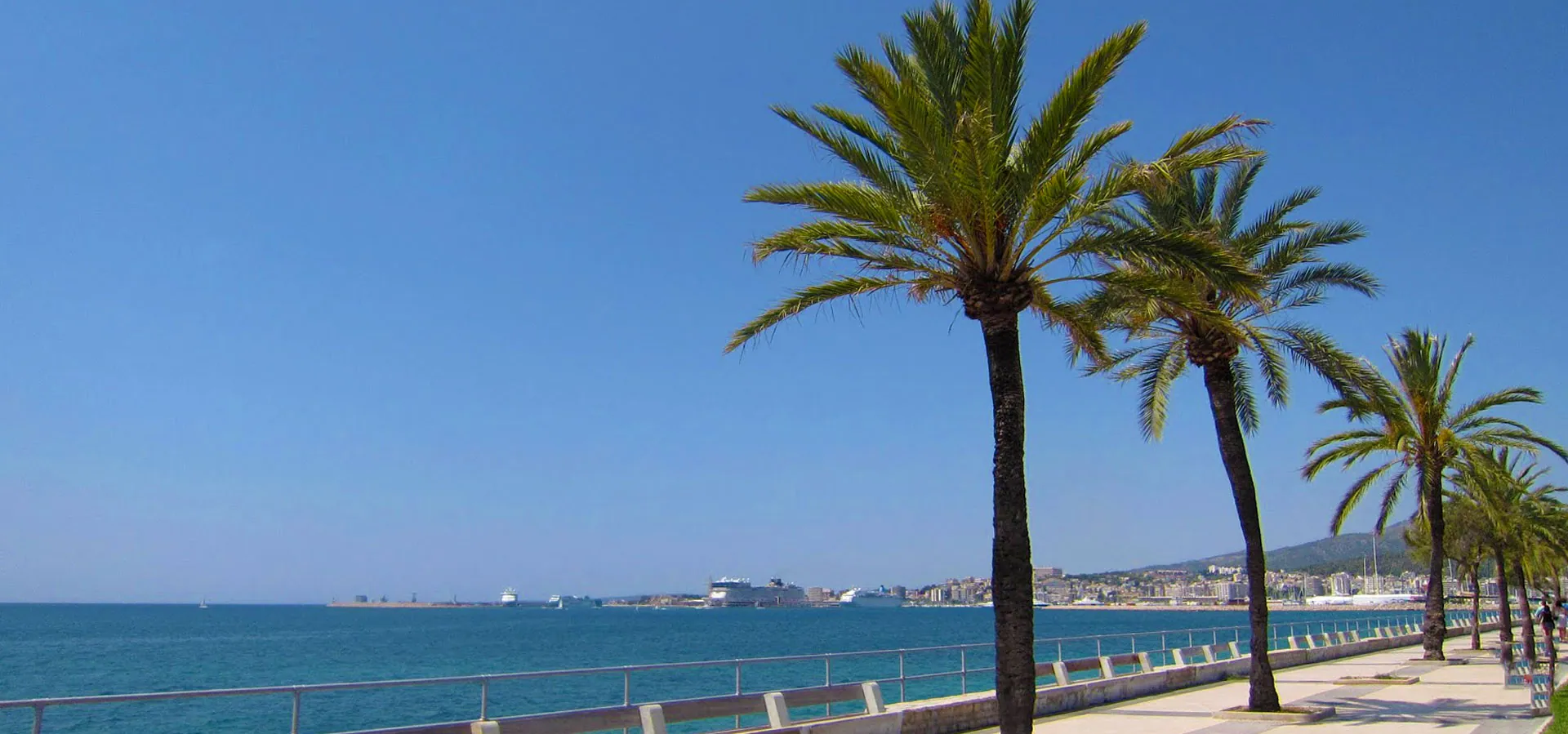
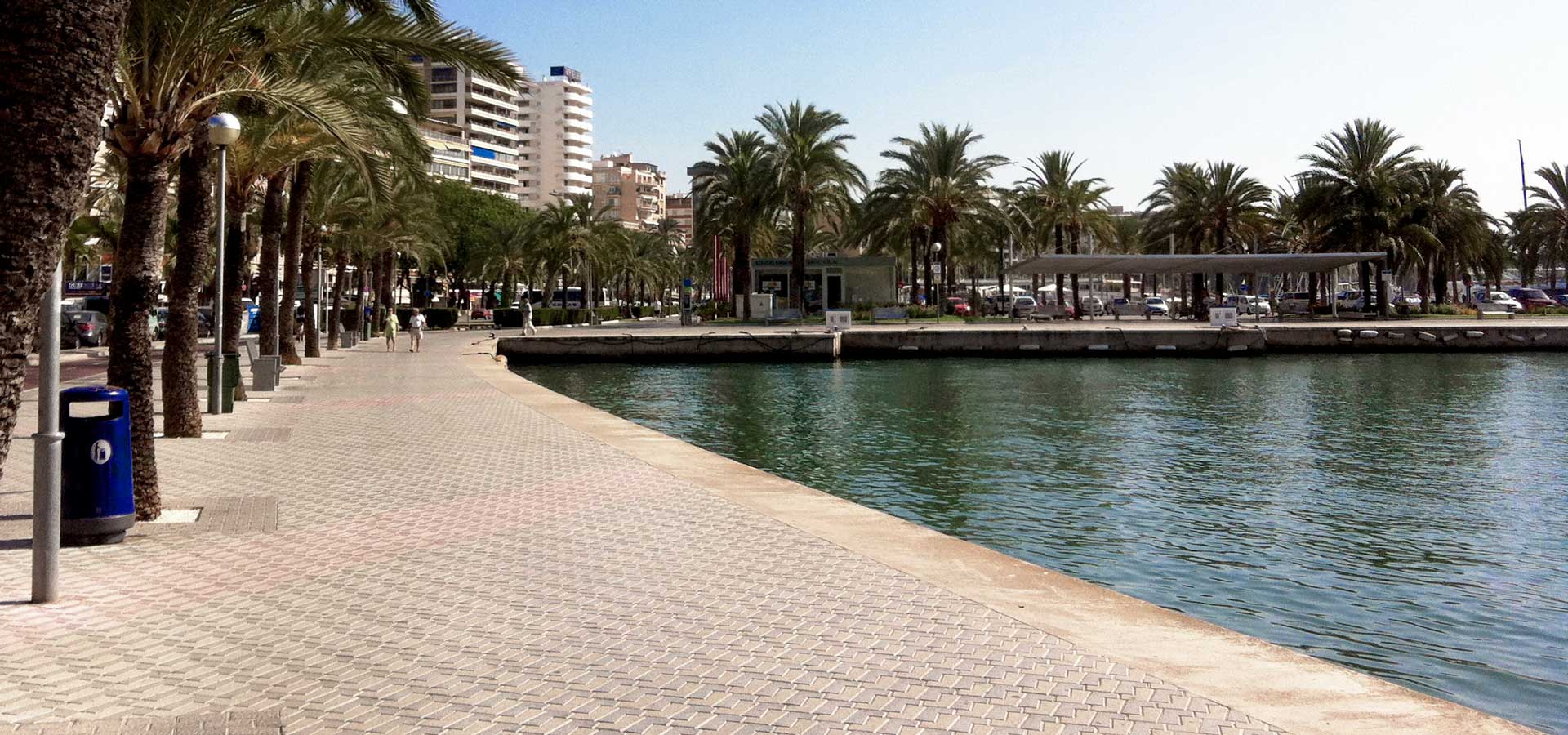
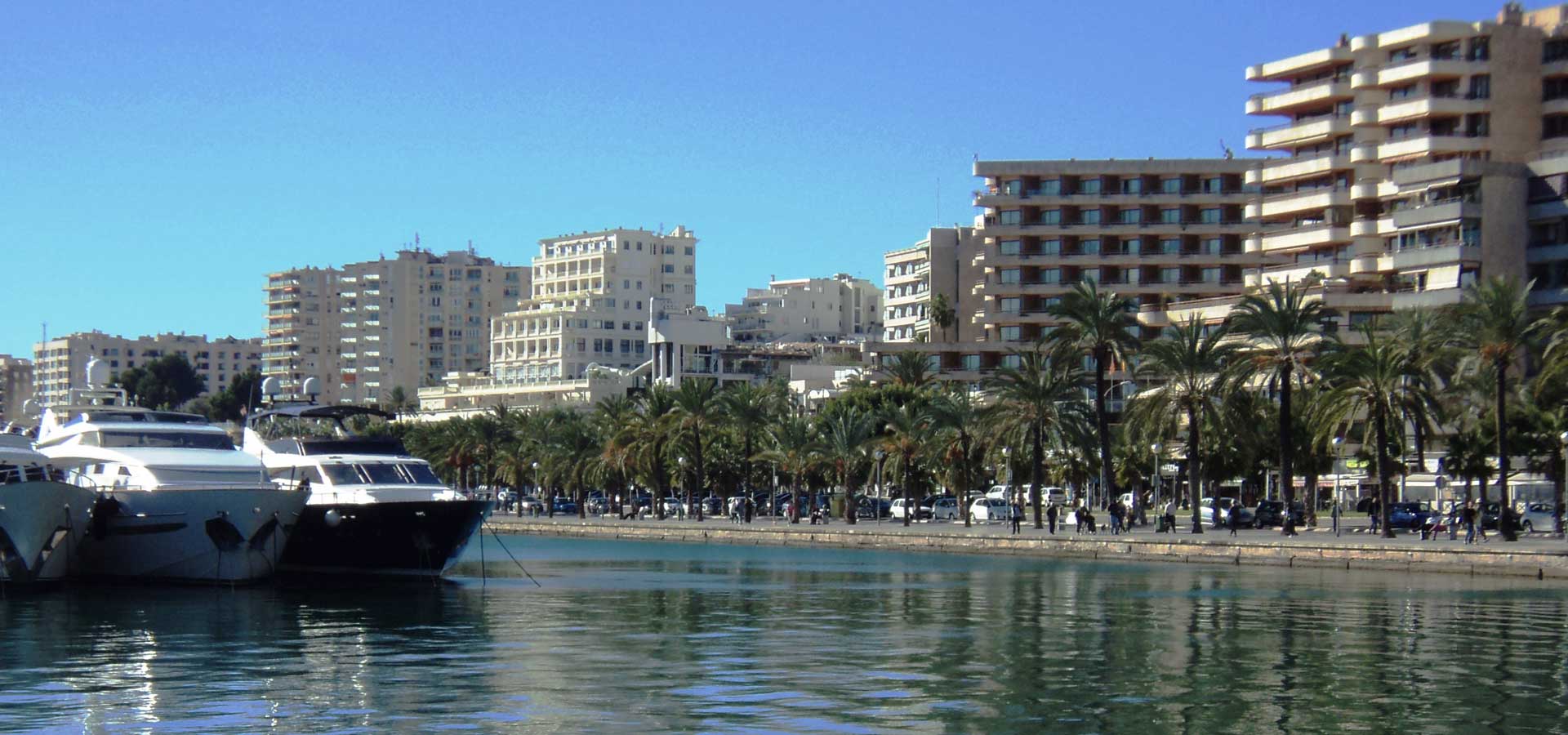
A key driver of recent waterfront urban regeneration is the €63 million redevelopment of the 3.5 km Paseo Marítimo, which concluded at the end of 2025. The project reallocated 70% of the surface area to pedestrian promenades, cycle paths, and green spaces, significantly enhancing waterfront living standards. Public transit connectivity has kept pace through the €3.6 million refurbishment of Palma Intermodal Station (2025–2026) and the extension of the M1 metro line to the Parc Bit technology park. Concurrently, Aena is finalising its terminal modernisation project at Palma de Mallorca Airport (PMI) by late 2026, reinforcing international accessibility.
To navigate Palma’s dynamic landscape, estate agents, valuation experts, and institutional investors track live supply shifts and price evolution across individual streets using CASAFARI Area Insights.
How do Palma’s five districts and key neighbourhoods compare?
According to the Ajuntament de Palma Geoportal Municipal (2026), the municipality is structured into five official administrative districts grouping 89 distinct neighbourhoods (barrios). Pricing dynamics vary considerably between historic quarters, coastal promenades, and elevated residential suburbs.
Centre: Gothic heritage and prime apartments
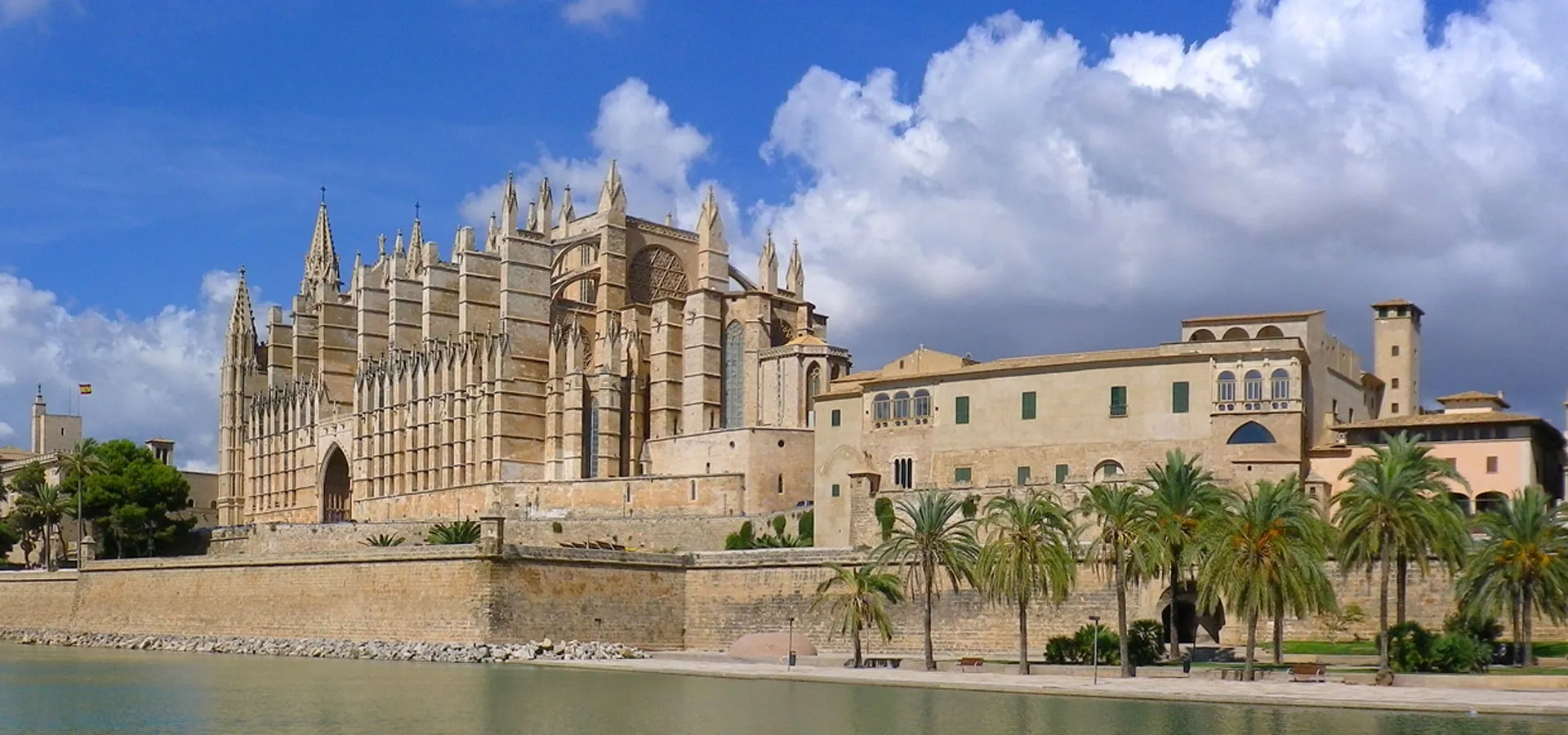
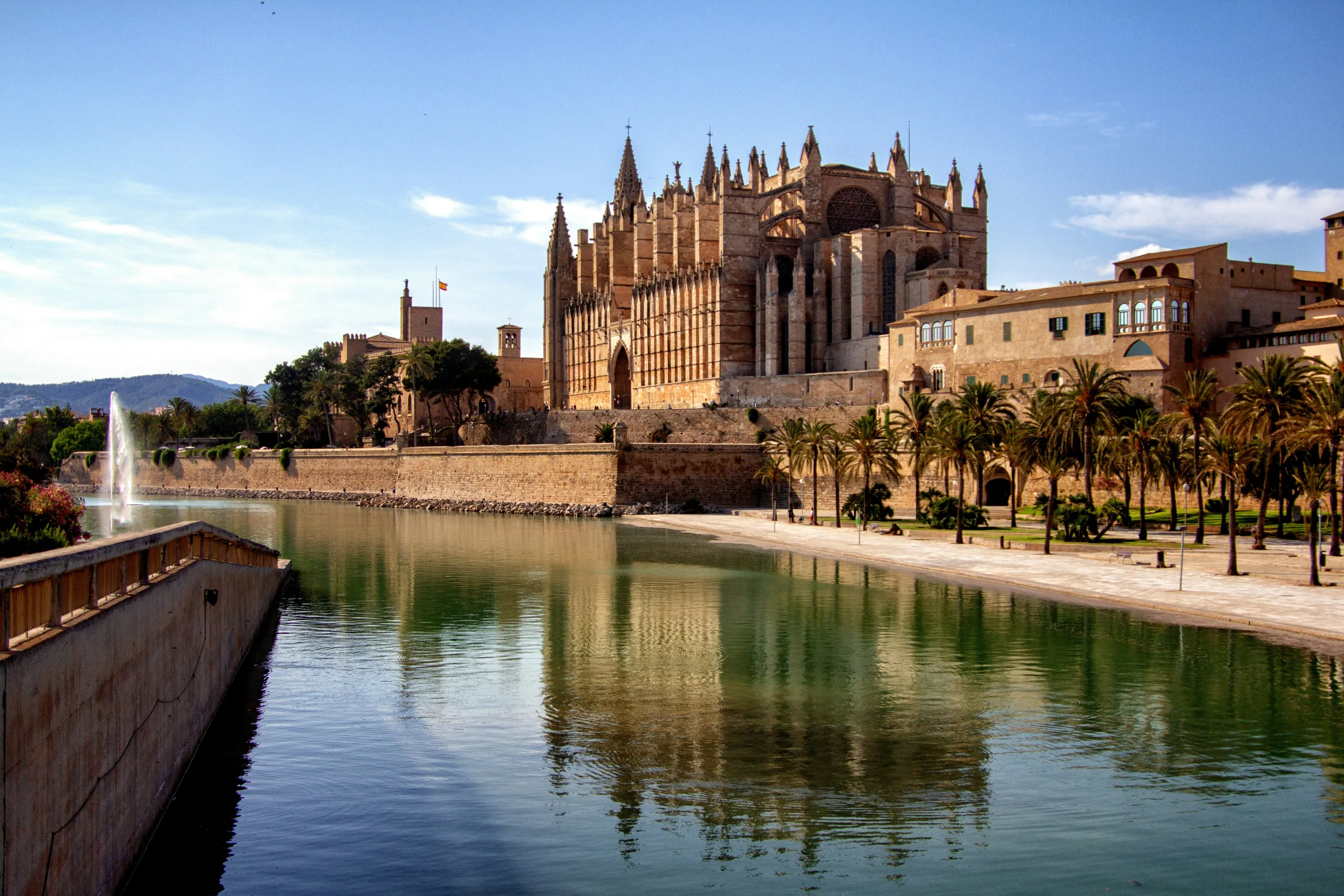
Palma’s Centre district—encompassing historic quarters such as La Seu, La Calatrava, Cort, Sant Jaume, and La Llotja-Born—is defined by restored Gothic palacetes, interior courtyards, and luxury boutique developments. In September 2026, asking prices in the Centre averaged €7,004/m² for sale and €21.36/m² per month for long-term rentals (Idealista).
Ponent: Culinary quarters, seaside promenades, and Son Vida
The Ponent district recorded an average asking price of €6,117/m² for sale and €21.30/m² per month for rent in September 2026 (Idealista). Ponent offers diverse sub-markets, including the gastronomic quarter of Santa Catalina, the family-friendly streets of Son Espanyolet and Son Armadams, and the hillside enclaves of La Bonanova and Cala Major. Up the hill, the exclusive gated community of Son Vida commands Palma’s highest residential prices, averaging €8,476/m² in September 2026.
Llevant, Nord, and Platja de Palma: Coastal regeneration and growth
The remaining districts provide a spectrum of investment profiles and price points:
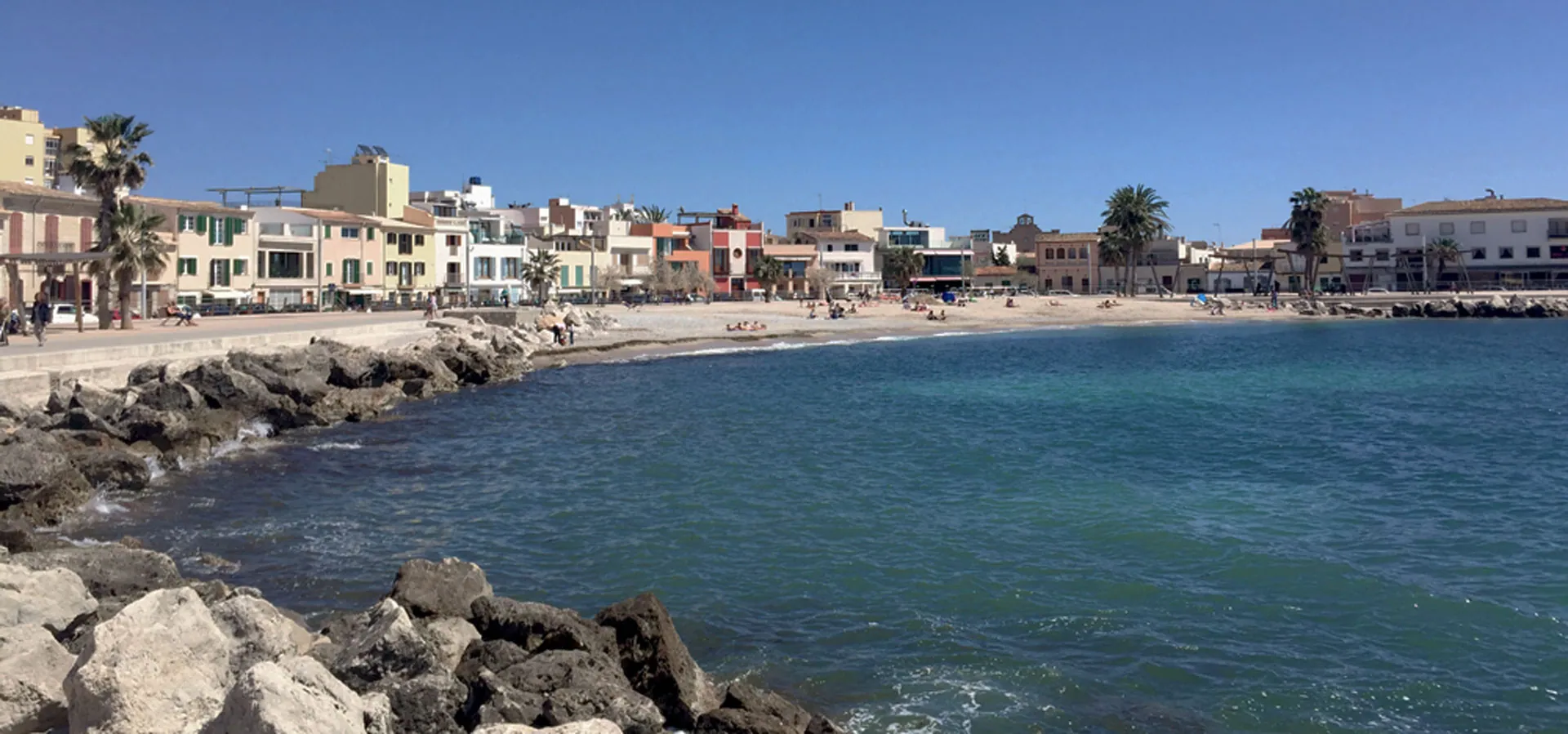
- Llevant: Averaging €4,200/m² for sale (€17.88/m² rent), Llevant ranges from the prime coastal promenades of Portixol and El Molinar to the contemporary apartment blocks of Nou Llevant. The district also includes more affordable residential pockets such as La Soledat, which registered Palma’s lowest sub-area average at €3,541/m² in September 2026.
- Nord: Averaging €4,211/m² for sale (€17.60/m² rent), this district combines suburban family areas with rural residential estates in Establiments.
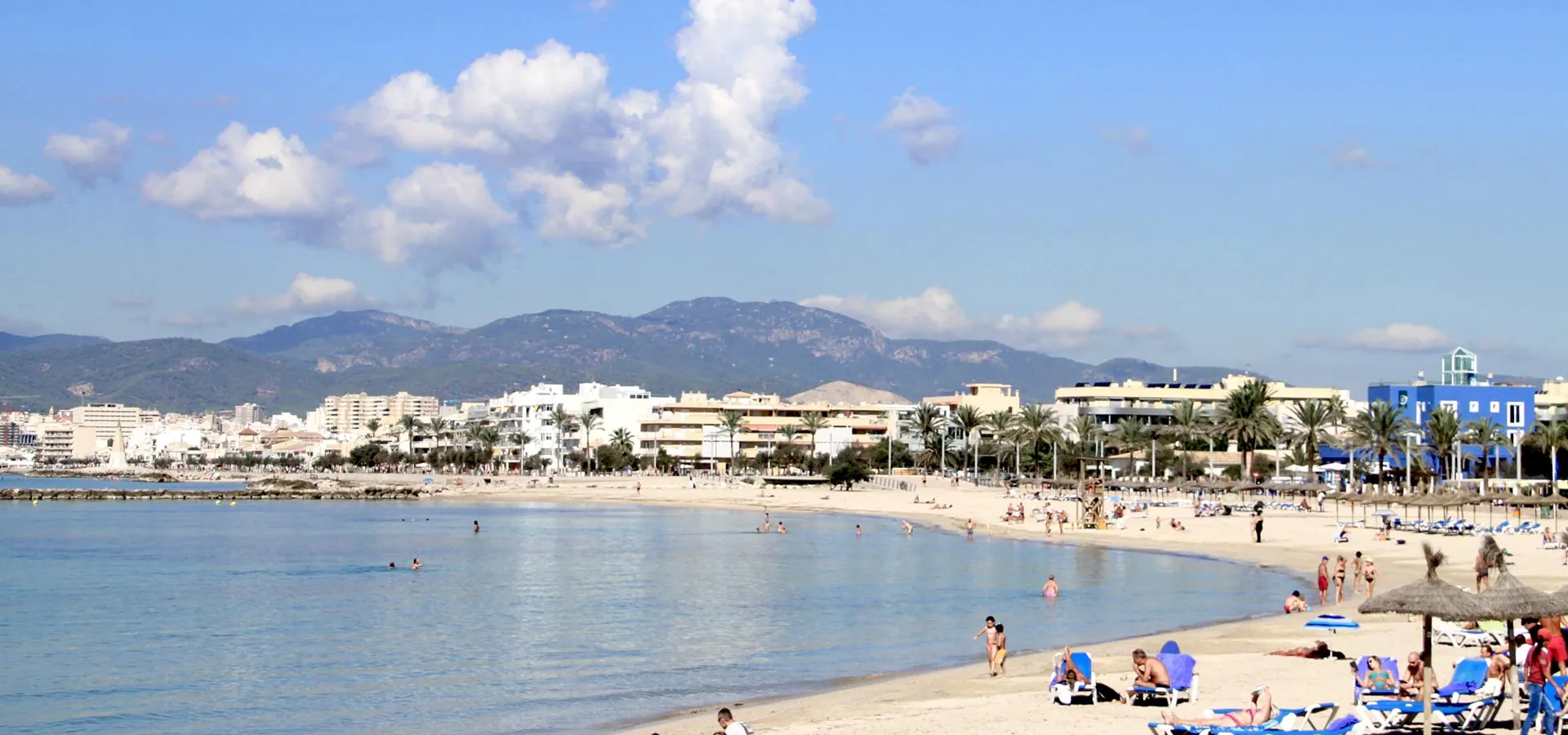
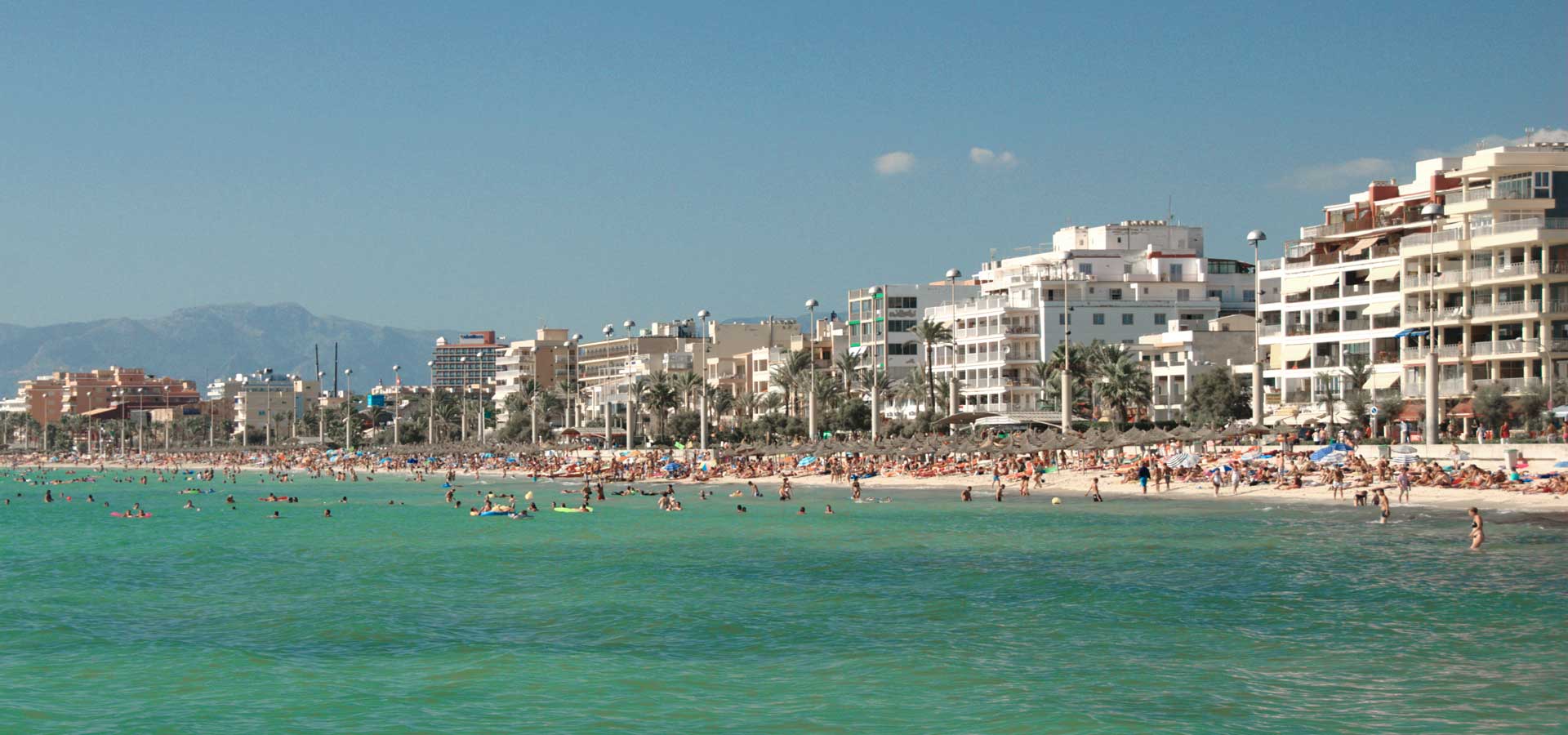
- Platja de Palma i Pla de Sant Jordi: Averaging €5,528/m² for sale and €22.73/m² per month for rent, driven by coastal holiday infrastructure and waterfront residential blocks.
What are the property taxes, holiday rental rules, and residency routes in 2026?
Acquiring and holding real estate in Mallorca requires careful planning around Balearic tax frameworks, municipal planning restrictions, and Spanish immigration laws.
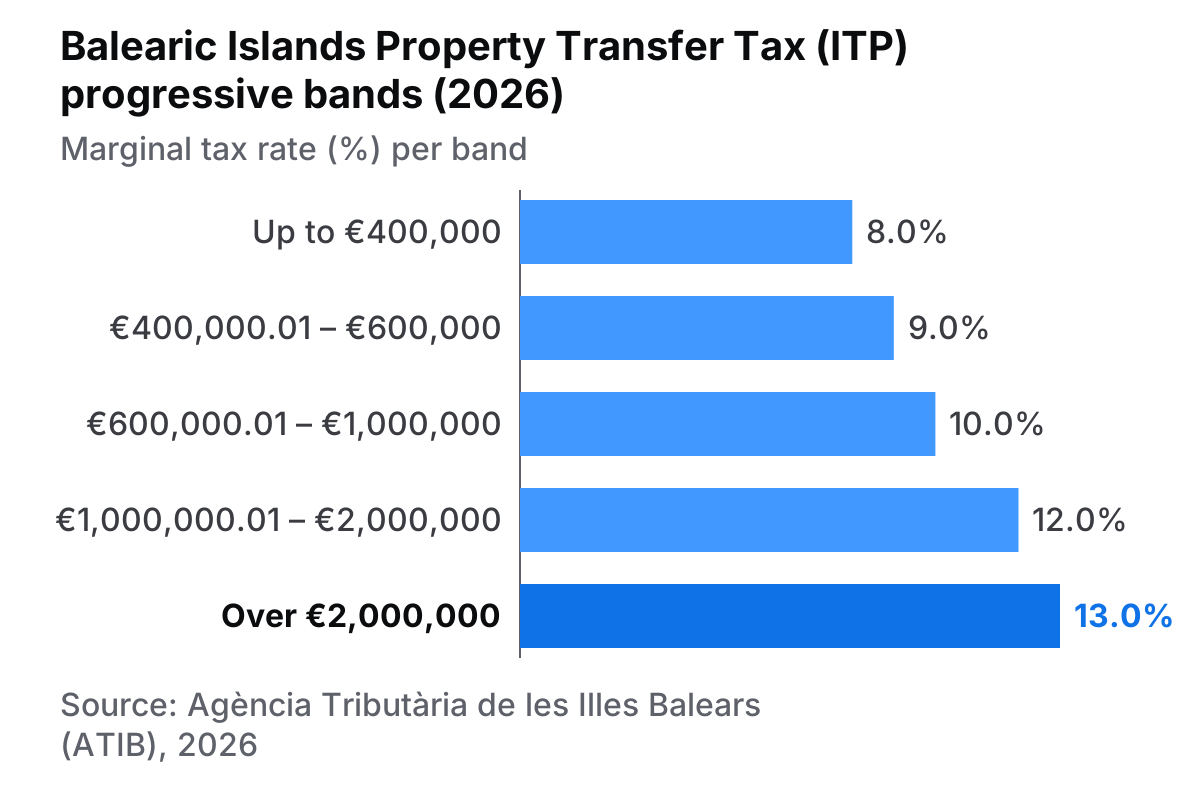
According to the Agència Tributària de les Illes Balears (ATIB) (June 2026), purchasing a resale residential property incurs progressive Property Transfer Tax (ITP). Rates apply in incremental brackets starting at 8% for the first €400,000, rising to 13% on the portion exceeding €2,000,000. New-build homes are subject to 10% VAT (IVA) plus 1.5% Stamp Duty (AJD), which increases to 2% AJD for properties valued at €1,000,000 or above. For a comprehensive walkthrough of completion formalities, consult our guide to the Spanish property purchase contract and escritura.
Regarding holding costs, Balearic Law 12/2023 established a €3,000,000 autonomous tax-free allowance per taxpayer for Wealth Tax (Impuesto sobre el Patrimonio) in the 2026 tax year. Both fiscal residents and non-resident owners electing regional Balearic rules benefit from this threshold, with net asset values above €3,000,000 taxed on progressive rates between 0.28% and 3.45%.
For rental strategy, investors must note that new tourist rental licences (ETV) are completely banned across the entire municipality of Palma. The city was designated a non-suitable zone (ratified in May 2026 by the Consell de Mallorca Tourist Accommodation Consortium (CBAT)), alongside Decree-Law 4/2025 prohibiting new holiday lets in multi-family apartment buildings. As a result, investors focus strictly on long-term residential lets or seasonal contracts under the Urban Leases Act (LAU) for verified non-tourist stays. Property owners considering selling a property in Mallorca should factor these licensing limits into their asset evaluations.
Regarding non-EU residency, Spain’s real estate Golden Visa was officially repealed by Organic Law 1/2025 in the Official State Gazette (BOE), taking effect on 3 April 2025. British and non-EU citizens relocating to Mallorca now utilise alternative pathways, such as the Digital Nomad Visa for remote professionals or the Non-Lucrative Visa for self-funded residents.
Which international schools and lifestyle amenities attract relocating families?
Palma’s western district (Ponent) and neighbouring hillsides—such as La Bonanova, Cala Major, Sant Agustí, and Son Rapinya—are primary targets for relocating international families, largely due to proximity to established international schools.
According to The Good Schools Guide (2025/2026 academic year), leading British-curriculum options serving Palma include:
- Bellver International College: Located in Cala Major/Marivent, offering IGCSE, A-Levels, and IB for pupils aged 3–18.
- Queen’s College: Situated in La Bonanova adjacent to Bellver Forest, educating students aged 3–18 through GCSE, A-Levels, and the IB Diploma.
- Baleares International College (BIC): Operating a primary campus in Sant Agustí (ages 3–11) alongside an all-through campus in nearby Sa Porrassa, Calvià (ages 2–18).
Whether assessing primary catchments or benchmarking hyper-local transactions, real estate professionals rely on CASAFARI’s property valuation and market study tool to generate accurate comparables. Real estate professionals can sign in to platform.casafari.com to access live market analytics across Spain.
Frequently asked questions
What are the property transfer taxes (ITP) when buying a home in Palma de Mallorca?
For resale properties in the Balearic Islands (ATIB, June 2026), Property Transfer Tax (ITP) is charged on a progressive scale based on the property value. The brackets start at 8% for the first €400,000, 9% between €400,000.01 and €600,000, 10% between €600,000.01 and €1,000,000, 12% between €1,000,000.01 and €2,000,000, and 13% on any amount exceeding €2,000,000. New-build properties are exempt from ITP but incur 10% VAT (IVA) plus 1.5% Stamp Duty (AJD), which rises to 2% AJD for purchases of €1,000,000 or more.
Can you get a tourist rental licence (ETV) for an apartment or house in Palma?
No, new tourist rental licences (ETV) cannot be issued anywhere in the municipality of Palma de Mallorca. Regional Balearic legislation (reinforced by Decree-Law 4/2025) prohibits holiday rentals in multi-family apartment buildings, while Palma’s municipal zoning (ratified in May 2026) classifies the entire city as a non-suitable zone for new licences. Only properties with pre-existing, valid ETV licences may continue operating holiday rentals legally.
How does the Balearic wealth tax affect non-resident property owners in Mallorca?
Under Balearic Law 12/2023 for the 2026 tax year, the autonomous tax-free allowance for Wealth Tax (Impuesto sobre el Patrimonio) is set at €3,000,000 per individual taxpayer. Non-resident property owners in Mallorca can choose to apply this Balearic regional allowance instead of the national €700,000 baseline. Consequently, wealth tax applies only to net property values exceeding €3,000,000 after eligible deductions, with progressive tax rates starting at 0.28%.
What residency options exist for non-EU buyers in Spain after the Golden Visa ended?
Spain abolished the €500,000 real estate Golden Visa effective 3 April 2025 under Organic Law 1/2025. While investors who applied prior to this date retain renewal rights, new non-EU and British buyers cannot gain residency through property purchase alone. Non-EU buyers currently relocate to Mallorca via the Digital Nomad Visa for remote employees and contractors, or the Non-Lucrative Visa for self-funded residents and retirees.