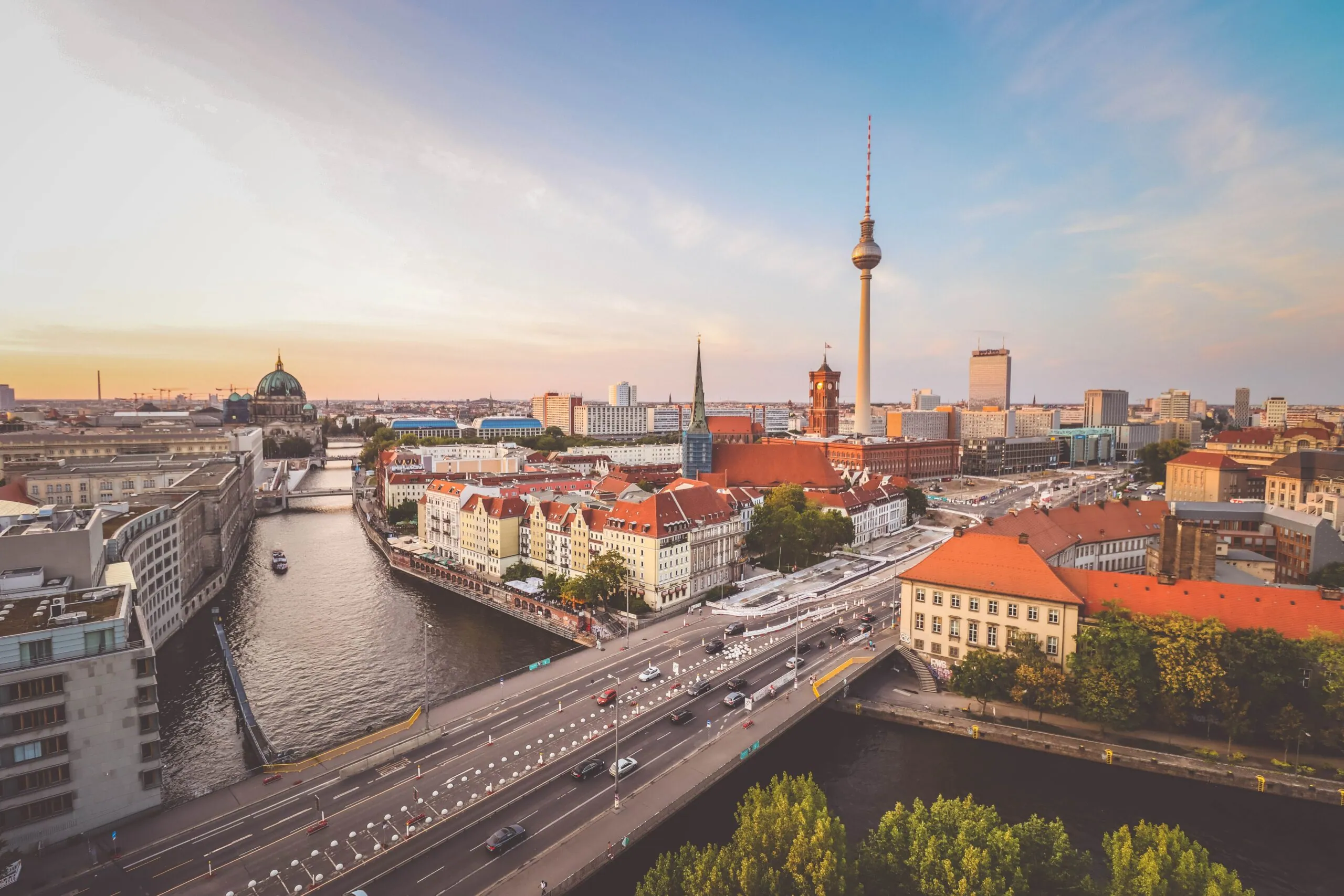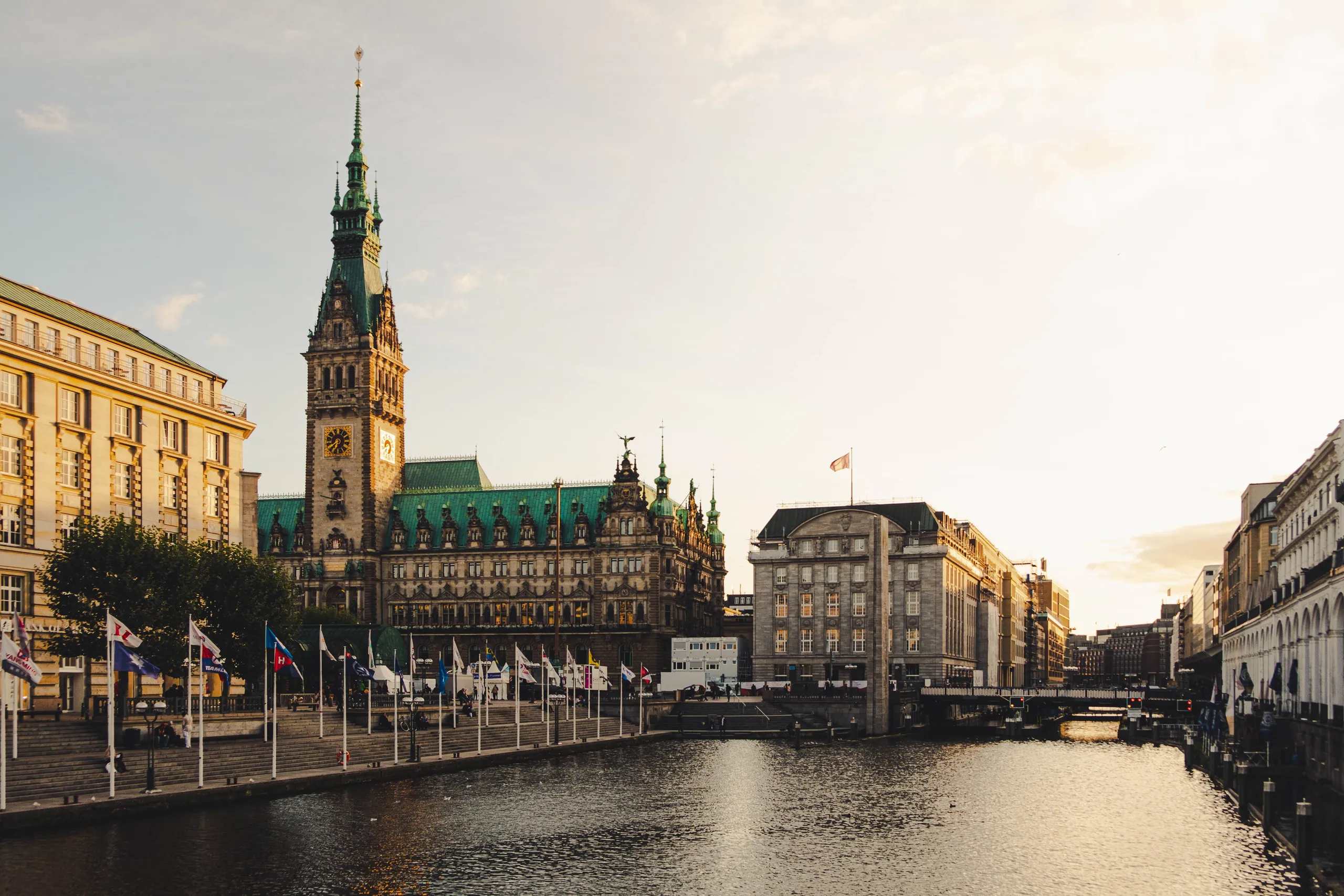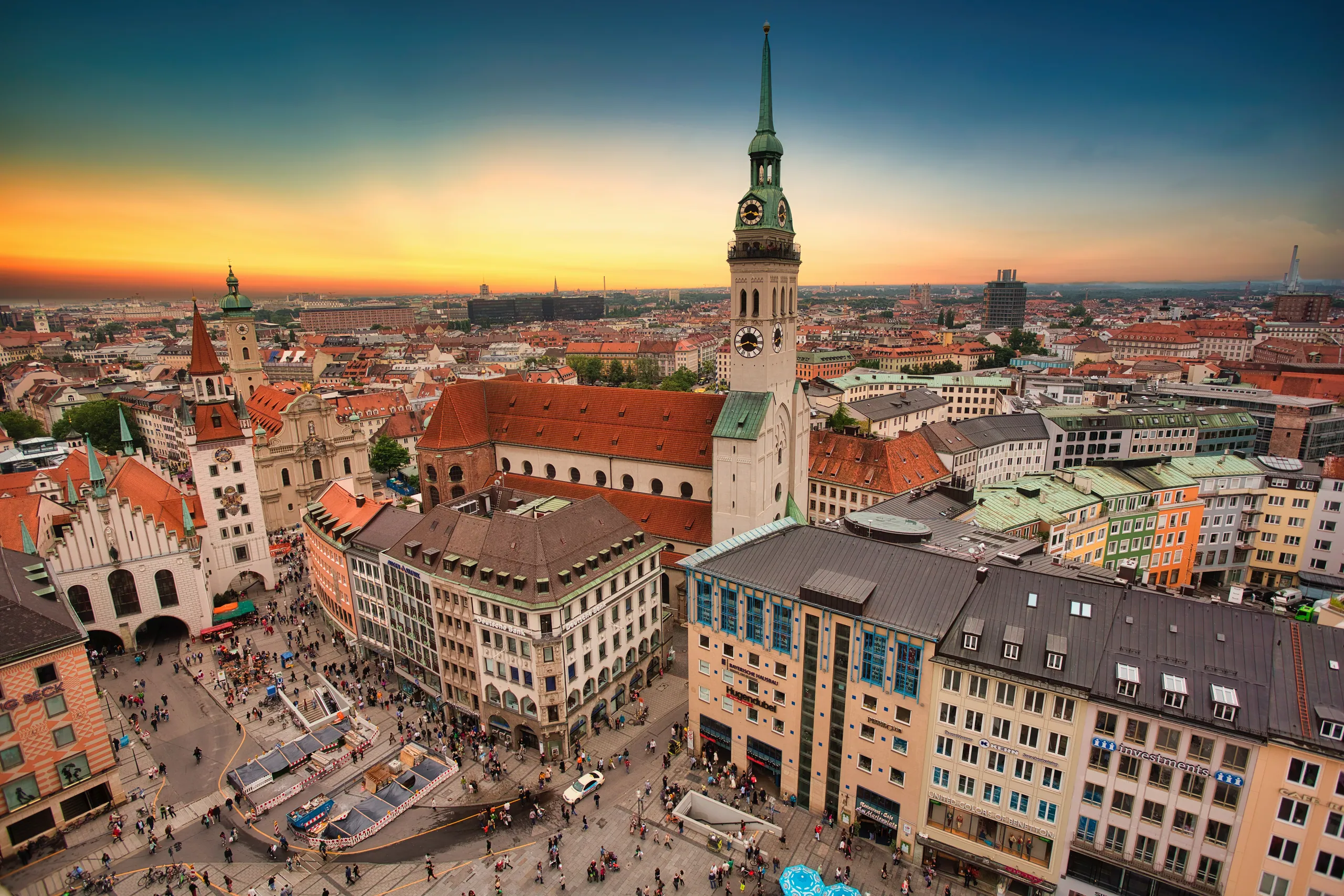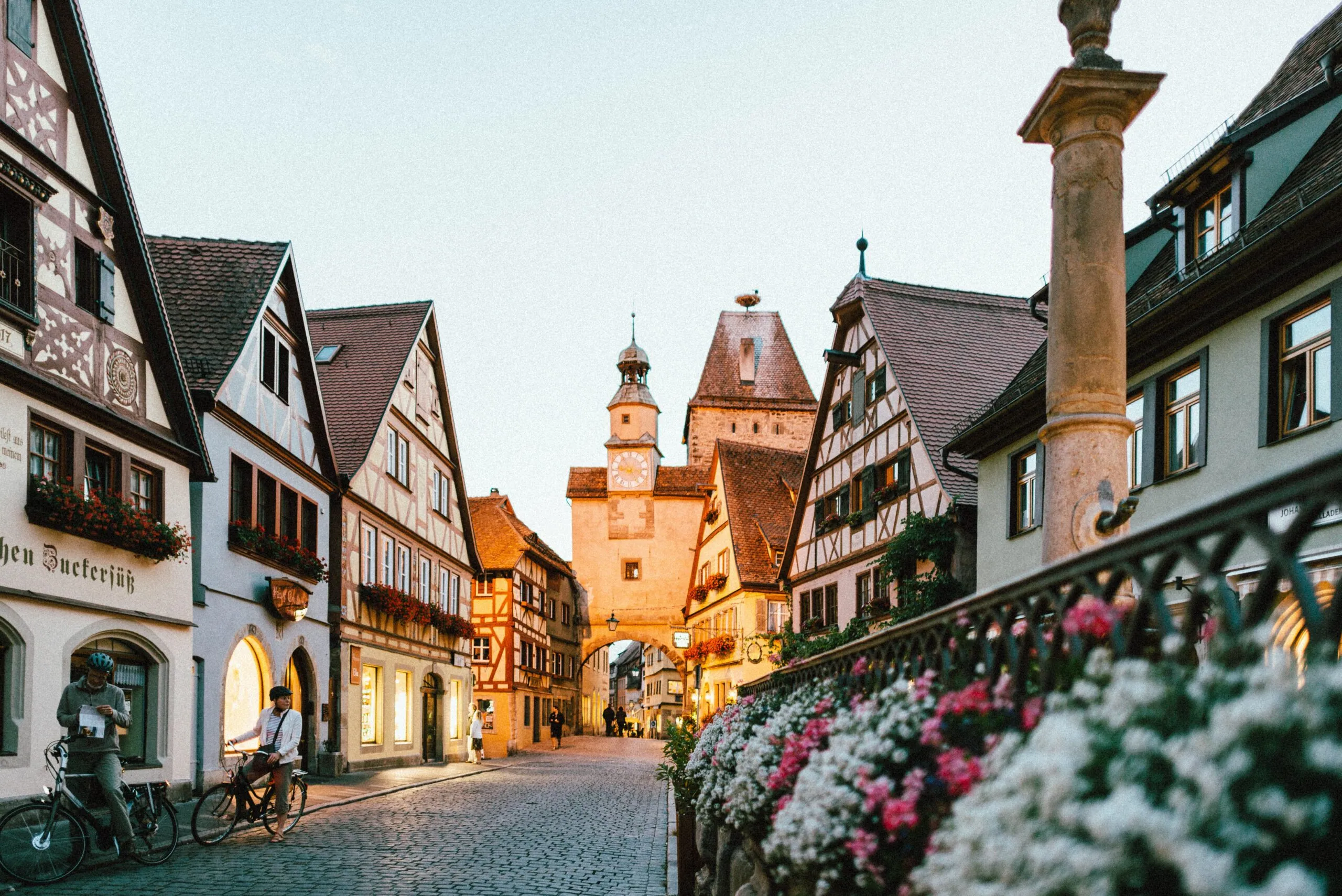
CASAFARI’s present all around Germany.
Get to know the most desirable locations.
Buying property in Germany involves no foreign ownership restrictions, but purchasers must navigate regional transaction costs between 8% and 12% of the purchase price. According to Destatis official population statistics, Germany’s 83,467,117 residents are distributed across a polycentric economy. Total purchase costs are heavily shaped by state property transfer tax (Grunderwerbsteuer) ranging from 3.5% to 6.5%, alongside statutory notary, land registry, and estate agency fees.
How is the German residential property market structured?
Unlike monocentric property markets such as the United Kingdom or France, where real estate capital heavily concentrates in a single major metropolis, Germany operates across a distributed, polycentric network of major regional hubs. As of 31 December 2025, official data from Statistisches Bundesamt (Destatis) puts Germany’s total population at 83,467,117 residents. Demand for residential property is split among distinct economic centres across the country.
Traditionally defined by institutional real estate investors as the “Big Seven”, the largest German cities exhibit distinct demographic hierarchies. According to Destatis census-adjusted figures as of 31 December 2025, Berlin remains the largest city with 3,700,577 residents, followed by Hamburg (1,869,473), Munich (1,505,036), Cologne (1,025,523), Frankfurt am Main (760,656), Düsseldorf (619,444), and Leipzig (615,932). Leipzig has now surpassed Stuttgart (609,365) in total resident population, reflecting strong growth trajectories across Eastern German urban centres.
Following several quarters of macroeconomic calibration, the official Statistisches Bundesamt (Destatis) residential property price index (base year 2025=100) recorded a 3.2% average annual increase across 2025. Destatis data released in September 2026 showed the index standing at 100.3 in Q1 2026 (+1.4% year-on-year) and reaching 100.6 in Q2 2026 (+0.6% year-on-year, +0.3% quarter-on-quarter), pointing to broader market stabilization. Property investors and agents analyzing district-level pricing can consult CASAFARI Area Insights when tracking European property market trends. Readers can also reference the live price ticker on this page for up-to-date average asking prices per square metre.
What are the purchase taxes, notary fees and agent commissions in Germany?
When calculating the capital required to purchase a residential property in Germany, buyers must account for transaction costs (Kaufnebenkosten). These statutory closing costs typically add between 8% and 12% to the agreed purchase price, with significant variation driven by the property’s location.
The single largest variable fee is the state-level property transfer tax (Grunderwerbsteuer). As of October 2026, German federal state property transfer tax (Grunderwerbsteuer) rates range from 3.5% to 6.5% depending on the federal state (Bundesland):
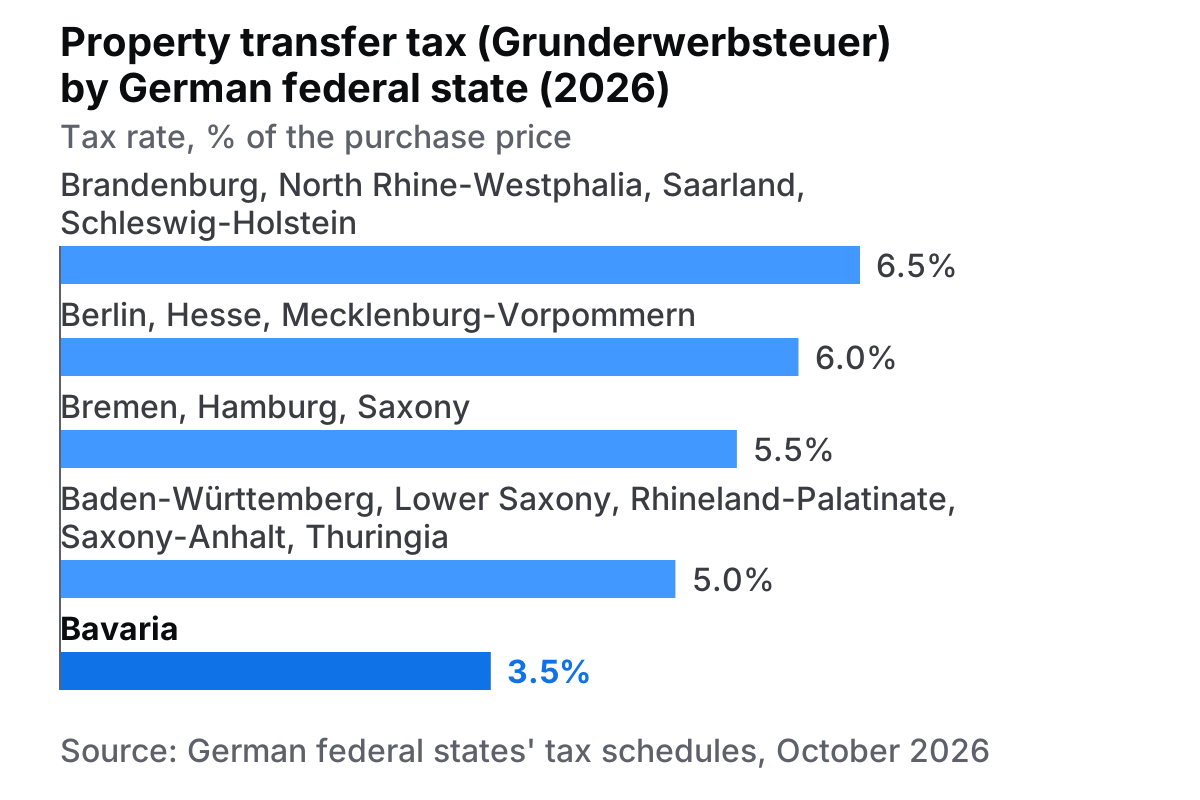
- 3.5%: Bavaria
- 5.0%: Baden-Württemberg, Lower Saxony, Rhineland-Palatinate, Saxony-Anhalt, Thuringia
- 5.5%: Bremen, Hamburg, Saxony
- 6.0%: Berlin, Hesse, Mecklenburg-Vorpommern
- 6.5%: Brandenburg, North Rhine-Westphalia, Saarland, Schleswig-Holstein
Beyond property transfer tax, transaction costs are governed by strict statutory legal standards. Notary and land registry fees (Notar- und Grundbuchkosten) are fixed by federal law under the Gerichts- und Notarkostengesetz (GNotKG) and cannot be negotiated. Together, they total between 1.5% and 2.0% of the purchase price (roughly 1.0% to 1.5% for notarization and 0.5% for the land registry, including the entry of the protective priority notice, or Auflassungsvormerkung).
Estate agent commissions (Maklerprovision) for consumer purchases of flats and single-family homes are regulated under the statutory estate agent commission split (§§ 656a–656d BGB). Under this parity principle (Halbteilungsprinzip), the buyer cannot be charged more than 50% of the total commission agreed with the seller. In standard market practice, the buyer’s fee works out to 2.98% to 3.57% including 19% VAT, out of a total market commission of 5.95% to 7.14%. Property professionals evaluate these local fee structures and historical pricing using property valuation and market study tools, much like how German agency Belle Estate GmbH prices property with data.
How do property taxes, capital gains and the 2026 energy law affect owners?
Long-term individual property investors benefit from attractive tax treatment under § 23 Abs. 1 Satz 1 Nr. 1 of the German Income Tax Act (EStG). Private individuals who hold a let property for more than ten years between notarised purchase and sale agreements can realize capital gains completely free of income tax (Spekulationsfrist). For owner-occupied properties, tax-free sales are permitted even sooner if the property served as the primary residence in the year of sale and the two preceding calendar years. On 8 October 2026, the Bundestag rejected legislative proposals to modify or eliminate this 10-year rule, a decision formally confirmed by the Bundesrat on 16 October 2026.
Annual property tax (Grundsteuer) underwent a nationwide structural reform that took effect on 1 January 2025, based on updated valuation baselines from 1 January 2022. Eleven federal states utilize the Federal Model—which was affirmed as constitutional by the Bundesfinanzhof in December 2025—while five states apply their own state-specific area or value models. Landlords retain the statutory right to pass ongoing Grundsteuer costs to tenants as part of the annual service charge settlement (Betriebskostenabrechnung).
Building efficiency rules were modernized on 29 July 2026 when the Gebäudemodernisierungsgesetz (GModG) came into force, replacing the previous Gebäudeenergiegesetz (GEG). Detailed in the Verbraucherzentrale overview of the 2026 Gebäudemodernisierungsgesetz (GModG), the GModG maintained the strict two-year post-purchase deadline from official land registry entry (Grundbuch) for new owners to insulate exposed top-floor ceilings and uninsulated heating/hot-water pipes. However, it relaxed the strict 30-year boiler replacement obligation and phased out the rigid 65% renewable energy requirement for replacement systems. Presenting a valid Energy Performance Certificate (Energieausweis) remains mandatory upon sale or letting, and under the GModG this requirement now extends to historic listed properties (denkmalgeschützte Gebäude).
What are the rules on rent controls, short-term lets and residency for foreign buyers?
Germany maintains an open regulatory framework for international property buyers. Non-EU and EU nationals face zero legal restrictions, special government permits, or residency requirements when purchasing residential or commercial property. However, owning German property confers no automatic right to residency; non-EU buyers without a resident permit remain subject to standard Schengen regulations allowing visits up to 90 days within any 180-day window.
For residential landlords, long-term letting is subject to local tenancy protections. The statutory rent brake (Mietpreisbremse under § 556d BGB) was formally extended by federal legislation until 31 December 2029. In designated tight housing markets, state governments enforce this rule to cap new lease prices at a maximum of 10% above the local benchmark rent (ortsübliche Vergleichsmiete or Mietspiegel).
Short-term holiday rentals are heavily regulated in major German municipalities under housing preservation statutes (Zweckentfremdungsverbote). Cities including Berlin, Munich, Hamburg, and Frankfurt am Main impose strict caps—such as Munich’s eight-week annual limit for unpermitted short lets—with non-compliance fines reaching up to €500,000. Furthermore, under EU Regulation 2024/1028 and Germany’s national Kurzzeitvermietung-Datenaustausch-Gesetz (KVDG), in force since 20 May 2026, hosts must display an official municipal registration number on listings. Since 1 July 2026, major booking platforms transmit automated monthly host occupancy data directly to the Federal Network Agency (Bundesnetzagentur).
Investors, acquisitions teams, and buyers’ agents searching for opportunities across German cities can leverage Property Sourcing across the German market to locate verified inventory. Developers and software teams can integrate market analytics directly via the CASAFARI Area Insights API documentation or sign in to the CASAFARI platform to evaluate micro-market demand.
Frequently asked questions
Can non-EU citizens buy property in Germany without residency?
Yes, foreign nationals—including UK, US and other non-EU citizens—can purchase residential and commercial property in Germany in their own name without nationality restrictions, special permits or residency preconditions. However, Germany does not operate a Golden Visa programme, so owning property does not grant a residence permit. Non-resident non-EU owners remain subject to standard Schengen restrictions allowing stays of up to 90 days in any 180-day period.
What are the total closing costs when buying property in Germany?
Buyers should budget roughly 8% to 12% of the purchase price in ancillary closing costs (Kaufnebenkosten), depending on the federal state. As of October 2026, this comprises state property transfer tax (Grunderwerbsteuer) of 3.5% to 6.5%, statutory notary and land registry fees (Notar- und Grundbuchkosten under the GNotKG) of 1.5% to 2.0%, and the buyer’s share of the estate agent’s commission. Under §§ 656c–656d BGB, the buyer’s commission share is typically 2.98% to 3.57% including VAT.
Do private sellers pay capital gains tax on German property after 10 years?
No; under § 23 Abs. 1 Satz 1 Nr. 1 of the German Income Tax Act (EStG), private individuals can sell a let residential property completely free of capital gains tax once they have held it for more than ten years between notarised purchase and sale contracts. Owner-occupied homes qualify for tax-free sale even earlier if the owner lived in the property during the year of sale and the two preceding calendar years. Legislative proposals to alter or abolish this exemption were formally rejected by the Bundestag on 8 October 2026 and the Bundesrat on 16 October 2026.
Are short-term holiday lets on platforms like Airbnb restricted in German cities?
Yes, major cities including Berlin, Munich, Hamburg and Frankfurt am Main enforce strict housing protection bylaws (Zweckentfremdungsverbote) that restrict unpermitted short-term lets and carry fines of up to €500,000. Furthermore, under EU Regulation 2024/1028 and Germany’s Kurzzeitvermietung-Datenaustausch-Gesetz (KVDG), hosts in regulated municipalities must display an official registration number on property listings. Since 1 July 2026, booking portals automatically submit monthly host occupancy records to the Bundesnetzagentur.