
GENOVA PROPERTY GUIDE
Genuine Spanish neighbourhood for a perfect family living
Nestled on the lower slopes of the Serra de na Burguesa, Génova offers a serene hillside village environment five kilometres west of central Palma. With average asking prices reaching €7,115/m² in July 2026, it attracts international families and investors seeking sea-view villas near top British schools, while operating under Palma’s strict residential regulations.
Why are international buyers choosing property in Génova?
Situated on the western edge of Palma municipality, Génova combines the atmospheric character of a traditional Mallorcan hillside village with immediate urban access. The village core maintains a resident population of 3,826 people (expanding to 4,214 including immediate surroundings), set within Palma’s broader municipal population of 484,039 registered inhabitants, according to official figures from INE / IBESTAT / Ayuntamiento de Palma.
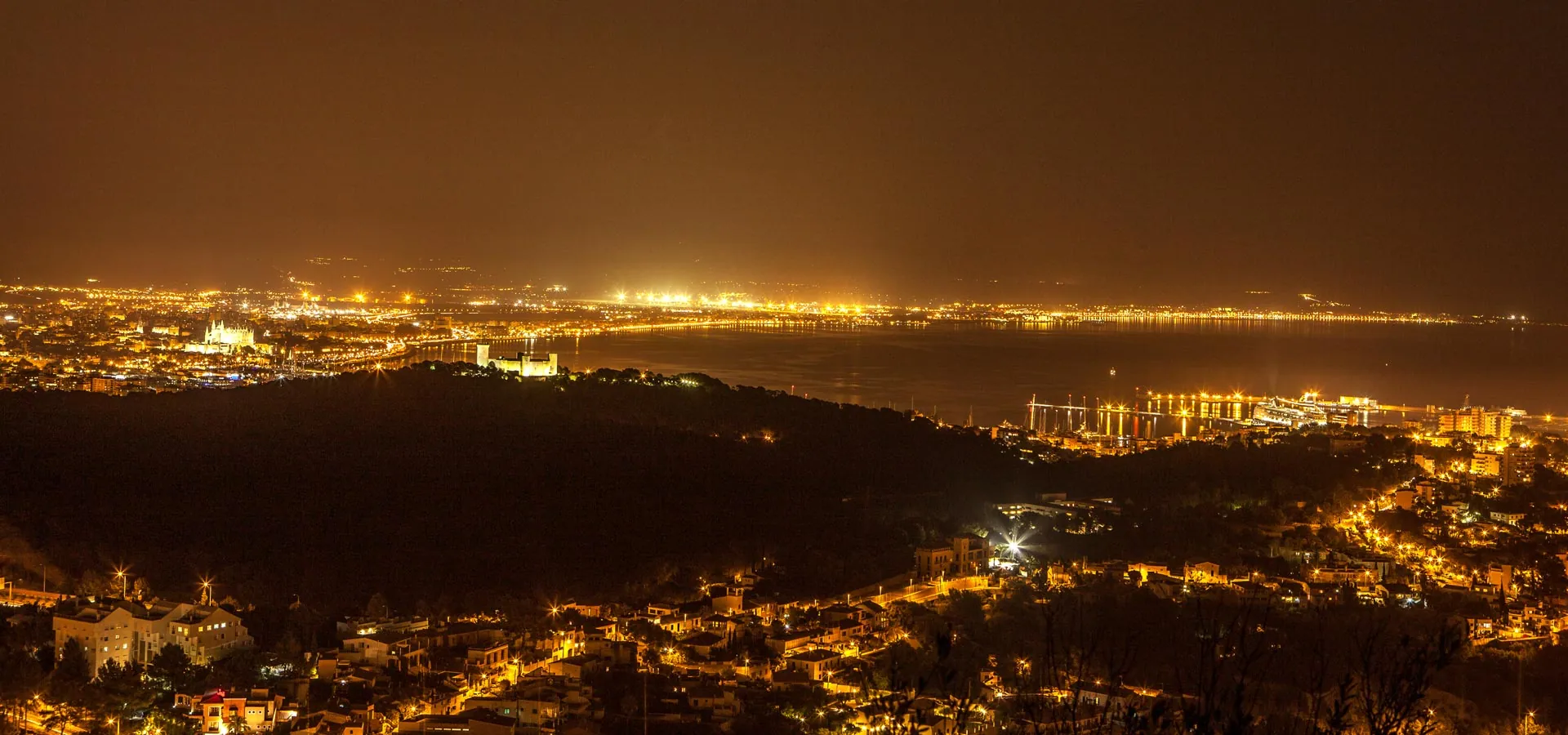
Architecturally, Génova presents a distinct contrast. Narrow, winding lanes in the historic centre feature stone village houses and authentic townhouses, while the upper hillside slopes host contemporary villas equipped with infinity pools, landscaped Mediterranean gardens, and expansive terraces. Properties on these elevated plots enjoy panoramic views across Palma Bay, the city skyline, and Bellver Castle.
The buyer profile is overwhelmingly oriented toward primary residences for relocating international families and discreet second homes. According to Idealista price reports, asking prices in the specific Génova sub-neighbourhood reached €7,115/m² in July 2026, compared to €6,499/m² across the broader Génova - Bonanova - Sant Agustí zone.
Real estate professionals and private investors benchmarking local micro-markets rely on tools like CASAFARI Area Insights to evaluate pricing variations across Palma’s southwest corridor, while using Valuation & Market Study to perform precise comparable property valuations.
What is everyday life like in Génova: dining, caves, beaches and golf?
Despite its tranquil residential feel, Génova is celebrated locally for its rich culinary tradition. The village streets house famous local restaurants where residents and visitors gather for traditional Mallorcan roast meats, alongside classic Spanish starters such as pa amb oli, pimientos de padrón, and pulpo a la gallega. While the Mirador de Na Burguesa viewpoint above the village remains open 24 hours for sweeping bay vistas, the former mountaintop restaurant adjacent to the lookout is closed and derelict as of 2026, with the Bishopric of Mallorca initiating legal eviction proceedings in February 2026.
Beneath the village lies one of Palma’s most fascinating natural attractions: the Cuevas de Génova. Located at Carrer del Barranc, 45, these natural subterranean limestone galleries descend to a depth of 36 metres. The caves are open daily to the public from 09:30 to 17:30, with admission prices set at €12 for adults and €7 for children up to 12 years old as of October 2026.
For outdoor recreation, Génova is ideally situated. Directly below the hillside, Cala Major beach provides immediate coastal access and regained its ADEAC Blue Flag status for the 2026 summer season, as reported by Última Hora. Golf enthusiasts are equally well served, with the championship courses of Son Vida situated just a short drive to the north.
How do schools and transport serve families living in Génova?
One of Génova’s strongest advantages for relocating international buyers is its location within Palma’s premier educational corridor. Families residing in the village benefit from close proximity to several leading international schools:
- Queen’s College: Located in neighbouring La Bonanova, offering a British curriculum leading to GCSEs, A-Levels, and International Baccalaureate (IB) options.
- Bellver International College: Situated in adjacent Cala Major, providing continuous British education (IGCSE, A-Levels) and the IB Diploma for students aged 3 to 18.
- Baleares International College (BIC): Operating campuses in nearby San Agustín and Sa Porrassa, delivering a comprehensive British curriculum.
- Colegio San Cayetano: Positioned nearby in Palma, providing high-standard bilingual and IB education.
Transport infrastructure connects Génova seamlessly with central Palma and the rest of Mallorca. Drivers enjoy immediate access to the Ma-20 ring road via Camí dels Reis. Public transit is equally efficient: EMT Palma Line 46 route and timetable provides direct bus connections every 20 minutes on weekdays, linking Génova with Sant Agustí, Cala Major, La Bonanova, El Terreno, and central Palma hubs including Plaza de España and Sindicat.
What taxes, holiday-let rules and visa laws apply when buying in Génova in 2026?
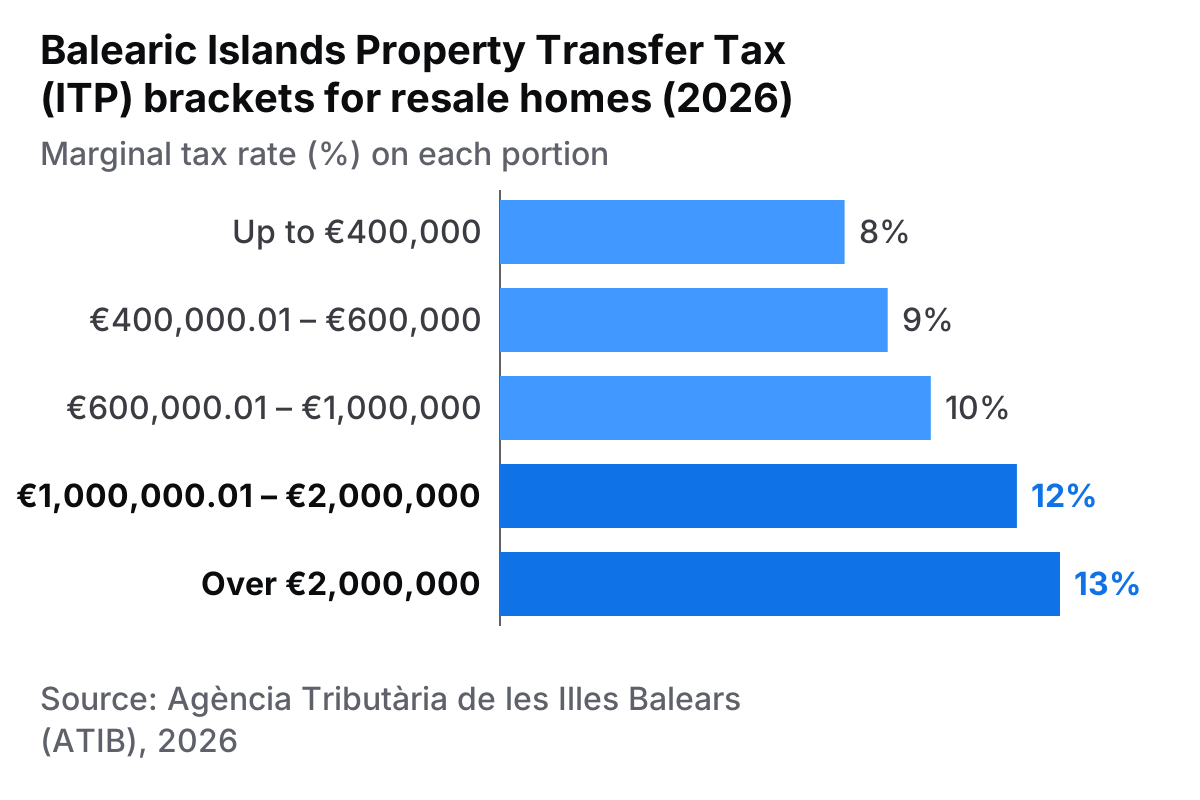
Acquiring residential real estate in Génova requires navigating specific regional tax frameworks and municipal regulations established for 2026. Resale property acquisitions are subject to the Balearic Islands Property Transfer Tax (ITP), calculated on a progressive scale defined by the Balearic Tax Agency (ATIB) 2026 ITP scale:
- Up to €400,000: 8%
- €400,000.01 to €600,000: 9%
- €600,000.01 to €1,000,000: 10%
- €1,000,000.01 to €2,000,000: 12%
- Above €2,000,000: 13%
Investors considering short-term rental strategies must account for municipal policy updates. Between February and May 2026, Palma City Council amended its urban plan (PGOU) to designate the entire municipality as an unsuitable zone for tourist accommodation (ETV). As reported by Infobae España, this extended Palma’s long-standing apartment ban to detached houses and villas, prohibiting new short-term rental licences across Génova. Investors seeking rental yield should focus on long-term residential leasing or verify pre-existing, legally transferable licences.
For non-EU buyers, including UK nationals, residency rules have also evolved. Following the enactment of Organic Law 1/2025, the Spanish Government permanently ended the real estate Golden Visa on 3 April 2025, as confirmed in the Spanish Government announcement ending the Golden Visa in April 2025. Non-EU purchasers must now secure residency through alternative channels, such as the Non-Lucrative Visa or the Digital Nomad Visa.
Whether researching market availability or preparing a transaction, property advisers can utilize Property Sourcing to search cross-portal listings, review our general guide to buying property in Spain, or consult our analysis on selling a property in Mallorca. You can explore live market data directly when you sign in to the CASAFARI platform.
Frequently asked questions
Can you get a tourist rental licence (ETV) for a villa in Génova, Palma?
No new tourist rental licences can be issued in Génova. Between February and May 2026, Palma City Council amended its General Urban Plan (PGOU) to declare the entire municipality of Palma an unsuitable zone for tourist stays in residential properties (ETV), extending the existing 2018 apartment ban to all detached houses and villas. Only properties that already hold a valid, grandfathered licence can legally operate as short-term holiday lets.
Which international schools are closest to Génova in Mallorca?
Génova sits at the heart of southwest Palma’s international school corridor. Queen’s College in neighbouring La Bonanova, Bellver International College in Cala Major, and the San Agustín campus of Baleares International College (BIC) are all within a few minutes’ drive, offering British (IGCSE and A-Level) and International Baccalaureate (IB) curricula, alongside Colegio San Cayetano in Palma.
What are the property transfer tax (ITP) rates when buying a resale home in Mallorca in 2026?
According to the Balearic Tax Agency (ATIB) tariff for 2026, resale residential purchases are taxed on a progressive scale: 8% on the first €400,000; 9% between €400,000.01 and €600,000; 10% between €600,000.01 and €1,000,000; 12% between €1,000,000.01 and €2,000,000; and 13% on any amount above €2,000,000. Buyers under 30 purchasing their first habitual residence may qualify for a 100% reduction subject to statutory thresholds.
Does buying a €500,000 property in Génova still qualify for Spain’s Golden Visa?
No. Under Organic Law 1/2025, the Spanish Government abolished the investor residency visa (Golden Visa) for real estate acquisitions effective 3 April 2025. Non-EU citizens, including British buyers, can no longer obtain Spanish residency solely by purchasing property and must apply through alternative routes such as the non-lucrative visa or telework (digital nomad) visa.