EIXAMPLE PROPERTY GUIDE
The city’s finest modernist architecture and high-street shopping
Eixample is Barcelona’s most populous district, with 277,353 residents across 7.48 square kilometres as of January 2026 (Ajuntament de Barcelona), and serves as the city’s prime architectural core. According to CASAFARI Area Insights, apartments for sale in Eixample averaged an asking price of €6,942 per square metre in Q3 2026 (up 5.1% year on year from €6,608 in Q3 2025), while average asking rents reached €34.0 per square metre per month (+1.2% year on year from €33.6 in Q3 2025), contrasted with notary closing prices of up to €7,267 per square metre in prime central postcodes.
Where is Eixample and how is the district connected?
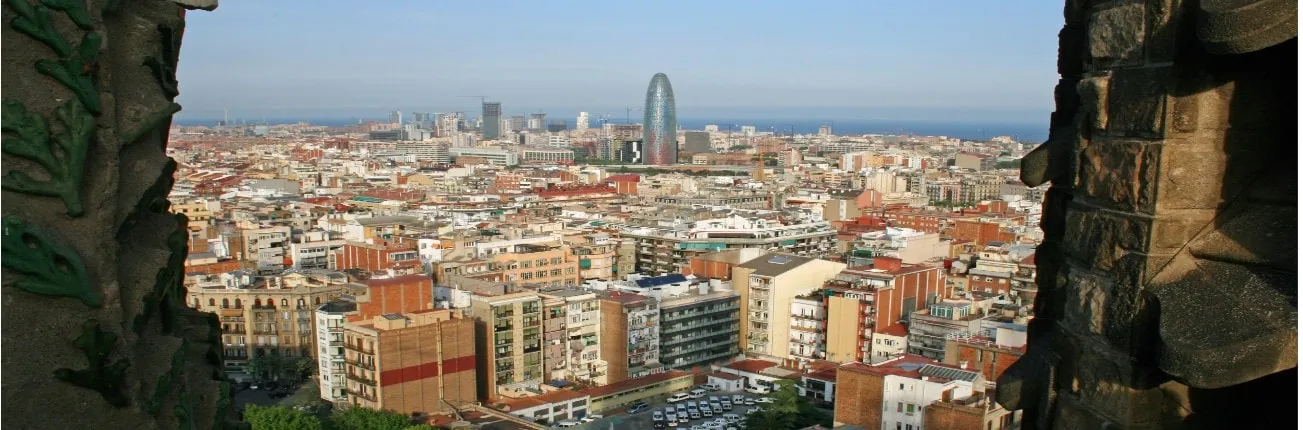
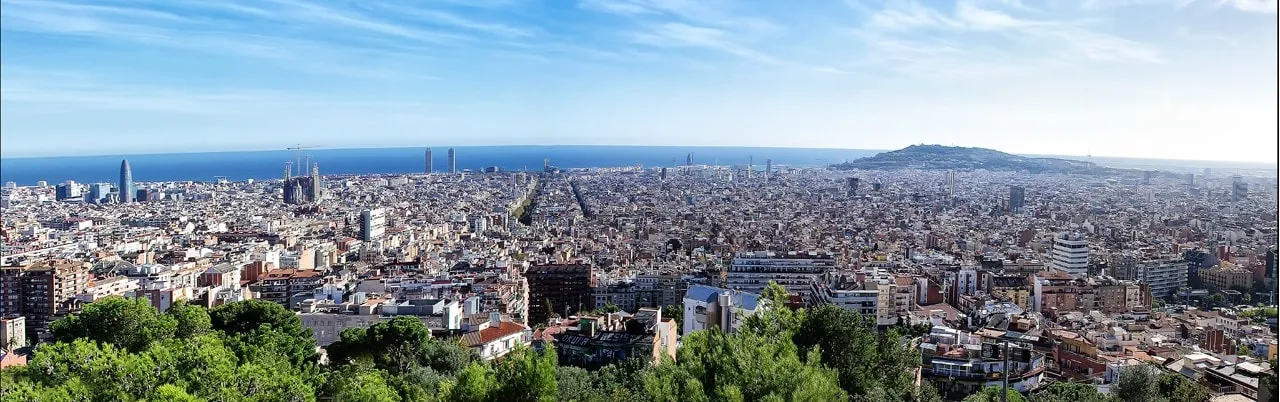
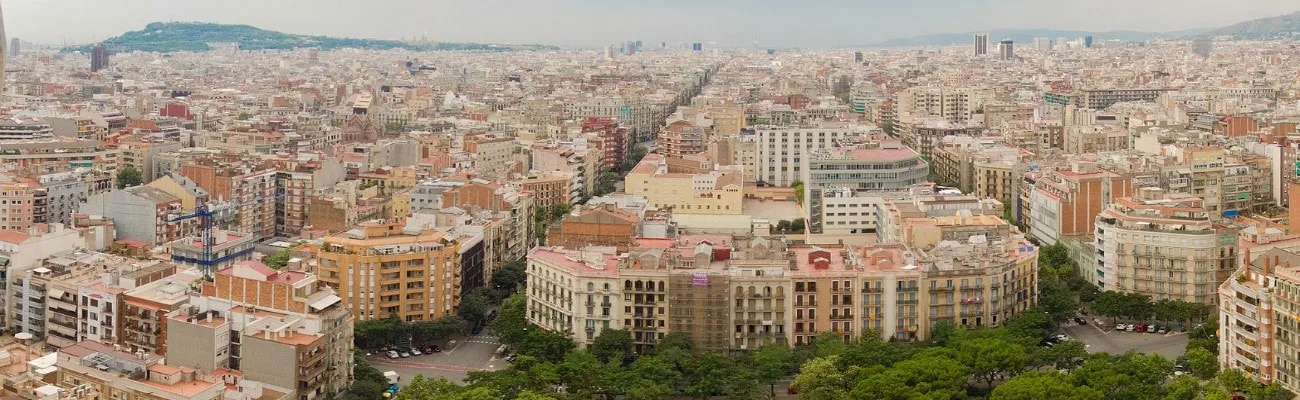
Conceived by master planner Ildefons Cerdà in the mid-19th century, Eixample was designed as an expansive grid system to connect the historic medieval core of Ciutat Vella with the surrounding former independent villages such as Gràcia, Sants and Sant Andreu. It acts as the urban bridge of the Barcelona property market, balancing grand commercial boulevards with structured residential blocks.
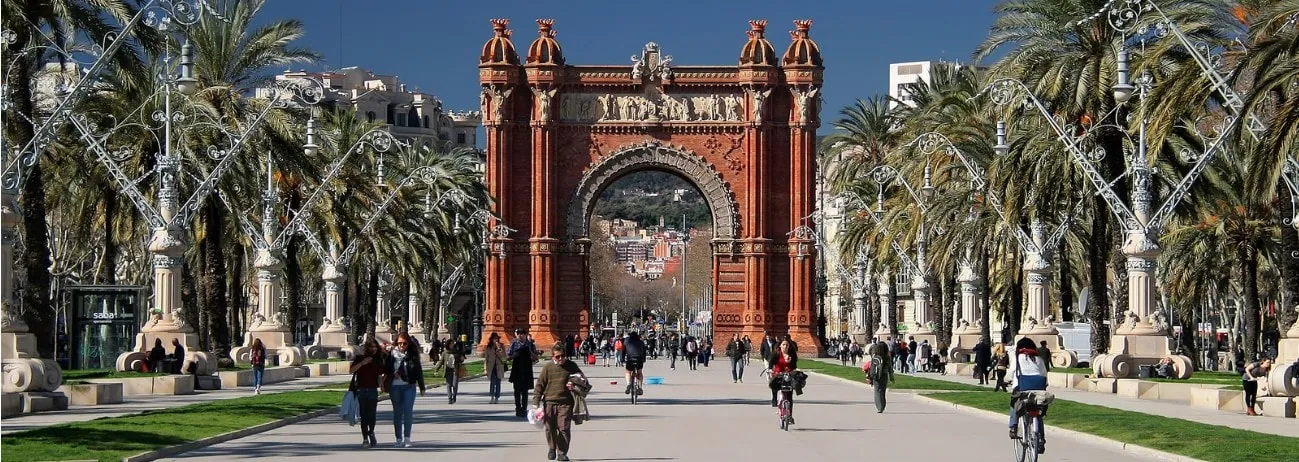
The district enjoys exceptional public transport connectivity across the Transports Metropolitans de Barcelona network. Residents have direct access to Metro lines L1, L2, L3, L4 and L5, along with Ferrocarrils de la Generalitat (FGC) commuter lines (L6, L7, L8 and regional services) via major transport hubs at Plaça de Catalunya, Provença and Plaça d’Espanya. Furthermore, Rodalies Renfe lines R1 to R4 operate through Passeig de Gràcia, Plaça de Catalunya and Arc de Triomf, providing seamless links to Barcelona-El Prat Airport and the Catalan coastline, while the TRAM T4 extension along Avinguda Diagonal to Verdaguer (operational since November 2024) complements the existing tram network at Francesc Macià.
The six neighbourhoods of Eixample: how the sub-markets compare
Eixample is far from a uniform property market; it comprises six distinct administrative neighbourhoods (barris), each possessing a unique architectural density, buyer demographic and price point. Understanding these micro-markets is essential, whether you are exploring the luxury axis of Eixample Dreta, the medical and academic hub of Eixample Esquerra, or the more residential family-oriented streets of Nova Esquerra de l’Eixample.
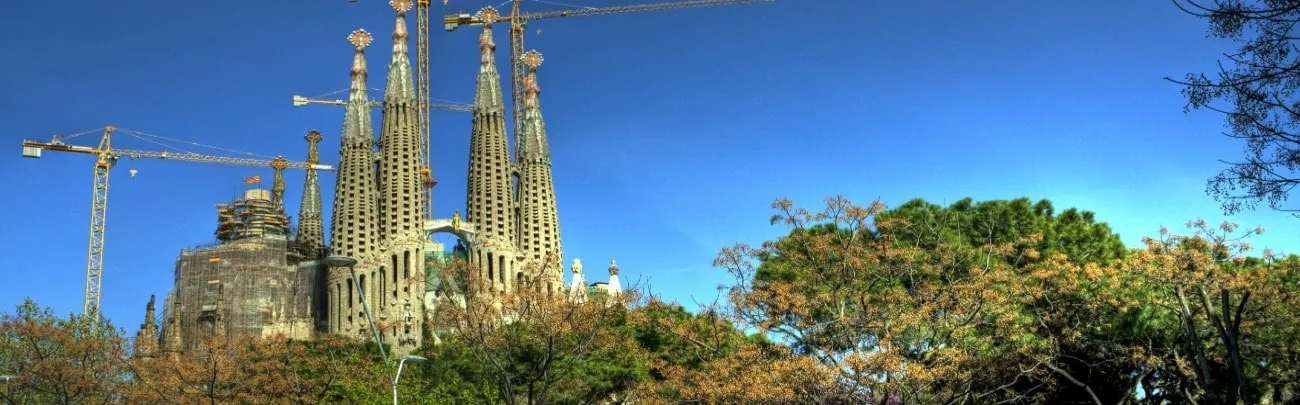
Moving towards the northern and eastern fringes, the district encompasses the bustling vicinity surrounding Sagrada Família, the multicultural commercial residential blend of Fort Pienc, and the dynamic culinary quarter of Sant Antoni, renowned for its landmark iron market hall and vibrant street life. Daily life across all six barris has been heavily transformed by the municipal Superilla Barcelona initiative and the creation of pedestrian Green Axes (Eixos Verds) along streets such as Consell de Cent, Girona, Rocafort and Comte Borrell. These single-level pedestrian priority zones—enforcing a 10 km/h speed limit and featuring four 2,000 m² public squares at major intersections—have concentrated buyer demand around quiet pedestrianised crossings, supported by strict municipal commercial zoning (Pla d’usos) that caps restaurant and terrace saturation.
Housing stock and buyer profiles: fincas regias, principals and corporate capital
The architectural identity of Eixample is defined by its chamfered octagonal blocks (manzanas) featuring light-filled interior courtyards (patis d’illa) and historic fincas regias built during the late 19th and early 20th centuries. These properties typically showcase ornate Modernista facades, high 3.5-metre coffered ceilings, hydraulic mosaic floor tiles (such as traditional panot and Nolla ceramics), and dual orientations that pair street-facing balconies with peaceful interior gallery terraces.
Within these historic buildings, vertical hierarchy dictates valuation: the prized principal (the first main residential floor with elevated ceilings and expansive terrace space above commercial ground floors) and top-floor penthouses (àtiks and sobreàtiks) command substantial premiums over lower interior levels. According to notary closing records published by the official property transaction statistics from the Generalitat and Barcelona Municipal Data Office as of late 2025, buyer profiles diverge sharply between the city average and prime Eixample postcodes. While individual buyers account for 87% of residential transactions across Barcelona as a whole, corporate entities, family offices and investment funds represent 42.3% of purchases in postcode 08008 and 38% in postcode 08007, operating alongside international lifestyle buyers and relocating corporate executives.
Eixample property prices and rental market in Q3 2026
Analysing asking prices alongside actual transaction data provides a rigorous baseline for market participants. According to CASAFARI Area Insights (location id 10550, queried 25 October 2026), the average asking price for apartments for sale in Eixample reached €6,942 per square metre in Q3 2026, marking a 5.1% increase year on year from €6,608 per square metre in Q3 2025.
These asking prices from portal listings can be evaluated against official registered closing prices from the Land Registry and Notaries. Across the entire Eixample district, the average closing price stood at €5,945 per square metre in early 2026 (rising from €5,714 in Q1 2025), reaching €6,239.68 per square metre in Antiga Esquerra in April 2026, and peaking at an average closing price of €7,267 per square metre (with an average transaction ticket of €818,910 for 111 square metres) across prime central postcodes 08008, 08037 and 08009 between August 2025 and July 2026.
On the rental front, CASAFARI Area Insights records an average asking rent of €34.0 per square metre per month in Q3 2026, representing a modest 1.2% year-on-year rise from €33.6 in Q3 2025. This subdued rental growth reflects severe supply compression counterbalanced by strict regulatory rent caps.
Taxes, rent caps and regulations every Eixample buyer must know in 2026
Property acquisition in Eixample is governed by a stringent regulatory framework. Under Decree-Law 5/2025, the Catalan Property Transfer Tax (ITP) for resale residential properties applies a progressive scale based on the higher of the purchase price or the Cadastral Reference Value: 10% up to €600,000; 11% from €600,000 to €900,000; 12% from €900,000 to €1.5 million; and 13% for any amount exceeding €1.5 million (as detailed by the progressive Property Transfer Tax (ITP) brackets in Catalonia). Furthermore, an aggravated 20% ITP rate applies to large landlords (grans tenidors) and entire building acquisitions, while eligible young buyers or large families benefit from a reduced 5% rate. New-build properties incur 10% VAT (IVA) plus 1.5% Stamp Duty (AJD) settled via Form 600 at the Agència Tributària de Catalunya.
Barcelona has operated as a stressed residential market zone (Zona de Mercat Residencial Tensionat) since March 2024, capping new long-term rents. Under Catalan seasonal and room rental regulations (Law 11/2025 and Law 11/2026), statutory rent caps and rigorous documentary justifications for temporary necessity now extend to mid-term seasonal rentals (lloguers de temporada for work, study or medical treatments) and individual room lets.
Short-term holiday rentals are heavily restricted: Eixample is a zero-growth zone under PEUAT regulations, and under Barcelona City Council’s 2028 phase-out of tourist apartment licences (HUT), all approximately 10,101 existing tourist licences across Barcelona will expire permanently without renewal in November 2028. Finally, non-EU buyers should note that Spain abolished the €500,000 real estate Golden Visa on 3 April 2025 via Organic Law 1/2025, and completing any purchase requires presenting a valid Cèdula d’habitabilitat and a registered Energy Performance Certificate (CEE).
How real estate professionals and investors analyse Eixample with CASAFARI
Navigating Eixample’s intricate property landscape requires street-by-street and floor-by-floor granularity. A modernised principal situated on a tranquil pedestrianised Green Axis commands a vastly different valuation profile than a lower-floor unit facing a high-traffic artery such as Gran Via or Carrer d’Aragó.
Advisors, investors and agents leverage CASAFARI Area Insights to monitor micro-neighbourhood asking price shifts, inventory absorption rates and rental yields across Eixample’s six barris. Professionals also utilise Property Sourcing to deduplicate listings across multiple portals, track historical price adjustments, and uncover off-market opportunities, while building robust Comparative Market Analyses (CMAs) through Valuation & Market Study by combining asking prices with transactional closing data. For comprehensive conveyancing guidance when signing the public deed of sale (escritura) in Spain, or to integrate analytical workflows, professionals can sign in to the CASAFARI platform or consult the Area Insights API and MCP documentation.
Frequently asked questions
Can I buy an apartment in Eixample for short-term or tourist rentals?
No new tourist apartment licences (HUT) can be issued in Eixample under municipal PEUAT zoning rules. Furthermore, under Catalan Decree-Law 3/2023, all approximately 10,101 existing tourist licences across Barcelona will expire permanently without renewal in November 2028. Since the implementation of Law 11/2025 and Law 11/2026, mid-term seasonal lets and room rentals are also bound by strict statutory rent caps and rigorous documentary requirements.
What are the property purchase taxes (ITP) in Eixample, Barcelona in 2026?
Resale property purchases in Catalonia are subject to a progressive Property Transfer Tax (ITP) scale calculated on the higher of the purchase price or Cadastral Reference Value. Rates range from 10% for properties up to €600,000, 11% up to €900,000, 12% up to €1.5 million, and 13% for amounts exceeding €1.5 million. Large corporate landlords face an aggravated 20% rate, whereas new-build properties incur 10% VAT and 1.5% Stamp Duty.
Does buying a €500,000 property in Eixample still qualify for Spain’s Golden Visa?
No. Spain officially abolished the residency-by-investment scheme for real estate acquisitions of €500,000 or more on 3 April 2025 following the enactment of Organic Law 1/2025. While non-EU nationals can still acquire property freely after obtaining a Spanish tax number, residency must now be pursued via alternative immigration pathways such as the Digital Nomad Visa.
What is the difference between Eixample Dreta and Eixample Esquerra for property buyers?
Eixample Dreta sits to the right of Passeig de Gràcia and functions as the historic epicentre of Modernista architecture and high-end retail, where corporate entities accounted for 42.3% of purchases in prime postcode 08008. Eixample Esquerra, divided into Antiga Esquerra and Nova Esquerra, offers a more localized residential atmosphere around Enric Granados and the Hospital Clínic district, balancing classic fincas regias with larger post-1960s family apartments.
How do the pedestrianised Green Axes influence property value?
The city’s Superilla Barcelona initiative and the conversion of streets like Consell de Cent into Green Axes have created pedestrian-priority zones with 10 km/h speed limits and new public squares. This municipal intervention has concentrated buyer demand and increased the desirability of homes on these quieter, greener streets, supported by strict commercial zoning that caps restaurant saturation.
Why does the specific floor of an Eixample apartment significantly change its valuation?
Historic fincas regias follow a strict vertical hierarchy, where the principal floor—the first residential level with high, coffered ceilings and terrace space—commands the highest status. Similarly, top-floor penthouses, known as àtiks and sobreàtiks, attract substantial premiums over lower, darker interior levels due to their access to natural light and superior architectural features.