POLLENSA PROPERTY GUIDE
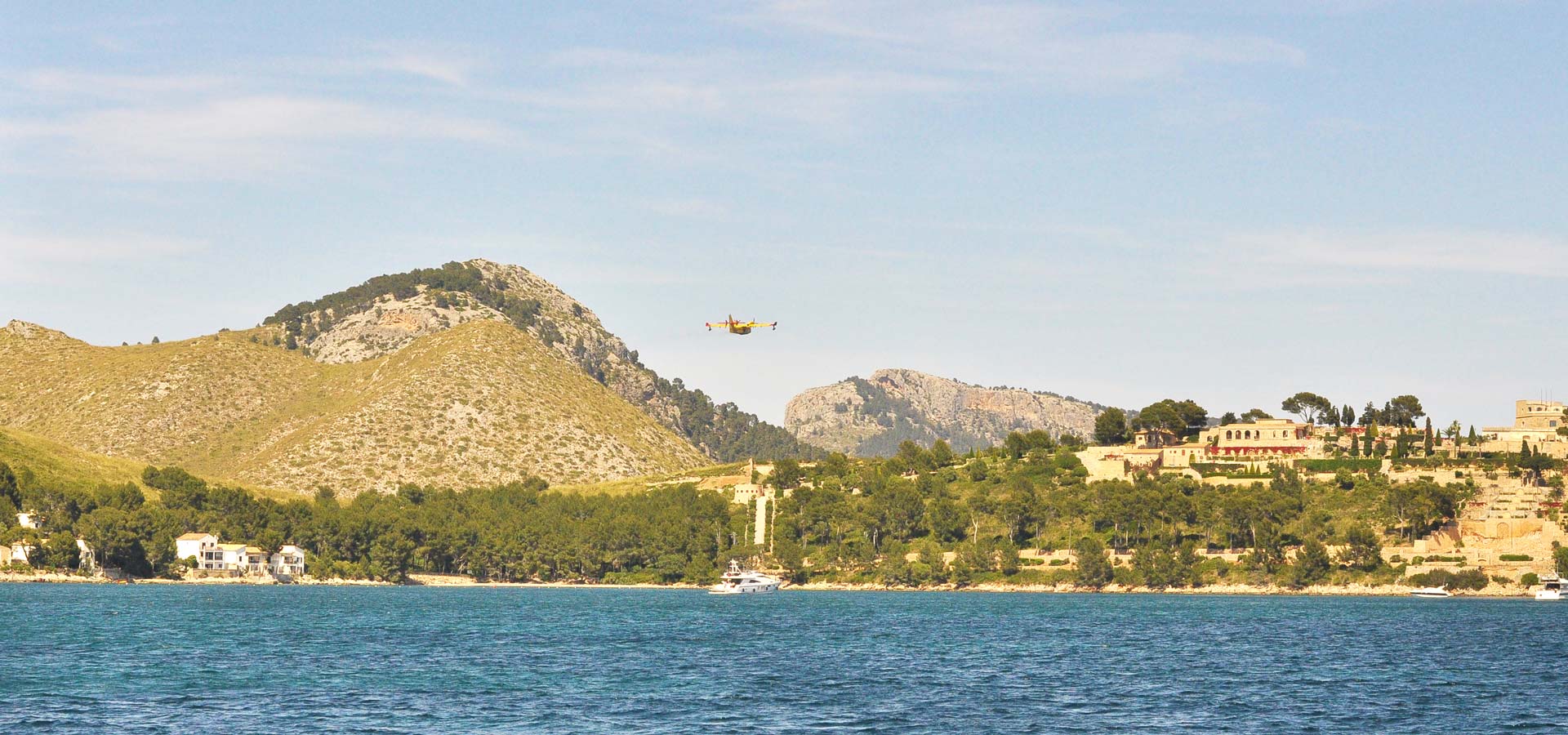
North treasure with the unique island’s culture, also a favourite destination for watersports and sailing
The municipality of Pollença in northern Mallorca offers a refined Mediterranean lifestyle with a registered population of 17,807 inhabitants (INE, January 2025). As of September 2026, average asking prices for residential Pollensa property stand at €5,238 per square metre according to Idealista, ranging from €4,808/m² in the historic town to €5,822/m² in Port de Pollença. Situated 54 kilometres from Palma via the Ma-13 motorway, Pollença combines historic charm with robust international appeal.
Why do international buyers choose Pollença in northern Mallorca?
Nestled at the eastern foot of the UNESCO-protected Serra de Tramuntana mountains, Pollença (often spelled Pollensa by foreign buyers) is one of Mallorca’s most sought-after municipalities. Located 54 kilometres north-east of Palma, the area provides a quiet alternative to the busier southern coast without sacrificing accessibility or modern services.
According to data from the Instituto Nacional de Estadística (INE, January 2025), Pollença maintains a stable year-round population of 17,807 residents (8,932 women and 8,875 men). This year-round vitality distinguishes Pollença from seasonal resort towns. Traditional stone townhouses around the central square sit alongside rural estates (fincas) in the surrounding valleys, creating an authentic Mallorcan environment supported by a longstanding British and European expatriate community.
Market metrics reflect steady, resilient demand. Figures published by Idealista in September 2026 place the average residential asking price across the municipality at €5,238/m², while the long-term rental market commands an average of €17.20/m² per month, representing a 4.1% year-on-year increase. Real estate professionals evaluating pricing trends and yield benchmarks across individual micro-locations rely on CASAFARI Area Insights for precise real-time valuations.
Towns, coastal enclaves and residential estates of the Pollença region
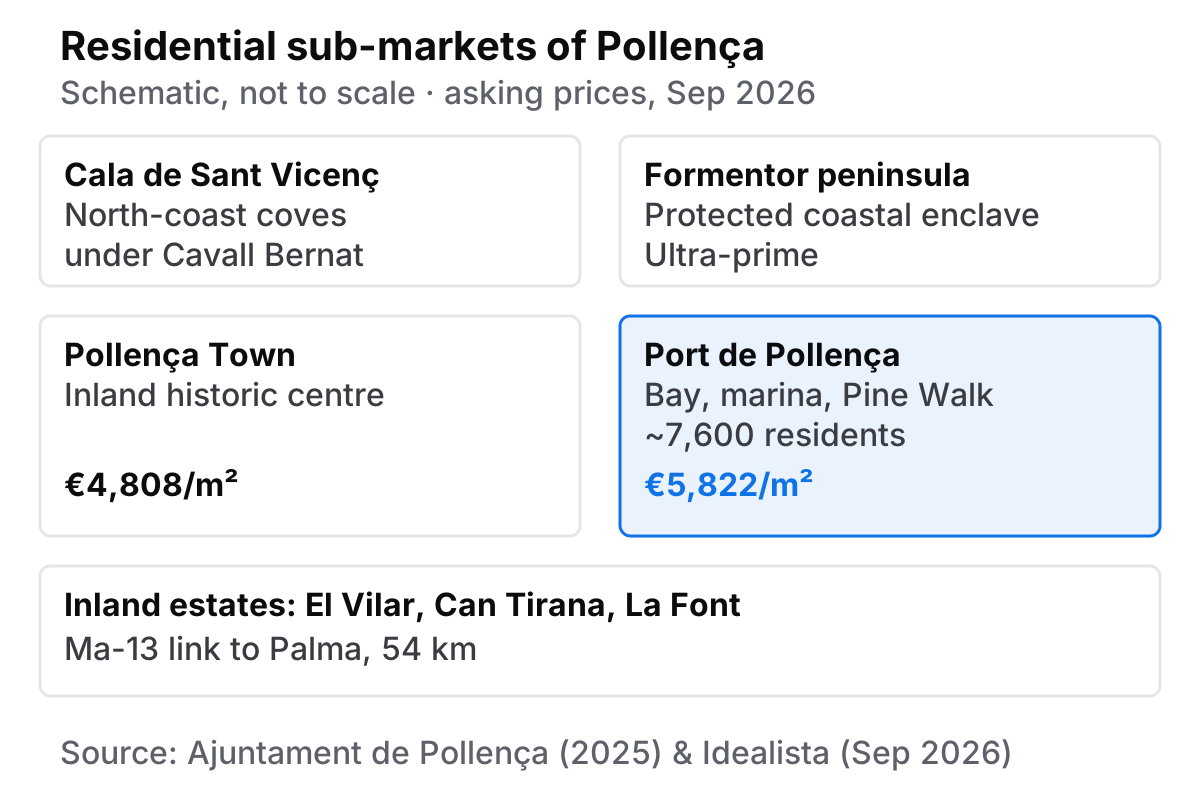
The municipality encompasses several distinct micro-markets, each offering different property types and lifestyle characteristics.
Pollença Town (Historic Centre)
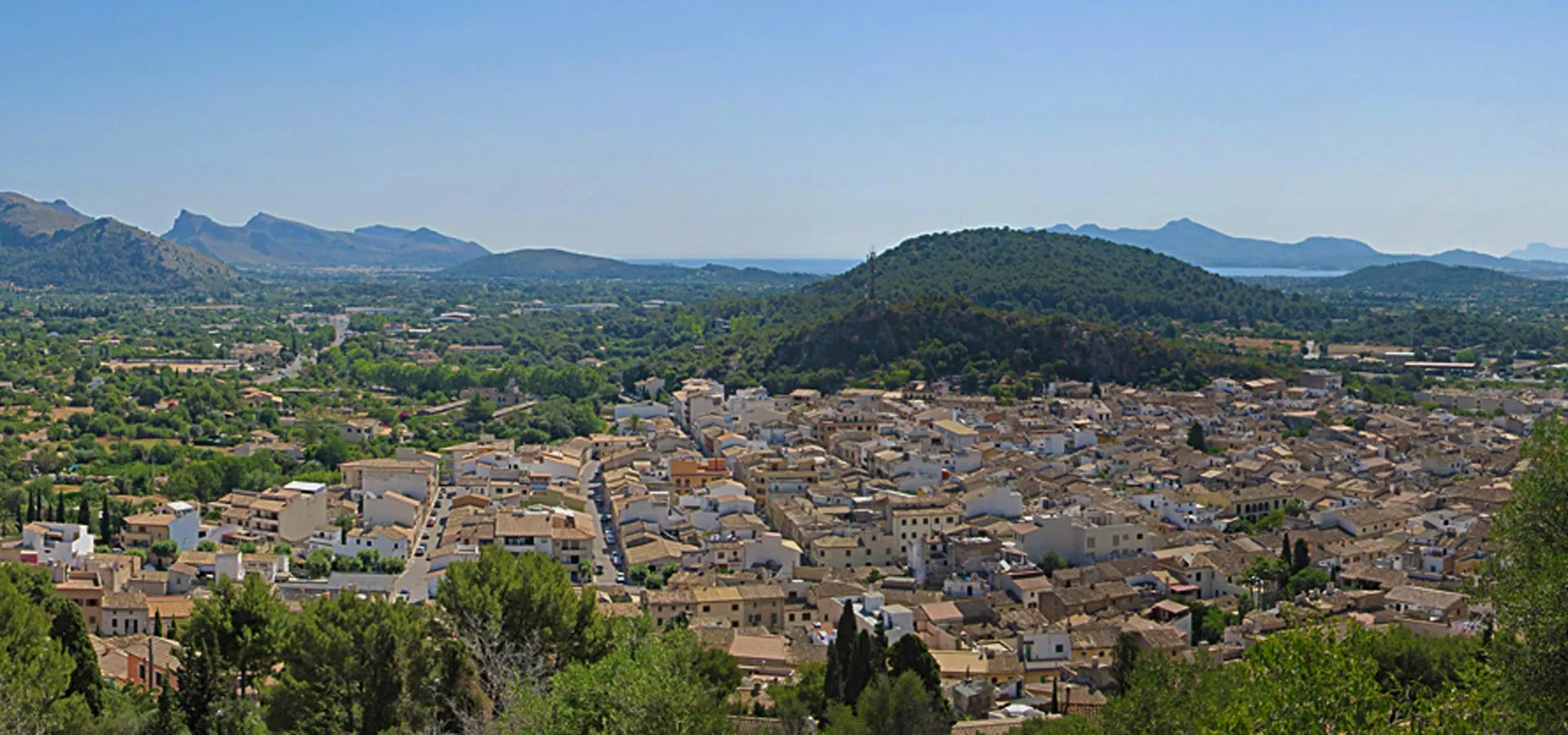
Characterised by honey-coloured sandstone façades, narrow medieval lanes and the famous 365 cypress-lined steps of El Calvari, Pollença town appeals to buyers seeking architectural heritage and year-round village life. Properties range from restored townhouses with internal courtyards to traditional village properties. According to Idealista report figures from September 2026, asking prices in Pollença town average €4,808/m².
Port de Pollença
Situated six kilometres coastward, Port de Pollença is home to approximately 7,600 residents (Ajuntament de Pollença, 2025). Centred around its sheltered bay, yacht club (Reial Club Nàutic) and the iconic Pine Walk (Passeig Voramar), the port features waterfront apartments, late 19th-century villas and contemporary homes. Prime coastal demand drives asking values here to an average of €5,822/m² (Idealista, September 2026).
Cala de Sant Vicenç and Formentor
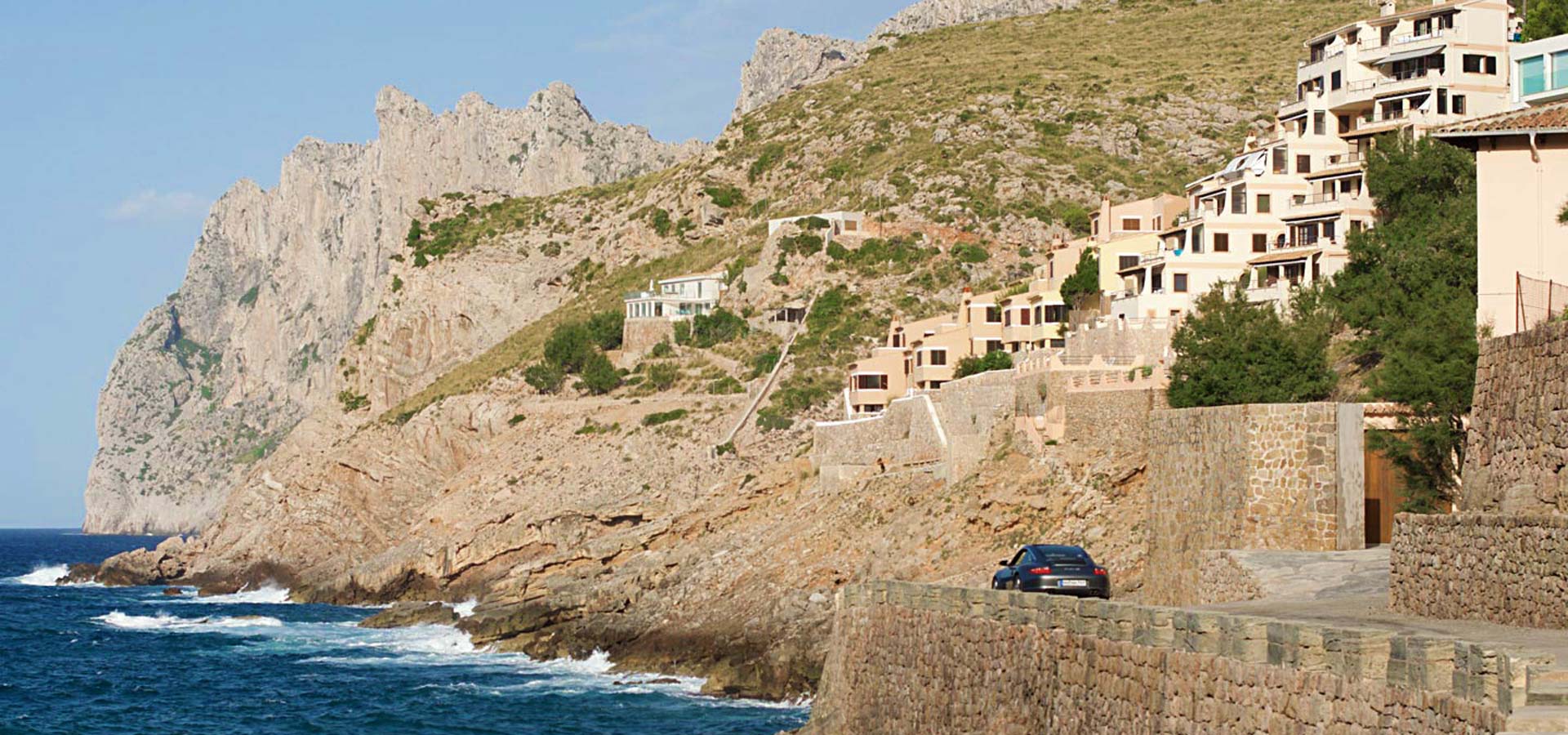
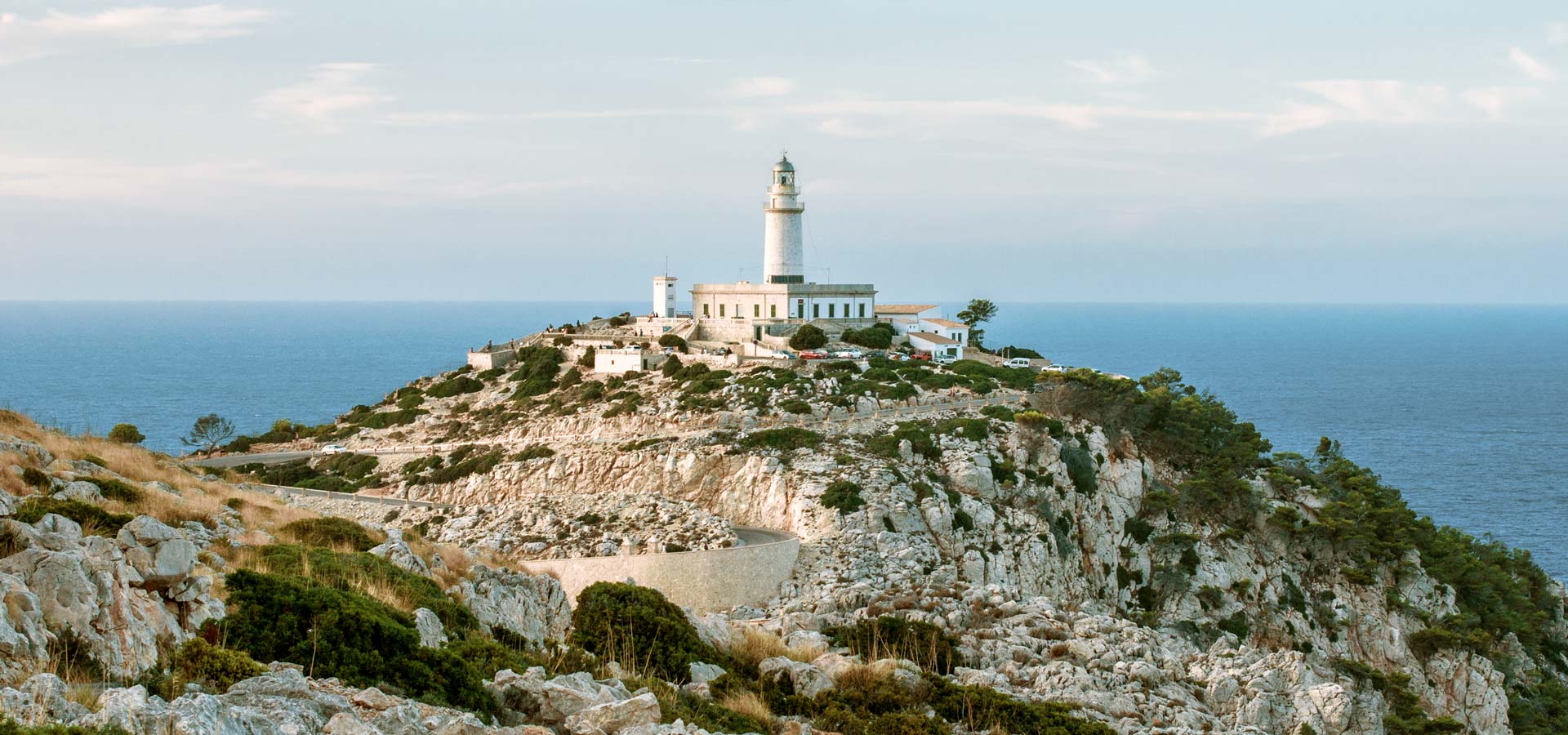
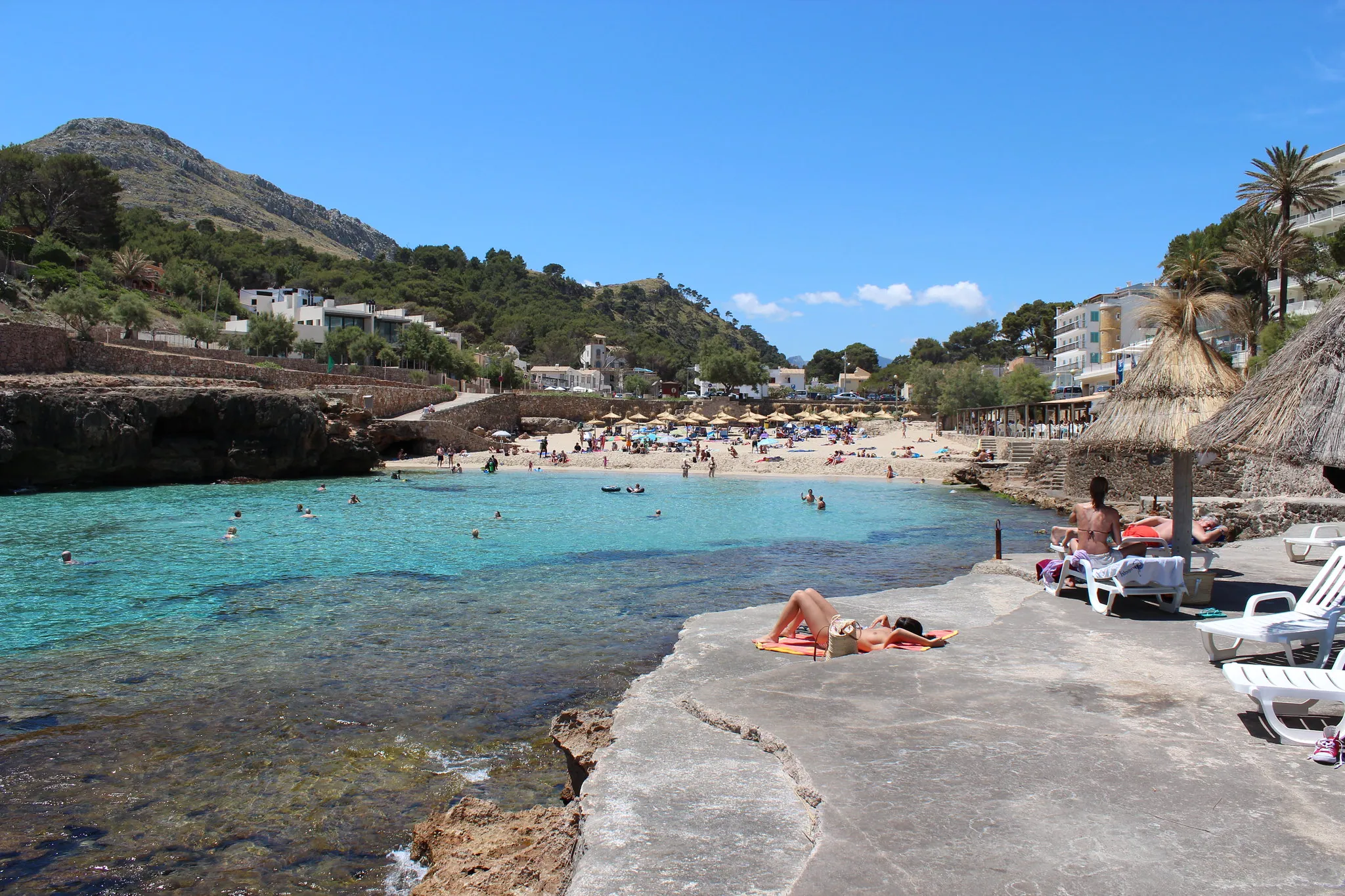
On the northern coastline, Cala de Sant Vicenç features dramatic cliffside coves beneath the Cavall Bernat mountain ridge, offering seaside apartments and detached villas with sea views. Further east lies the Formentor peninsula, an ultra-prime residential enclave where exclusive estates enjoy strict environmental planning protections.
Inland Estates and Valleys
Surrounding the historic core, residential urbanisations such as La Font, El Vilar and Can Tirana feature detached hillside villas with swimming pools and panoramic views across the bay. In the fertile Vall de Colonya and Vall d’en Marc, secluded rustic fincas set amidst olive and almond groves offer maximum privacy.
How do connectivity, schools and daily amenities work year-round?
Living in Pollença provides convenient access to essential infrastructure and regional services:
- Road connections: The Ma-13 motorway connects Pollença directly to Palma city centre and Palma de Mallorca Airport (PMI) in approximately 40 to 45 minutes.
- Public transport: Public bus service Line 301 operated by Transports de les Illes Balears links Port de Pollença and Pollença town directly to Palma’s Estació Intermodal. For airport journeys, passengers connect at Sa Pobla (Ronda nord) or Inca Llevant onto the Aerotib Line A32 express coach, as detailed on the TIB Line 301 timetable.
- International education: Families residing in Pollença are served by MySchool (Mallorca International School), located just south of the municipal border in the Crestatx urbanisation (Sa Pobla). MySchool delivers the British national curriculum for pupils aged 3 to 18.
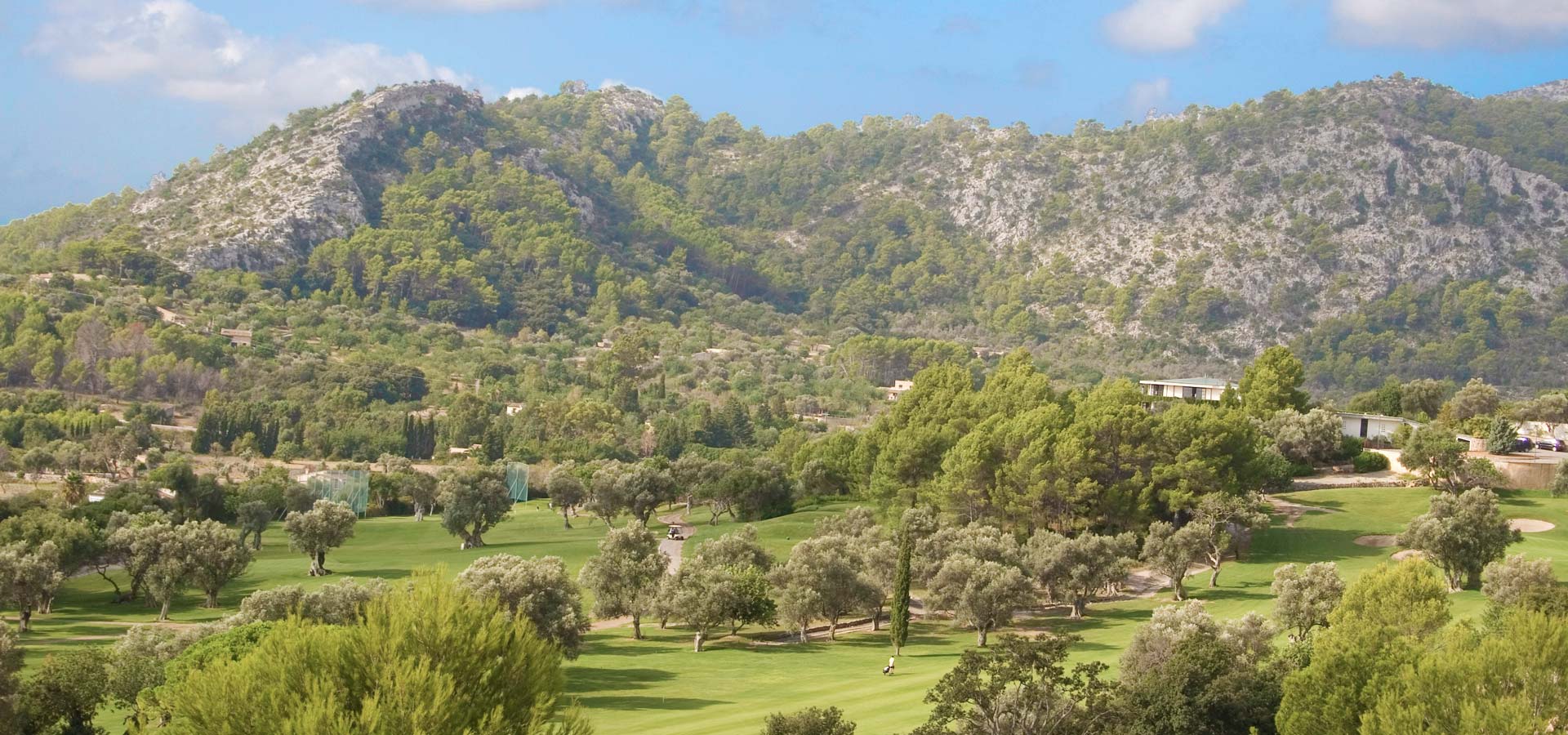
- Leisure and culture: Local life revolves around the weekly Sunday market in Plaça Major, golf at Pollensa Golf Club, water sports at the marina, and cycling routes extending towards Cap de Formentor and Coll de Femenia.
What taxes, tourist licence rules and visa laws apply when buying in Pollença?
Acquiring real estate in Mallorca requires a clear understanding of current tax framework regulations and administrative requirements in the Balearic Islands.
Property Transfer Tax (ITP)
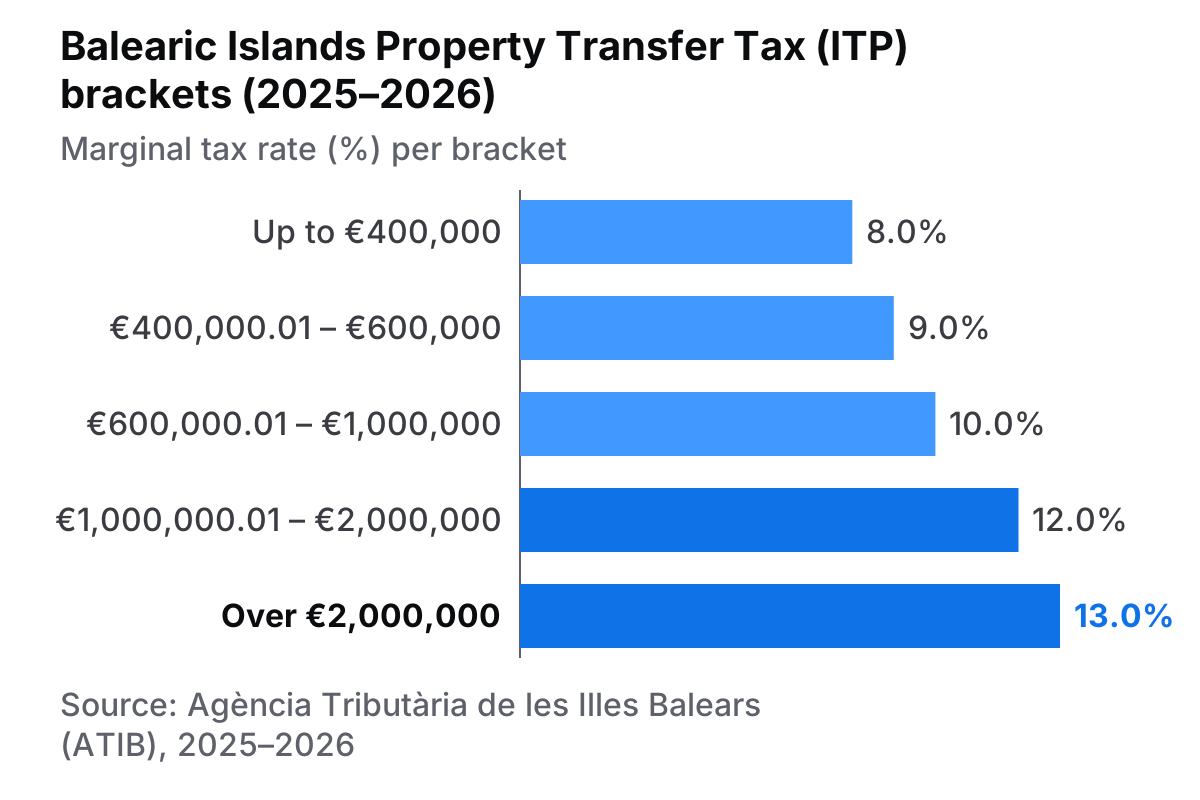
When purchasing resale residential property in Pollença, buyers pay the regional Property Transfer Tax (Impuesto sobre Transmisiones Patrimoniales, ITP). According to the Agència Tributària de les Illes Balears (ATIB) ITP tax brackets, the progressive tax rate is applied in tiers based on property valuation:
- Up to €400,000: 8%
- €400,000.01 to €600,000: 9%
- €600,000.01 to €1,000,000: 10%
- €1,000,000.01 to €2,000,000: 12%
- Portion exceeding €2,000,000: 13%
To ensure complete legal compliance during a purchase, buyers should familiarise themselves with the standard contract and title deed (escritura) process in Spain.
Wealth Tax Relief
Under Balearic Law 12/2023 (maintained through 2025–2026), the regional Wealth Tax (Impuesto sobre el Patrimonio) tax-free allowance was raised to €3,000,000 per individual taxpayer. Both tax residents and non-resident property owners electing Balearic regional rules benefit from this threshold before any tax liability applies.
Tourist Rental Licences (ETV Regulations)
Investors considering owning a rental property in Mallorca and Ibiza must comply with Balearic Decree-Law 4/2025. Key regulations enforced by the Consorci Borsa d’Allotjaments Turístics (CBAT) include:
- Apartments: New tourist licences (ETV) are prohibited for flats in multi-family residential buildings.
- Detached homes: New licences for single-family houses can only be acquired by purchasing de-registered bed spaces through public draws held by the CBAT (priced between €291.67 and €3,500 per bed space).
- Existing licences: Properties that already possess a valid, active ETV licence retain their operating rights, which transfer with the property title.
Abolition of the Golden Visa
Non-EU purchasers should note that Spain officially ended its investor residency programme. Enacted under Organic Law 1/2025 in the Boletín Oficial del Estado (BOE), Articles 63 to 67 of Law 14/2013 were repealed effective 3 April 2025. Purchasing real estate for €500,000 or more no longer grants residency rights. Non-EU buyers planning long-term stays in Mallorca typically use the Non-Lucrative Visa or Digital Nomad Visa routes.
Whether assessing historical price trends, verifying existing rental permissions, or sourcing off-market homes across northern Mallorca, real estate advisors and investors use tools like Property Sourcing and Valuation & Market Study to benchmark market values accurately.
To explore comprehensive real estate market data or query spatial metrics directly, property professionals can access the CASAFARI platform or consult our developer resources via the Area Insights API documentation.
Frequently asked questions
What are the property transfer taxes when buying in Pollensa, Mallorca?
Resale residential purchases in Pollença are subject to the Balearic Islands Property Transfer Tax (ITP), calculated on a progressive scale per bracket according to ATIB guidelines. The rates start at 8% for the first €400,000, rising to 9% (€400,000.01 to €600,000), 10% (€600,000.01 to €1,000,000), 12% (€1,000,000.01 to €2,000,000), and 13% on any portion exceeding €2,000,000. In addition, both resident and non-resident property owners benefit from a regional Wealth Tax exemption threshold of €3,000,000 per taxpayer.
Can you get a tourist rental licence (ETV) for a property in Pollensa?
Under Balearic Decree-Law 4/2025, new tourist rental licences (ETV) are strictly prohibited for apartments in multi-family buildings. For eligible detached or terraced houses, new licences require acquiring de-registered bed spaces through public draws managed by the Consorci Borsa d’Allotjaments Turístics (CBAT) at costs between €291.67 and €3,500 per space. Consequently, investors targeting immediate holiday rental income typically purchase properties that already hold a valid, transferable ETV licence.
Does buying property in Mallorca still qualify for the Spanish Golden Visa?
No, purchasing property in Mallorca no longer qualifies for a Golden Visa. Spain officially abolished the real estate investor residency scheme under Organic Law 1/2025 of 2 January (BOE-A-2025-76), which came into full effect on 3 April 2025. Non-EU citizens wishing to reside in Pollença for more than 90 days per 180-day period must apply for alternative immigration routes, such as the Non-Lucrative Visa or the Digital Nomad Visa.
Which international schools and transport links serve Pollensa?
Pollença is served by MySchool (Mallorca International School), located nearby in the Crestatx urbanisation of Sa Pobla, which teaches the British national curriculum for students aged 3 to 18. By road, Pollença connects to Palma and its international airport in 40 to 45 minutes via the Ma-13 motorway. Public bus Line 301 runs directly between Pollença and Palma’s Estació Intermodal, with airport connections available by changing at Sa Pobla or Inca Llevant onto the Aerotib Line A32.