
EL COLL PROPERTY GUIDE
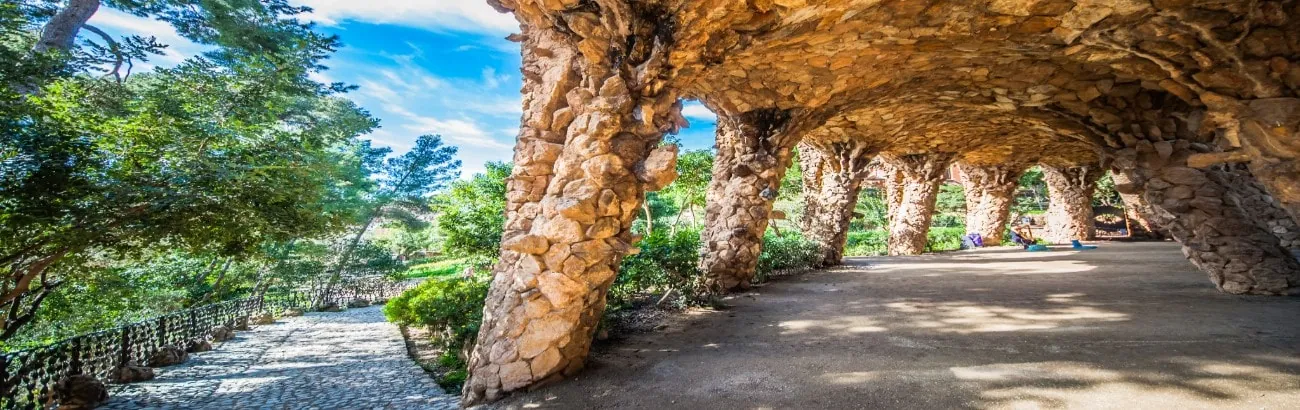
A peaceful residential area surrounded by a greenery of wonderful parks
El Coll is the northernmost, elevated neighbourhood of Barcelona’s Gràcia district, where average asking prices for apartments stood at €3,910/m² in Q3 2026 (+8.2% year on year) and asking rents averaged €21.3/m²/month (-9.7% year on year) according to CASAFARI Area Insights, making it a quieter, higher-yield entry point into Gràcia.
Where is El Coll and how is it connected to central Barcelona?
Perched roughly 150 metres above sea level in the hills between Turó del Carmel and Tibidabo, El Coll straddles the Horta-Guinardó border and sits directly above Vila de Gràcia, Vallcarca i els Penitents, and La Salut. For a broader overview of the surroundings, you can explore the Gràcia district guide. Historically, the steep topography isolated this valley until the Vallcarca viaduct bridged the gap in 1923.
Today, public transport connects residents efficiently despite the slopes. Barcelona Metro Line 5 (L5) serves the neighbourhood at El Coll | La Teixonera station, one of the deepest on the network, taking commuters straight into Diagonal and Sants. This is complemented by TMB daytime bus routes V17, V19, 19, 22, 24, 87, 92, 119, and 129, alongside night buses N4 and N5.
What is everyday life like in El Coll?
As of January 2026, the Ajuntament de Barcelona municipal register records a compact population of 8,056 residents in El Coll, of whom 23.3% hold foreign nationality. The neighbourhood maintains a peaceful, village-like atmosphere distinct from the bustling tourist hubs below, supported by a strict local cap that limits the area to just 20 registered tourist apartments.
The urban fabric features notable landmarks, including the 11th-century Romanesque Església de la Mare de Déu del Coll, which was rebuilt following a 1948 fire, and Josep Maria Jujol’s unfinished 1909 modernist Finca Sansalvador on Passeig de la Mare de Déu del Coll 79. Residents also enjoy the green expanse of Parc de la Creueta del Coll, a former granite quarry converted into a public park and summer bathing lake in 1987 by architects Martorell, Bohigas and Mackay, featuring Eduardo Chillida’s suspended sculpture ‘Elogi de l’Aigua’ and Ellsworth Kelly’s ‘Tòtem’.
What types of housing exist in El Coll and who is buying?
The neighbourhood began as a scattered collection of rural farmhouses and summer residences for affluent Barcelona families during the early 20th century. Mid-century expansion brought dense brick apartment blocks during the migration waves of the 1960s and 1970s.
Current housing stock comprises compact two-to-three-bedroom walk-up flats—frequently undergoing lift retrofits and energy efficiency upgrades—alongside terraced hillside houses, duplex penthouses with wide terraces overlooking the Mediterranean or the Collserola range, and occasional restored historic cottages. Domestic buyers priced out of Vila de Gràcia and the Eixample, alongside international professionals looking for terrace space and light, make up the core of the purchasing demographic.
How are property asking prices and rents performing in El Coll in 2026?
According to CASAFARI Area Insights (location id 10579, queried 25 October 2026), the average asking price for apartments for sale in El Coll reached €3,910/m² in Q3 2026, representing an 8.2% increase year on year from €3,612/m² in Q3 2025. These figures reflect asking prices from active listings, with outliers excluded, rather than closing prices.
Conversely, asking rents for apartments in El Coll stood at €21.3/m² per month in Q3 2026, marking a 9.7% decline year on year from €23.6/m² in Q3 2025 over the same period. While capital values climbed as buyers sought relative value within Gràcia, rental asking prices contracted due to municipal rent controls and tightening regulations on seasonal lets.
Which taxes, rent caps and licensing rules affect buyers in El Coll?
Property purchases in Catalonia are subject to progressive Property Transfer Tax (ITP) brackets under Decree-Law 5/2025 and Law 11/2026. Resale residential homes are taxed at 10% up to €600,000, 11% between €600,000.01 and €900,000, 12% up to €1.5 million, and 13% for amounts exceeding €1.5 million according to the Catalonia’s progressive ITP transfer tax brackets. A reduced rate of 5% applies to eligible buyers under 35, while large property holders owning five or more homes in stressed zones face a 20% levy alongside a general 1.5% Stamp Duty (AJD).
Rent regulation remains stringent since Barcelona is designated a stressed residential zone. New leases are bound by previous contract caps or the SERPAVI index. Furthermore, Catalan Law 11/2025 (effective 1 January 2026) mandates that seasonal rentals for work or study must prove their temporary nature and comply with identical rent limits, as outlined by the Agència de l’Habitatge de Catalunya rental price cap rules.
Tourist licences remain frozen under the PEUAT plan, and the Consorci de l’Habitatge de Barcelona on the 2028 tourist licence phase-out confirms that all existing tourist apartments in Barcelona will expire without renewal in November 2028. Non-EU investors should also note the official repeal of Spain’s Golden Visa in April 2025 via Organic Law 1/2025.
How real estate professionals analyse and source property in El Coll with CASAFARI
Navigating a hillside micro-market where topography creates distinct pricing variations requires granular market data. Estate agents, investors, and valuers rely on CASAFARI Area Insights to monitor quarterly asking-price trends and rental shifts at neighbourhood level.
To uncover off-market opportunities, price drops, and For-Sale-By-Owner listings without portal duplication, professionals use CASAFARI Property Sourcing. For accurate comparative market analyses that account for building conditions and historic sales, experts utilize the property valuation and market study tool alongside insights on combining asking prices with transactional closing data. For broader national context on legal requirements, consult our complete guide to buying property in Spain. To begin analysing local market data directly, you can sign in to the CASAFARI platform to explore El Coll market data.
Frequently asked questions
Is El Coll well connected to central Barcelona by public transport?
Yes. El Coll is served by Barcelona Metro Line 5 (L5) at El Coll | La Teixonera station, providing direct links to Diagonal, Sants Estació and Sagrada Família. Above ground, TMB operates multiple daytime bus routes alongside night services N4 and N5, supplemented by local municipal escalators and public lifts navigating the steep terrain.
Can I buy an apartment in El Coll for short-term holiday rentals or seasonal lets?
No new tourist apartment licences are issued in El Coll under the PEUAT zoning plan, and the 20 existing licences in the neighbourhood will expire permanently in November 2028 under Catalan Decree-Law 3/2023. Additionally, seasonal rentals for work or study are bound by the same strict rent caps as permanent housing under Catalan Law 11/2025.
What property transfer tax (ITP) applies when buying a resale home in El Coll in 2026?
Resale residential purchases in Catalonia are subject to a progressive ITP scale ranging from 10% on the first €600,000 up to 13% for portions exceeding €1.5 million. Eligible buyers aged 35 or under qualify for a reduced 5% rate for primary residences, whereas large property holders with five or more homes in stressed zones face an increased rate of 20%.
Does buying property in El Coll qualify non-EU citizens for a Spanish Golden Visa?
No. Spain permanently repealed the real estate Golden Visa scheme on 3 April 2025 through Organic Law 1/2025. Non-EU nationals wishing to establish residency in Spain for longer than 90 days must pursue alternative pathways such as the Non-Lucrative Visa or the Digital Nomad Visa.
What characterises the lifestyle and community of El Coll?
El Coll offers a tranquil, village-like atmosphere that stands apart from the bustling tourist centres in central Barcelona. As of January 2026, the neighbourhood is home to 8,056 residents, with a diverse demographic where 23.3% of the population are foreign nationals, all enjoying a quiet, elevated setting surrounded by greenery.
What should I expect when purchasing housing in El Coll?
The current housing stock features a mix of mid-century brick apartment blocks, terraced hillside homes and restored cottages. Many properties are compact, requiring potential buyers to budget for common local improvements such as lift retrofits or energy efficiency upgrades to bring these older, characterful buildings up to modern living standards.