Gràcia is Barcelona’s most distinctive residential district, offering village-like pedestrian squares, independent artisan culture, and striking Modernisme architecture just minutes from the city centre. According to CASAFARI Area Insights, average asking prices for apartments for sale in Gràcia reached €5,799/m² in Q3 2026 (up 4.7% year-on-year from €5,539/m² in Q3 2025), while average asking rents stood at €30.9/m² per month. Comprising five diverse neighbourhoods, Gràcia attracts families and international professionals navigating a strictly regulated Catalan housing market.
Where Gràcia sits in Barcelona and how it connects to the city
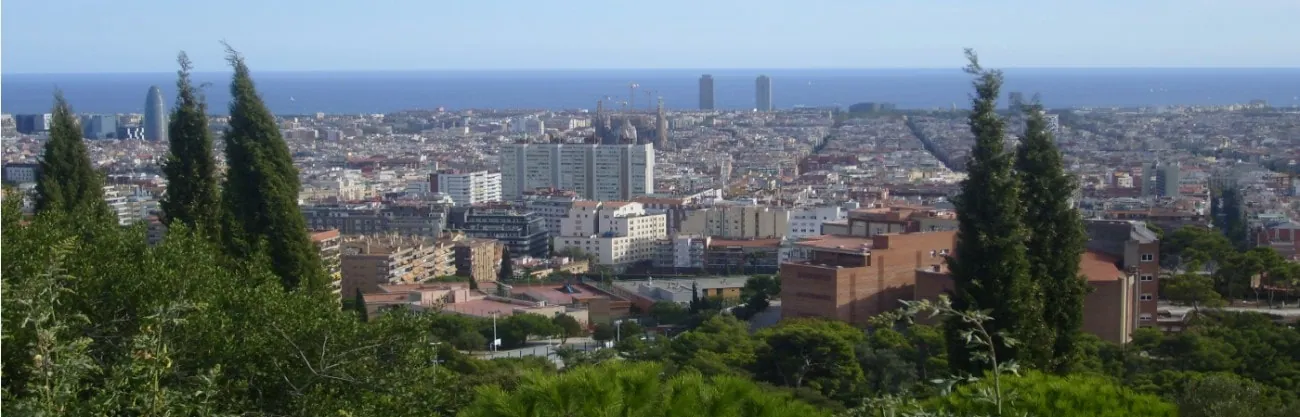
Covering a total area of 4.19 km² with approximately 122,000 residents, Gràcia occupies a unique geographic position immediately north of the Barcelona property market. In contrast to the rigid grid of the Eixample district which borders Gràcia to the south along Carrer de Còrsega, Carrer del Rosselló, Avinguda Diagonal, and Passeig de Sant Joan, Gràcia transitions from a flat, walkable lower grid into steep hillside terrain rising towards Collserola and Park Güell to the north and east. To the west, the district shares boundaries with Sarrià-Sant Gervasi along Via Augusta and Plaça de Lesseps.
Transport connectivity is robust, anchored by Metro lines L3 (Diagonal, Fontana, Lesseps, Vallcarca, Penitents), L4 (Joanic, Verdaguer), and L5 (Diagonal, Verdaguer, El Coll | La Teixonera), alongside FGC commuter lines (S1, S2, L6, L7) at Gràcia station. Furthermore, autumn 2026 marks the commencement of tunnel boring for the 4 km FGC L8 extension, which will link Plaça Espanya directly to Gràcia with new stops at Hospital Clínic and Francesc Macià, significantly enhancing cross-city transit.
Daily life, architecture and housing stock across Gràcia’s neighbourhoods
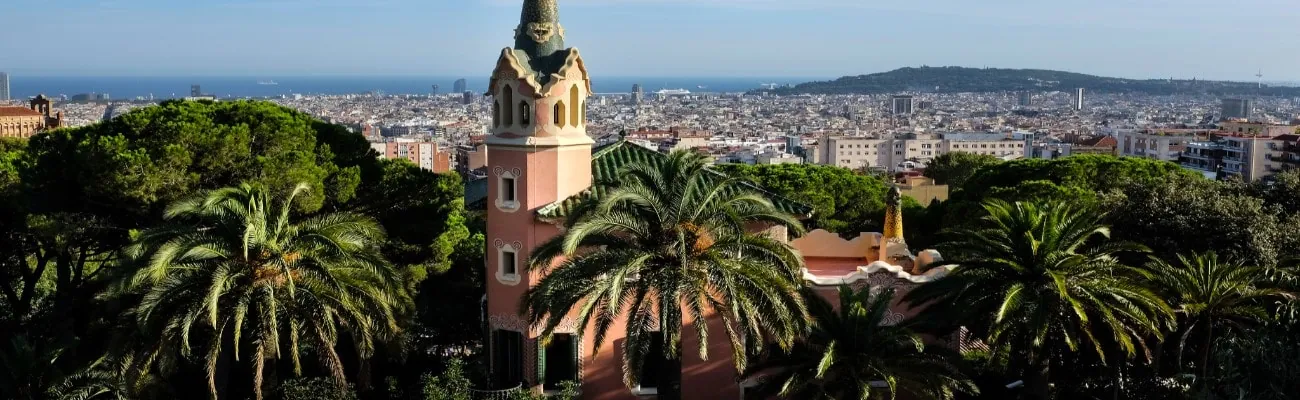
Gràcia maintains the intimate atmosphere of an independent Catalan municipality that was annexed to Barcelona only in 1897. Life centres around vibrant pedestrian squares such as Plaça de la Vila de Gràcia—with its iconic clock tower and modernist district headquarters—alongside Plaça del Sol, Plaça de la Virreina, and Plaça del Diamant. Beyond its famous Festa Major and Antoni Gaudí’s UNESCO-listed Casa Vicens, the district is officially divided into five distinct administrative barrios supporting approximately 121,500 to 123,000 residents according to municipal figures from the Barcelona City Council municipal register statistics (2025 / June 2026).
Buyers exploring the district will notice stark architectural contrasts across the sub-markets:
- Vila de Gràcia: The historic commercial and cultural heart (50,800 residents, 1.32 km²) featuring narrow streets, finques règies with hydraulic mosaic tiles, and Catalan vaulted ceilings (volta catalana), where older multi-storey walk-ups frequently lack lifts.
- Camp d’en Grassot and Gracia Nova: Forming a single administrative barri (34,438 residents, 0.65 km²), this eastern sector offers wider, Eixample-style grid streets, modern lift-serviced apartment blocks, and family-sized properties.
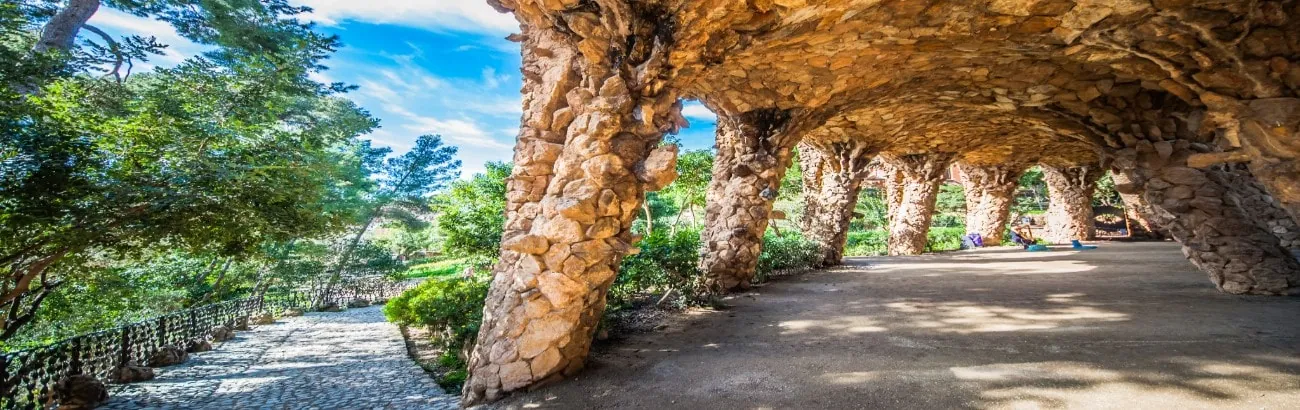
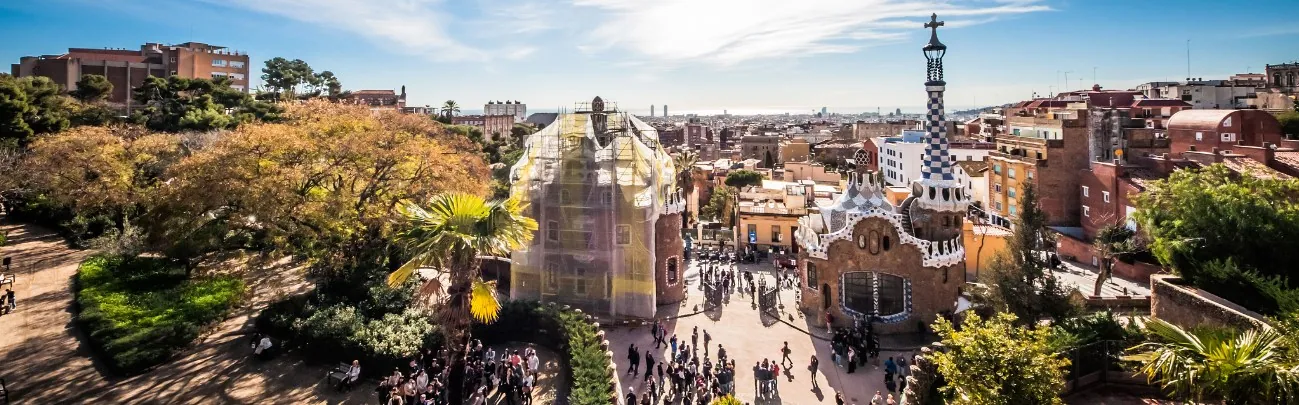
- La Salut: A greener hillside enclave (13,154 residents, 0.65 km²) surrounding Park Güell, known for tranquil residential streets and sweeping views.
- Vallcarca-Penitents: A northern valley neighbourhood (15,417 residents, 1.25 km²) undergoing gradual urban renewal, featuring low-rise blocks and terraced homes.
- El Coll: The highest-altitude residential pocket (7,303 residents, 0.35 km²), offering a village feel and accessible entry-level price points.
Gràcia property prices and rental market in 2026
Property search and investment analysis in Gràcia require distinguishing between asking expectations and registered transaction outcomes. According to CASAFARI Area Insights, apartments for sale in Gràcia recorded an average asking price of €5,799/m² in Q3 2026 (outliers excluded, queried 25 October 2026), marking a 4.7% increase year-on-year from €5,539/m² in Q3 2025. In the rental sector, average asking rents reached €30.9/m² per month in Q3 2026, representing a 2.3% annual rise from €30.2/m² in Q3 2025.
When comparing these listing metrics against official closing figures published by Barcelona Dades registered property transaction prices (Q2 2026), where the citywide average closing price for used homes stood at €5,158/m², registered resale closing prices in Gràcia typically hover between €4,800/m² and €5,500/m². Meanwhile, scarce new-build transactions close above €6,000/m². Local Catalan families trading up, European remote workers seeking walkable urban lifestyles, and value-add investors refurbishing unrenovated period flats continue to drive demand.
Taxes, rent caps and legal rules for buying in Gràcia in 2026
Property acquisition in Catalonia operates under a strict regulatory framework. Under Decret llei 5/2025, in force since June 2025 as detailed by the Generalitat de Catalunya tax report on Decret llei 5/2025, the progressive Property Transfer Tax (ITP) for resale homes is scaled at 10% up to €600,000; 11% between €600,000 and €900,000; 12% between €900,000 and €1,500,000; and 13% for values exceeding €1,500,000. A flat 20% ITP applies to large property holders (grans tenidors) and purchases of entire residential buildings, whereas buyers aged 35 or under benefit from a reduced 5% rate subject to income caps.
In the rental market, Barcelona is designated as a stressed residential market zone (ZMRT). Under Llei 11/2025, monitored by the Generalitat de Catalunya housing report on Llei 11/2025, both long-term leases and seasonal rentals (lloguer de temporada) for work, study, or medical care are capped by the statutory reference price index and require mandatory deposit registration with INCASÒL. Furthermore, Vila de Gràcia sits entirely within PEUAT Zone 1 where zero new tourist licences are permitted, and under Decret llei 3/2023, Barcelona City Council will extinguish all remaining tourist apartment licences when transitional periods expire in November 2028. Non-EU buyers should also note that Spain officially abolished its real estate Golden Visa scheme on 3 April 2025 via the Official State Gazette (BOE) text repealing the real estate Golden Visa.
Conveyancing due diligence requires verifying a valid Cèdula d’Habitabilitat obtained from the Agència de l’Habitatge de Catalunya habitability certificate registry, the Energy Performance Certificate (CEE), homeowners’ association debt clearances, and—for multi-family buildings over 45 years old—the Building Technical Inspection report (ITE) and Certificate of Aptitude. For further legal context on Spanish conveyancing, consult our guide on Spanish property purchase contracts and title deeds (escritura).
How real estate professionals and investors analyse Gràcia with CASAFARI
Because Gràcia’s property values vary dramatically between an unrenovated fourth-floor walk-up in Vila de Gràcia and a modern family apartment in Camp d’en Grassot, granular market intelligence is essential. Real estate professionals leverage CASAFARI Area Insights to track hyper-local asking price movements and historical rental yields across Barcelona. Agents and investors use Property Sourcing to filter deduplicated listings aggregated from over 30,000 sources, instantly identifying price reductions, private vendor listings, and historical conversion opportunities. To benchmark portfolio assets or assess acquisition targets against verified regional data, professionals rely on Valuation & Market Study.
To explore live Gràcia market analytics, sign in to the CASAFARI platform or examine technical documentation via the CASAFARI Area Insights API and MCP documentation.
Frequently asked questions
Which is the best neighbourhood in Gràcia to buy a property?
The ideal neighbourhood depends on your lifestyle priorities and budget. Vila de Gràcia is the premier choice for buyers seeking historic finques règies, vibrant pedestrian squares, and bohemian culture. Conversely, Camp d’en Grassot i Gràcia Nova appeals to families desiring wider streets, modern building amenities, and larger Eixample-style apartments, while the hillside districts of La Salut, Vallcarca i els Penitents, and El Coll offer quieter residential settings and more accessible entry-level price points.
What are the property transfer tax (ITP) rates when buying a resale home in Gràcia?
Under Catalonia’s Decret llei 5/2025, resale home purchases incur a progressive Property Transfer Tax (ITP) scaled from 10% for properties valued up to €600,000, 11% for the €600,000 to €900,000 bracket, 12% between €900,000 and €1,500,000, to 13% for amounts exceeding €1,500,000. Large property holders and corporate buyers face a flat 20% rate, whereas qualifying buyers aged 35 or under benefit from a reduced 5% rate.
Can I buy an apartment in Gràcia for short-term tourist or seasonal rentals?
No new tourist licences are issued in Gràcia as it lies within PEUAT Zone 1, and Barcelona is systematically phasing out all existing short-term tourist rental licences by November 2028. Furthermore, under Catalonia’s Llei 11/2025, seasonal rentals for work, study, or medical treatment as well as individual room rentals are strictly bound by mandatory reference price index caps.
What documents are required to buy an older apartment in Gràcia?
When purchasing a resale property in Gràcia before a notary, sellers must provide a valid Cèdula d’Habitabilitat (habitability certificate), an Energy Performance Certificate (CEE), and a certificate confirming zero debt with the homeowners’ association. For residential buildings older than 45 years, an official Building Technical Inspection report (ITE) and a valid Certificate of Aptitude issued by the regional housing agency are also legally mandatory.
What should I consider regarding the accessibility of older buildings in the Vila de Gràcia neighbourhood?
Vila de Gràcia is characterised by historic multi-storey walk-ups that often lack lifts, which may affect accessibility for some residents. When viewing properties in this area, it is important to confirm whether the building has a lift installed or if the structure permits the future addition of one, especially given the strict regulations covering these older, period-specific finques.
How do transit improvements like the upcoming FGC L8 extension impact property accessibility in Gràcia?
The ongoing development of the 4 km FGC L8 extension, which commenced in autumn 2026, will directly link Plaça Espanya to Gràcia. Once completed, the addition of new stops at Hospital Clínic and Francesc Macià will significantly enhance cross-city connectivity for those living or investing in the district.