SANTA MARIA MAIOR PROPERTY GUIDE
Grand avenues, magnificent plazas, and boutique shopping boulevards
Santa Maria Maior forms the historic, waterfront heart of Lisbon, encompassing 1.49 square kilometres of land area and 10,051 residents across Baixa, Rossio, Alfama, Sé, Castelo, and Mouraria. While new short-term rental (Alojamento Local) licences are frozen under a 66.9% saturation ratio as of April 2026, buyers benefit from full Urban Rehabilitation Area (ARU) tax reliefs, rejuvenated pedestrian quarters, and prime long-term investment potential.
Why Buy Property in Santa Maria Maior, Lisbon?
As the administrative and historical nucleus of Lisbon, the parish (freguesia) of Santa Maria Maior unites the capital’s most celebrated quarters. According to the Junta de Freguesia de Santa Maria Maior 2025 Social Diagnosis, the parish accommodates 10,051 residents across 1.49 square kilometres of emerged land (3.01 square kilometres including its Tagus riverfront domain).
Property seekers in Santa Maria Maior navigate two distinct architectural topologies:
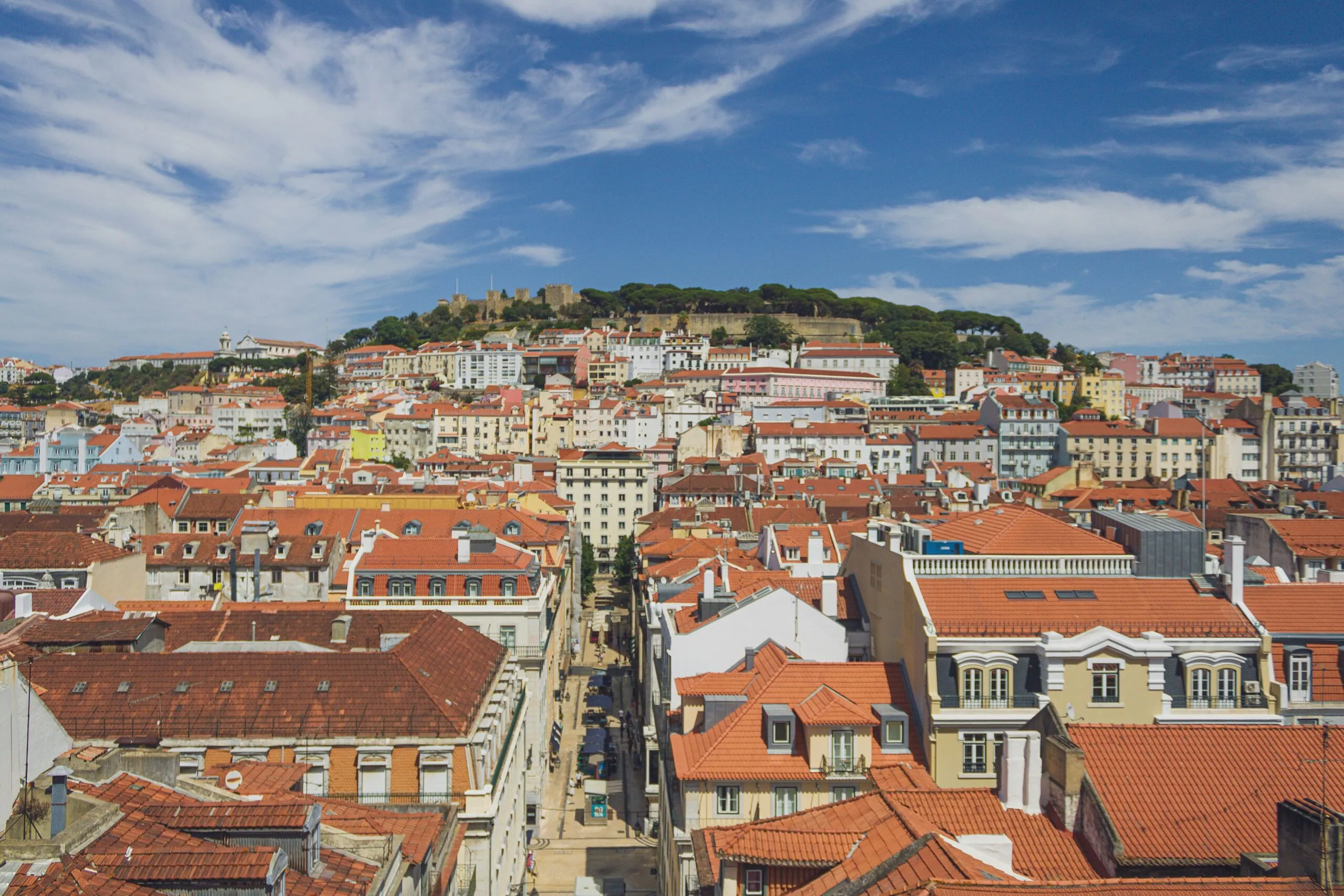
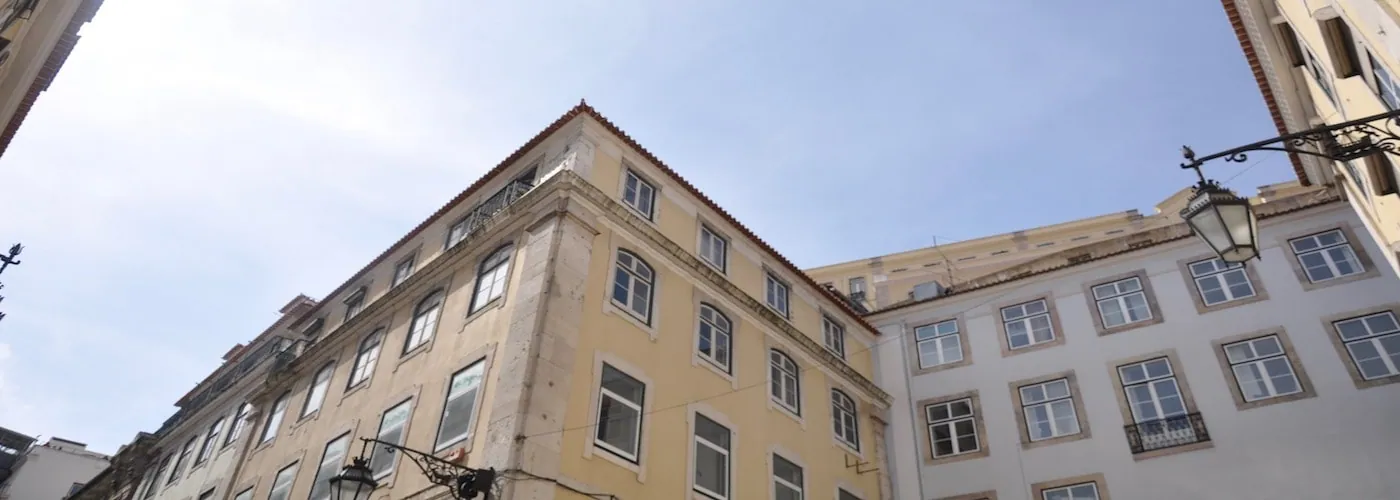
- The Pombaline Grid (Baixa and Rossio): Built following the 1755 earthquake, Baixa features 18th-century symmetrical blocks, wide avenues, and high-ceilinged apartments. Structures incorporate the gaiola pombalina—an early seismic-resistant timber frame. Many of these grand residential buildings have been fully restored, incorporating lift access, subterranean parking, and high-end finishes.
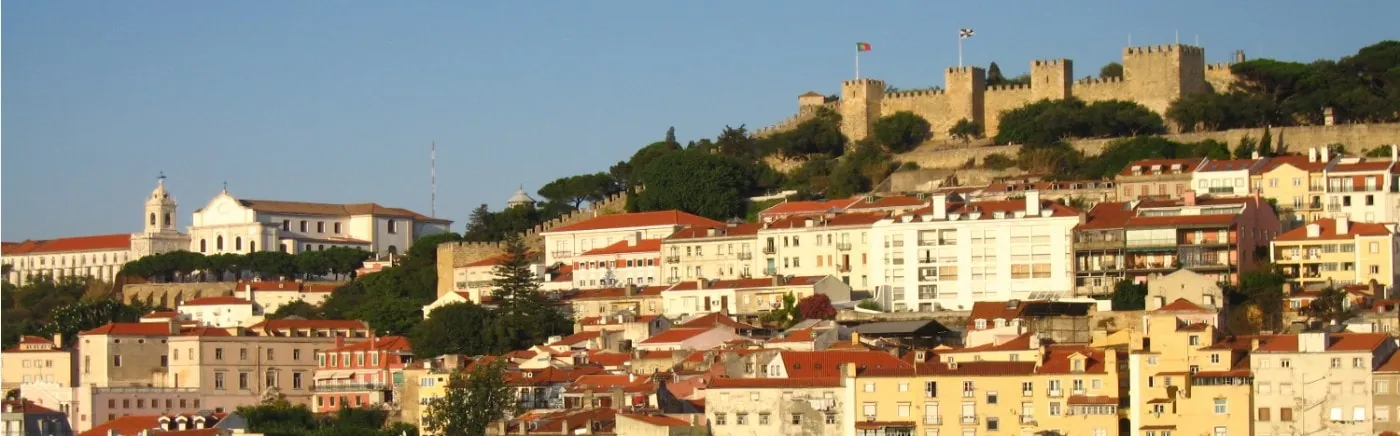
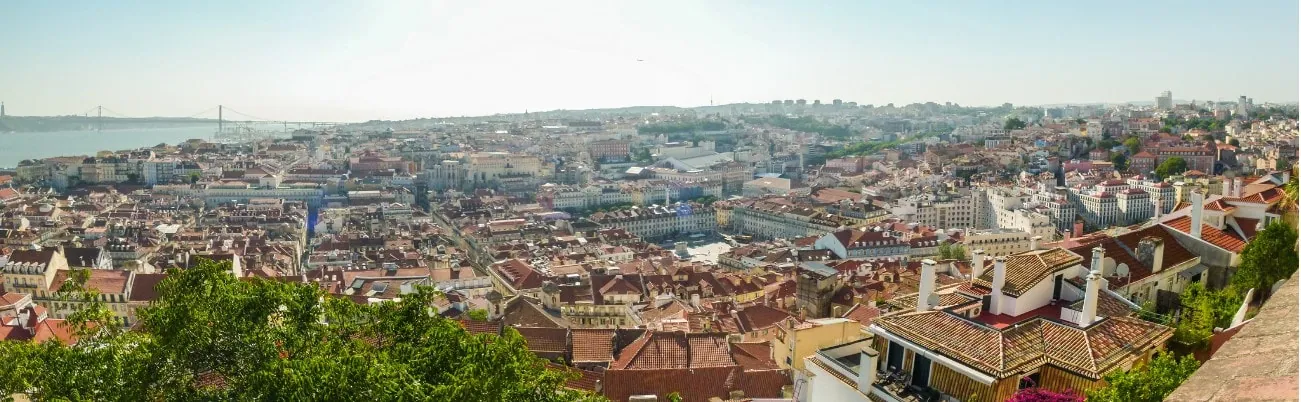
- The Medieval Hillside Quarters (Alfama, Castelo, Sé, and Mouraria): Cascading down from the Moorish castle to the Tagus riverfront, these quarters offer steep, labyrinthine lanes, cobblestone alleys, and traditional tiled facades (azulejos). Properties here range from compact studios to historic merchant townhouses, often featuring panoramic views across Lisbon’s rooftops and the river.
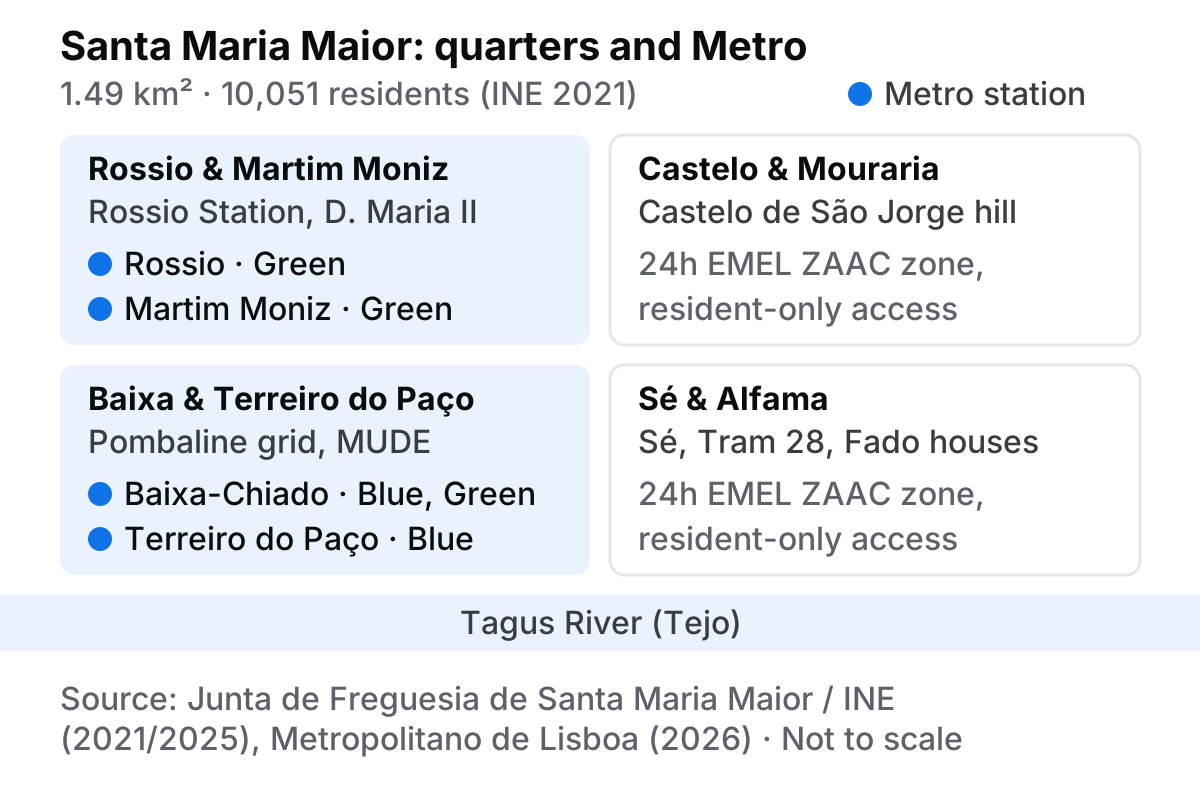
Situated between 7 km and 9.6 km south of Humberto Delgado Airport (a 20 to 27-minute journey by road or rail), Santa Maria Maior offers exceptional urban connectivity. It is served directly by four Lisbon Metro stations—Terreiro do Paço (Blue Line), Baixa-Chiado (Blue and Green Lines), Rossio (Green Line), and Martim Moniz (Green Line)—alongside mainline rail terminals at Rossio and adjacent Santa Apolónia, and the historic Tram 28 route.
What Tax Regimes and Rental Rules Apply to Buyers in 2026?
Navigating tax planning and property acquisition in central Lisbon requires an accurate understanding of recent legal updates.
Transition from NHR to IFICI (‘NHR 2.0’)
The original Non-Habitual Resident (NHR) tax regime was repealed on 1 January 2024 by Law no. 82/2023. International buyers moving to Portugal in 2026 look instead to its replacement, the Tax Incentive for Scientific Research and Innovation (IFICI), codified under Article 58-A of the Tax Benefits Statute (IFICI). IFICI offers a 20% flat Personal Income Tax (IRS) rate for 10 years on eligible high-value employment and self-employment income (Categories A and B). Crucially, purchasing real estate in Lisbon does not automatically qualify an individual for IFICI, and the regime does not grant foreign pension exemptions.
Urban Rehabilitation Area (ARU) Tax Incentives
The primary tax incentive for property investors in Santa Maria Maior stems from its status within Lisbon’s designated Urban Rehabilitation Area (ARU). Under Lisbon City Council urban rehabilitation tax exemptions, qualifying renovation projects benefit from:
- IMI Exemption: Complete exemption from annual municipal property tax (IMI) for 3 years following rehabilitation, renewable for an additional 5 years if used as a primary residence or long-term lease.
- IMT Exemptions: Full exemption from property transfer tax (IMT) on the initial purchase for rehabilitation (provided works commence within 3 years) and on the subsequent first sale post-rehabilitation when acquired for permanent residential housing.
- Reduced VAT Rate: Application of the reduced 6% VAT rate on urban rehabilitation construction contracts under Item 2.23 of List I of the VAT Code and Decree-Law no. 97/2026.
Alojamento Local (AL) Containment Zone
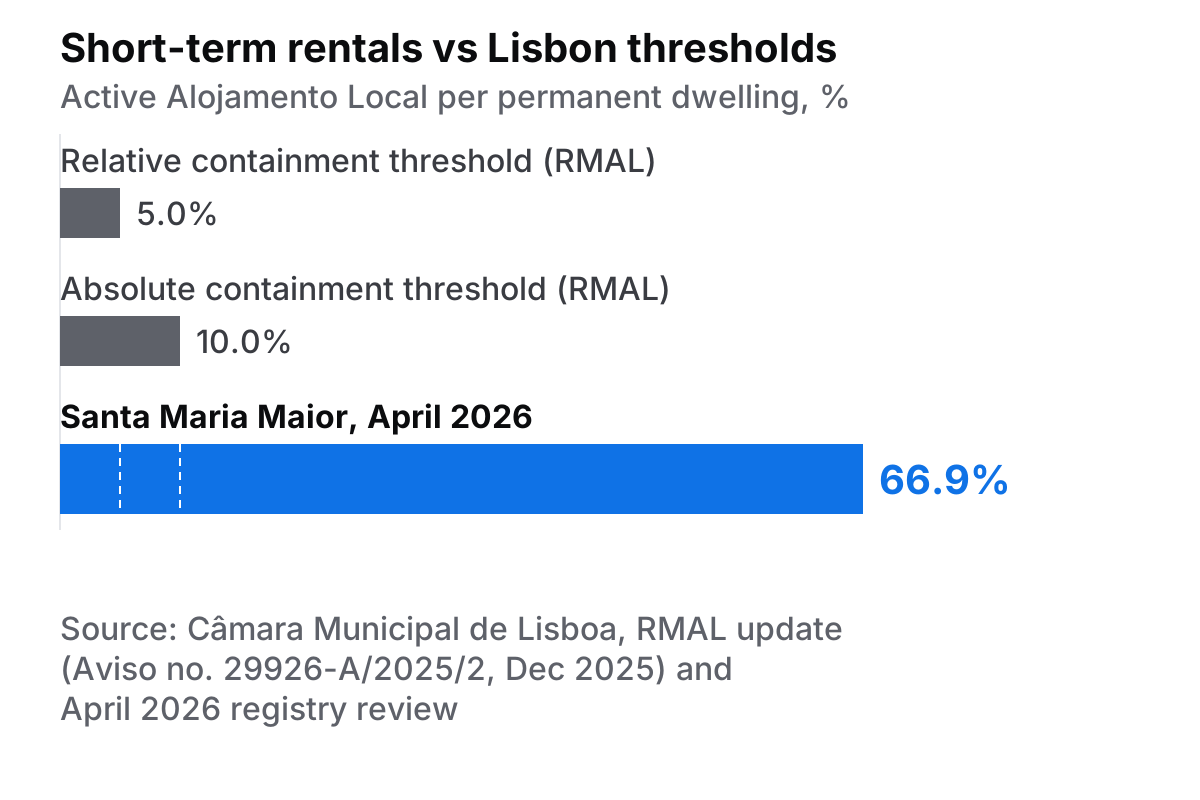
Under Lisbon’s updated Municipal Alojamento Local Regulation (Aviso no. 29926-A/2025/2) and subsequent municipal review in April 2026, Santa Maria Maior maintains a short-let containment ratio of 66.9%. Because this vastly exceeds the municipal 10% threshold for absolute containment, new short-term rental licences are strictly prohibited. Municipal exceptions are limited to total building rehabilitations of completely derelict structures that have had no active residential leases in the preceding 5 years.
Consequently, investors focused on income-generating assets in Santa Maria Maior target the long-term residential and corporate rental markets. To assess prevailing listing values and yield distribution across Baixa and Alfama, investors use CASAFARI Area Insights and the property valuation and market study tool. For broader guidance on transaction procedures, consult our complete guide to buying property in Portugal and review long-term rental trends in Lisbon.
Living in Santa Maria Maior: Dining, Design and Pedestrian Mobility
Life in Santa Maria Maior combines world-class cultural institutions with modern urban infrastructure.
Cultural landmarks in the parish have undergone major restoration. The MUDE – Museu do Design on Rua Augusta reopened in July 2024 following an eight-year renovation of its Pombaline block. On Rossio Square, the historic Queen Maria II National Theatre (Teatro Nacional D. Maria II) officially reopened its doors in September 2026 for its full performance season.
The fine dining scene along the border of Baixa and Chiado continues to evolve. The legendary Tavares Rico (founded in 1784) is undergoing comprehensive structural restoration by Plateform, targeting a 2027 reopening. Following the closure of Alma at the end of 2025, Chef Henrique Sá Pessoa launched his new flagship restaurant ‘Henrique Sá Pessoa’ in Lisbon in February 2026, earning two Michelin stars in the 2026 guide.
Urban mobility in Santa Maria Maior prioritises resident quietude. The parish falls within Lisbon’s Low Emission Zone (ZER) and features 24-hour bollard-controlled Restricted Vehicle Access Zones (ZAAC) in Alfama and Castelo, managed by EMEL. Through-traffic is strictly restricted, while residents holding an EMEL Resident Access Permit (Dístico de Acesso de Residente) enjoy full access. Furthermore, a municipal initiative enforced since April 2025 has banned tourist tuk-tuks from dozens of narrow residential streets across Alfama, Baixa, Castelo, and Mouraria, significantly reducing local noise and congestion.
Heritage, Fado and the Neighbourhood Calendar
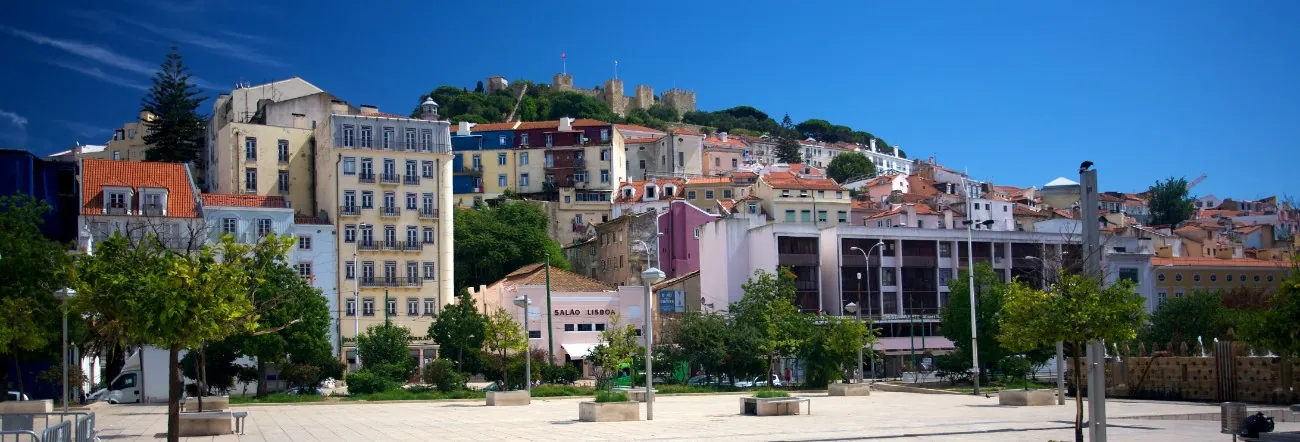
Santa Maria Maior is home to Lisbon’s most landmark historic monuments. Castelo de São Jorge crowns the parish hill, overlooking the 12th-century Sé Cathedral (Santa Maria Maior de Lisboa) and the Museum of Lisbon – Santo António. Opposite the cathedral, the Museum of the Aljube (Museu do Aljube – Resistência e Liberdade) documents 20th-century political resistance.
The neighbourhood calendar culminates every June during the Festas dos Santos Populares. Celebrating Santo António on 12–13 June, the festivities feature the Marchas Populares parade along nearby Avenida da Liberdade, religious processions through Alfama, and neighbourhood street parties (arraiais). Throughout the rest of the year, authentic Fado venues in Alfama and Mouraria preserve the capital’s musical heritage.
For real estate professionals, estate agents, and institutional investors evaluating acquisition opportunities in historic Lisbon, accessing reliable, real-time market data is critical. Using tools like CASAFARI Property Sourcing, buyers can track multi-agency listings and uncover renovation prospects. To explore full historical stock data, developer APIs via the Area Insights API documentation, or street-level comparables, sign in to the CASAFARI platform.
Frequently asked questions
Can I get an Alojamento Local (short-term rental) licence in Santa Maria Maior?
No, new Alojamento Local (AL) registrations are prohibited in Santa Maria Maior under Lisbon’s Municipal AL Regulation (Aviso no. 29926-A/2025/2). Following the municipal cancellation of inactive licences across Lisbon, Santa Maria Maior recorded a 66.9% AL-to-housing ratio in April 2026—far exceeding the 10% threshold for an absolute containment zone. Exceptions are limited to rare municipal authorisations for full rehabilitations of derelict buildings vacant of residential leases for at least five years.
Is the Non-Habitual Resident (NHR) tax regime still available when buying property in Lisbon?
Portugal repealed the original NHR tax regime on 1 January 2024 under Law no. 82/2023. In 2026, qualifying new tax residents may access the replacement IFICI regime (Tax Incentive for Scientific Research and Innovation, Article 58-A of the Tax Benefits Statute), which grants a 20% flat IRS rate for 10 years on eligible high-value scientific, technical, or executive income. However, purchasing real estate in Lisbon does not automatically confer tax residency or IFICI eligibility, and foreign pensions no longer receive flat-rate tax exemptions.
What tax incentives apply to renovating a historic property in Santa Maria Maior?
Because Santa Maria Maior lies within Lisbon’s Urban Rehabilitation Area (ARU), certified property renovations qualify for significant tax reliefs. Buyers can obtain a 3-year municipal property tax (IMI) exemption upon completion—extendable by 5 years for permanent residences or long-term rentals—as well as property transfer tax (IMT) exemptions on acquisition and first resale. In addition, qualifying renovation works benefit from a reduced 6% VAT rate under Decree-Law no. 97/2026.
Can residents drive and park in Alfama, Castelo and Baixa?
Yes, registered residents can drive and park in these historic quarters. Santa Maria Maior is governed by Lisbon’s Low Emission Zone (ZER) and 24-hour automated bollard zones (ZAAC) managed by EMEL Restricted Vehicle Access Zones in historic neighbourhoods. While general through-traffic and tourist tuk-tuks are restricted, residents with an EMEL Resident Access Permit (Dístico de Acesso de Residente) retain full 24-hour vehicle access, and temporary 30-minute Visitor Cards are available for loading and drop-offs.