
PORT SOLLER PROPERTY GUIDE
Picturesque harbour resort right at the foot of the Serra de Tramuntana
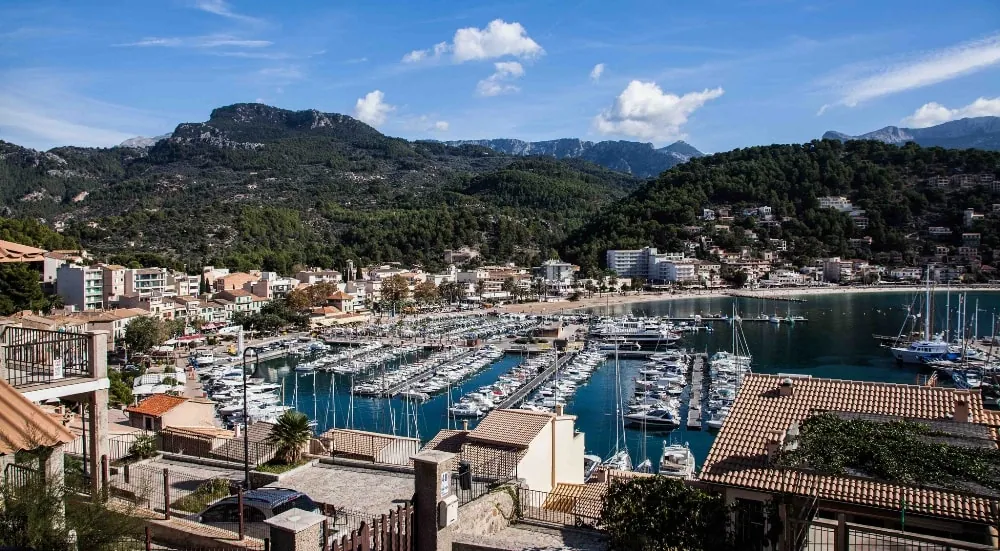
Port de Sóller is the only sheltered natural harbour and sandy bay on Mallorca’s UNESCO-protected Serra de Tramuntana coast, located 28.4 km from Palma via the toll-free Ma-11 tunnel. According to the Instituto Nacional de Estadística (INE), the harbour village maintains a permanent population of 2,485 residents. Combining 465 moorings, historic architecture, strict Balearic planning constraints, and a 30-minute drive to Palma, Port de Sóller offers a highly sought-after, low-density Mediterranean lifestyle.
Why do buyers choose property in Port de Sóller?
The appeal of Port de Sóller lies in its unique geography. Framed by the dramatic peaks of the Serra de Tramuntana, it provides a protected maritime sanctuary along an otherwise precipitous cliffline. Unlike purpose-built resort destinations, the harbour retains authentic Mediterranean roots. Official census figures from the Instituto Nacional de Estadística (INE) record 2,485 permanent residents in El Port out of 13,882 across the wider municipality of Sóller, ensuring an active local community throughout all four seasons.
Residential property around the bay falls into three distinct categories. In the historic Santa Caterina quarter above the northern side of the bay, renovated former fishermen’s cottages offer cobbled pedestrian charm. Along the seafront promenades of Es Través and Platja d’en Repic, mid-century and modern apartment complexes provide immediate beach access and harbour views. Meanwhile, the surrounding hillsides feature detached villas set on generous plots with panoramic vistas over the bay and open sea.
Accessibility remains excellent despite the mountain backdrop. Travelling by car along the Ma-11 road, Palma city centre is 28.4 km away (a drive of roughly 30 minutes), while Palma de Mallorca Airport can be reached in 35 to 45 minutes across a distance of 35 to 38 km. The opening of the Ma-11 Sóller tunnel as a toll-free route in 2017 permanently simplified year-round commuting to and from the capital.
What is everyday life like around the bay, beaches and marina?
Daily activity in Port de Sóller revolves around its crescent-shaped natural harbour and two urban beaches, documented by Illes Balears Travel. To the south sits Platja d’en Repic, measuring 250 metres long by 20 metres wide, featuring a paved pedestrian promenade lined with dining venues such as Restaurante Es Passeig. Stretching 800 metres along the inner bay, Platja del Port de Sóller (Es Través) runs parallel to the vintage tramline and hosts long-standing establishments like Restaurant Randemar. Both beaches offer shallow, calm waters, shower facilities, sunbed rentals, and gentle accessibility walkways.
Public transport connecting the port to the rest of the island is both practical and charming. According to the published schedule from Ferrocarril de Sóller, the historic wooden tram operates continuously between 08:00 and 21:05, linking the beach promenade directly to Sóller town centre in 15 minutes for €10 one-way. From Sóller station, seven daily train departures run to Palma (€23 one-way, or €40 for a combined train and tram return ticket).
For day-to-day amenities, the port offers boutique grocery shops, bakeries, and essential services along Passeig des Traves and Calle Marina. For larger supermarket trips, banking, and the traditional Saturday open-air market, residents take a brief tram or bus ride inland to the main plaza of Sóller town.
Moorings, coastal sailing and Serra de Tramuntana trails
For boat owners and maritime enthusiasts, Port de Sóller serves as the principal harbour along Mallorca’s northwest shore. Figures from Ports de les Illes Balears (PortsIB) confirm that the public harbour authority manages 465 moorings (including 164 to 250 berths reserved for transit vessels) accommodating craft up to 15.00 metres in length, 4.46 metres beam, and draughts of 3 to 5 metres. Immediately adjacent, the private Marina Tramontana concession caters to larger motor yachts and sailing vessels up to 25 to 40 metres.
The harbour acts as a launchpad for sea excursions to iconic coastal landmarks, including Sa Calobra and the Torrent de Pareis to the north, or southwards past Cala Deià towards Sant Elm and Sa Dragonera. On land, extensive hiking networks start right at the water’s edge. A scenic walk of under an hour leads up to the Cap Gros lighthouse, delivering sweeping vistas over the harbour mouth, while well-signposted trails lead inland through citrus groves to Fornalutx, Biniaraix, and Deià.
The annual cultural calendar reflects the rich history of the valley. The island-famous Sa Fira and Es Firó festivals take place in May, culminating in the dramatic mock battle of Es Firó held on the second Monday of the month (11 May 2026). On 15 July, the port celebrates the maritime procession of Mare de Déu del Carme, where decorated fishing boats parade across the bay. Autumn brings classical music to the harbour: the Festival de Música Clàssica Port de Sóller hosts concerts on Saturdays in October within the 13th-century Oratori de Santa Caterina d’Alexandria, home to the Museu de la Mar.
Taxes, holiday rental rules (ETV) and market data for buyers in 2026
Acquiring real estate in Port de Sóller involves navigating specific Balearic tax structures and regional planning regulations. Buyers purchasing a resale residential property are subject to the progressive Property Transfer Tax (Impuesto sobre Transmisiones Patrimoniales – ITP). Official guidelines from the Agència Tributària de les Illes Balears (ATIB) set out five marginal tax brackets:
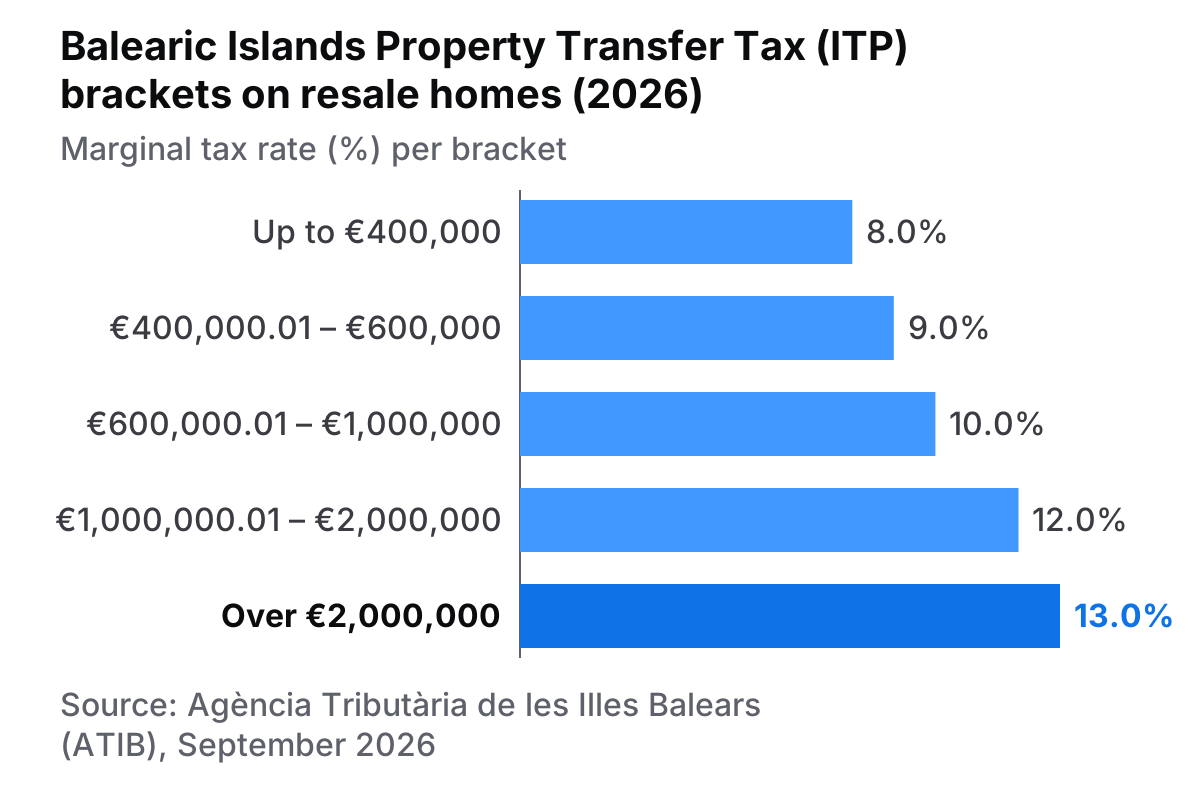
- Up to €400,000: 8.0%
- €400,000.01 to €600,000: 9.0%
- €600,000.01 to €1,000,000: 10.0%
- €1,000,000.01 to €2,000,000: 12.0%
- Portion above €2,000,000: 13.0%
For readers seeking a broader legal overview, our comprehensive guide to buying property in Spain details notary procedures and registration steps.
Short-term holiday letting rules are tightly governed under Balearic Decree-Law 4/2025 and Consell de Mallorca zoning ordinances. As outlined by the Consorci Borsa d’Allotjaments Turístics (CBAT), new tourist rental licences (ETV) are strictly prohibited in multi-family residential buildings (apartments) across the entire archipelago. Furthermore, Port de Sóller is classified as a saturated coastal area, meaning new year-round licences (ETV365) are not issued even for detached houses. Investors looking for rental returns—detailed further in our analysis on owning a rental property in Mallorca and Ibiza—must seek single-family homes that already hold a valid, transferable licence, or apply for seasonal 60-day permissions (ETV60) when public draw pools reallocate retired places.
Because inventory in this protected coastal strip is finite, international buyers, investors, and real estate professionals rely on live data to evaluate opportunities. By utilising CASAFARI Area Insights, Property Sourcing, and professional tools for property valuation and market study, market participants can monitor authentic listing histories, price trends, and availability across the Tramuntana region. You can start analyzing real-time market data when you sign in to CASAFARI Platform.
Frequently asked questions
How long does it take to get from Palma and the airport to Port de Sóller?
By road via the Ma-11 and the toll-free Sóller tunnel, Port de Sóller is 28.4 km from Palma, taking approximately 30 minutes by car. Palma de Mallorca Airport is located between 35 and 38 km away, requiring a drive of roughly 35 to 45 minutes depending on traffic. Alternatively, the historic Ferrocarril de Sóller train operates seven daily services from Palma to Sóller town, where passengers connect directly with the vintage tram down to the harbour.
Can you get a holiday rental licence (ETV) for a property in Port de Sóller?
Under Balearic Decree-Law 4/2025 and Consell de Mallorca zoning, new tourist rental licences (ETV) are completely banned for apartments in multi-family buildings. Furthermore, Port de Sóller is designated as a saturated coastal zone where new year-round licences (ETV365) are prohibited for single-family homes. Buyers seeking rental income must purchase a detached or semi-detached house with an existing, valid licence or apply for 60-day temporary licences (ETV60) through CBAT public draws.
What are the property transfer tax (ITP) rates when buying a resale home in Port de Sóller?
When purchasing a resale property in Port de Sóller, buyers pay progressive Balearic Property Transfer Tax (ITP) based on purchase price brackets set by ATIB. The rates are 8% on the first €400,000, 9% for the portion between €400,000.01 and €600,000, 10% between €600,000.01 and €1,000,000, 12% between €1,000,000.01 and €2,000,000, and 13% on any amount exceeding €2,000,000.
What is the difference between buying in Port de Sóller and Sóller town?
Port de Sóller has 2,485 residents and offers a maritime lifestyle centred on two sandy beaches, a 465-berth marina, seafront dining, and sea-view apartments or hillside villas. Sóller town, located 3 km inland with 9,392 residents, provides a traditional interior atmosphere with historic stone townhouses, modernist architecture, year-round civic services, and a vibrant central plaza connected to the port by a 15-minute tram ride.