ARTA REAL ESTATE GUIDE
Attractive rural headway boasting spectacular scenery
Artà is a hilltop market town in north-east Mallorca with one main coastal village, Colònia de Sant Pere, and the island’s longest stretch of protected, unbuilt coast. Located about an hour from Palma airport via the Ma-15 road, buying a resale home here attracts progressive Balearic transfer tax from 8% to 13%, while holiday letting requires a tourist licence (ETV) subject to strict moratorium rules. Real-time property values across the municipality can be tracked using the CASAFARI Area Insights live ticker on this page.
What makes Artà different from the rest of Mallorca
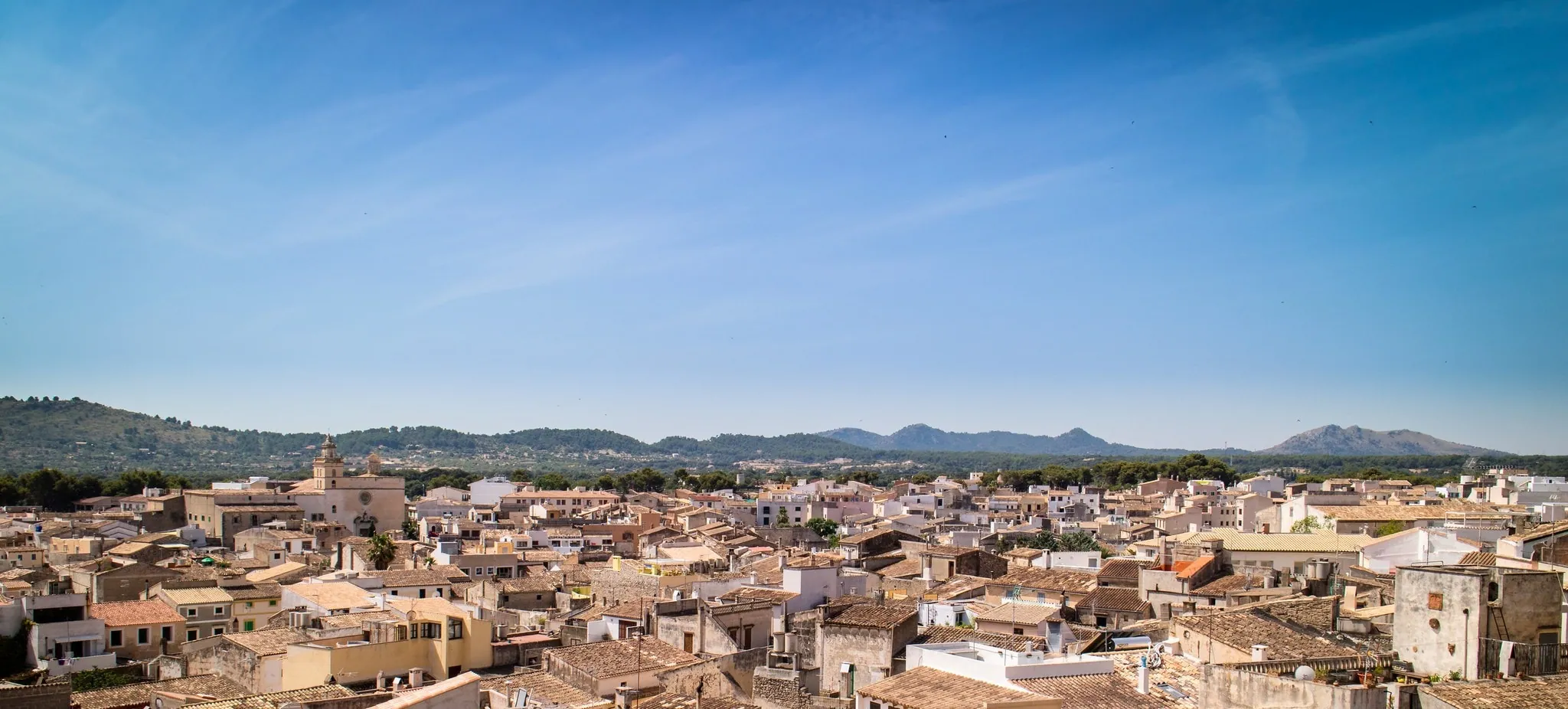
On a Tuesday morning, the town square beneath the fortified Santuari de Sant Salvador fills with stallholders, coffee drinkers, and local residents. Ten minutes later along a quiet country lane, the landscape opens onto the unpaved track leading down to Cala Torta, where turquoise water meets protected pine scrub. This contrast defines the municipality of Artà in Mallorca’s Llevant region: a centuries-old market town paired with an untouched coast.
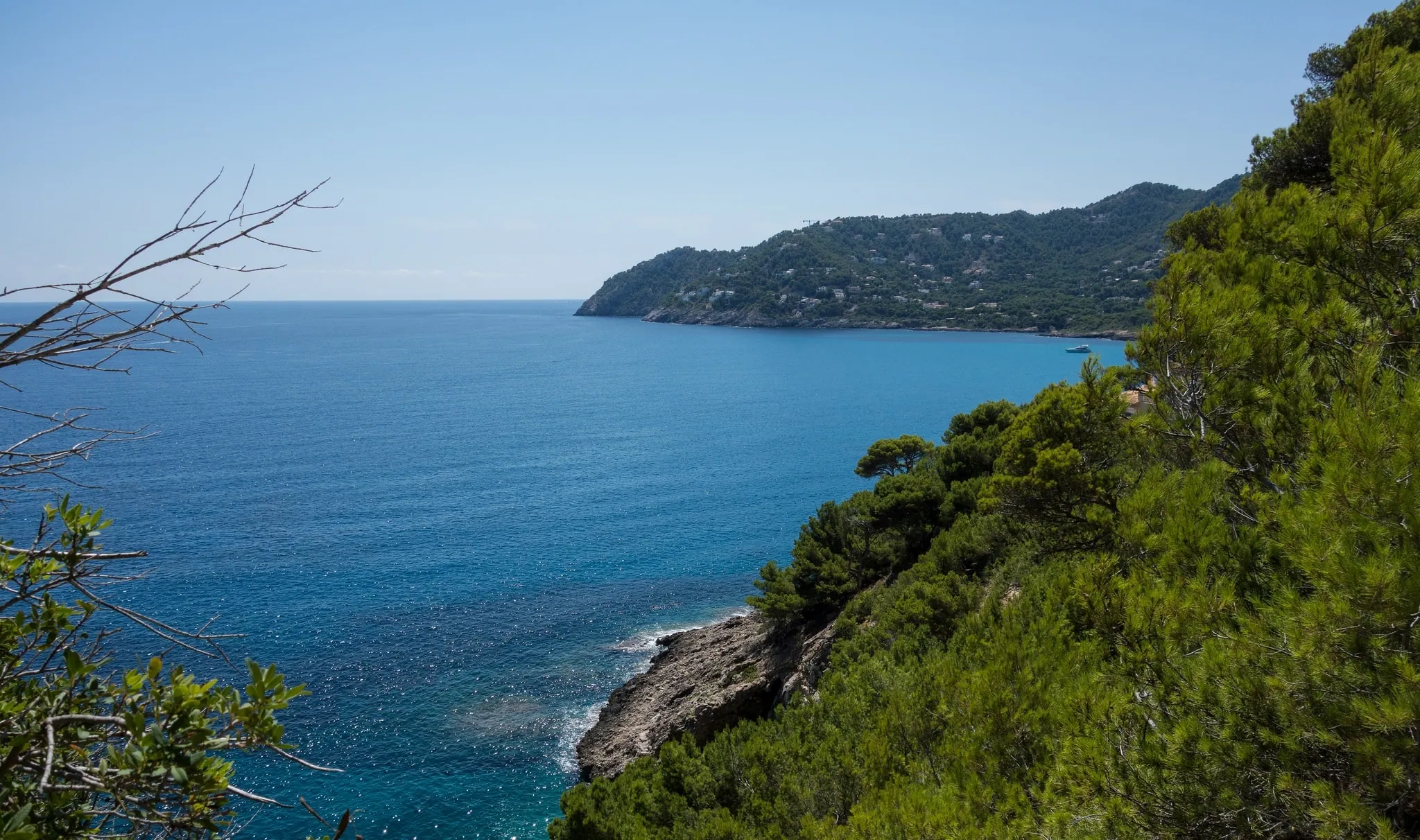
Unlike the heavily built resort strips of south-western Mallorca, Artà offers low-density living dominated by historic townhouses, traditional countryside fincas, and low-rise coastal homes in Colònia de Sant Pere. Much of the coastline lies within the Parc Natural de la Península de Llevant, keeping wide swathes of the municipality permanently free from commercial development. Demand in Artà comes primarily from international and Spanish buyers seeking privacy, architectural character, and genuine year-round island life rather than seasonal tourism.
Towns and villages of the Artà region
The municipality comprises several distinct residential pockets, each offering a different lifestyle profile:
- Artà town: The administrative and cultural centre features narrow stone streets, restored traditional townhouses, local artisan shops, primary and secondary schools, and the Centre de Salut d’Artà. Life centres around the weekly Tuesday market and major traditional celebrations, such as the Sant Antoni festivities every January.
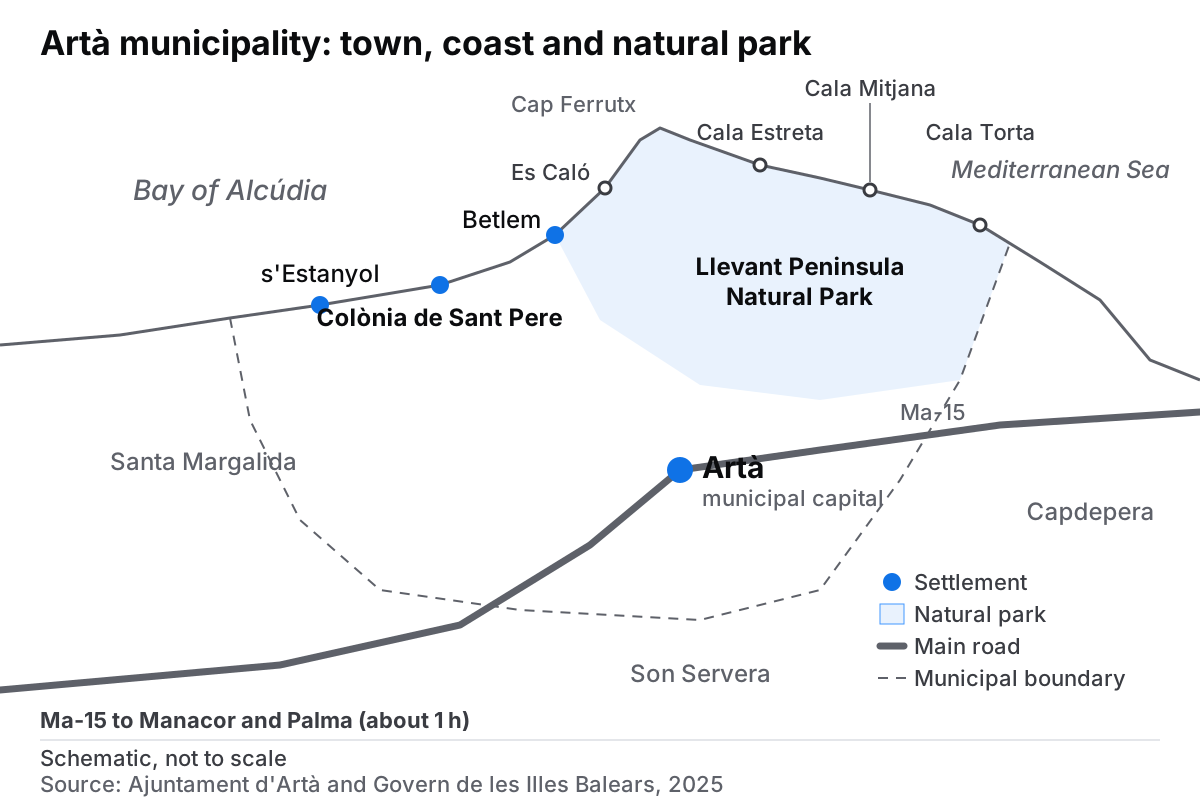
- Colònia de Sant Pere: Positioned on the bay of Alcúdia, this former fishing village has evolved into a calm residential settlement with a marina, seafront promenade, and low-rise coastal properties. It includes the quiet residential enclaves of Betlem, s’Estanyol, and Montferrutx.
- Rural interior: The agricultural valleys surrounding Artà town host detached fincas and historic estate properties (possessions). Building on rural land is strictly regulated under Balearic planning frameworks to preserve the countryside.
Buyers and agents should note a frequent mapping error in property portal listings: the famous Coves d’Artà caves are located in the neighbouring municipality of Capdepera near Canyamel, not within Artà itself. Similarly, the pristine coves of Cala Torta, Cala Mitjana, Cala Estreta, and Es Caló inside the natural park remain entirely unbuilt, with no commercial construction permitted.
How do you get to Artà, and how far is Palma?
Driving from Palma de Mallorca Airport (PMI) to Artà town takes roughly an hour via the Ma-15 arterial road through Manacor. Driving onward to Colònia de Sant Pere adds approximately fifteen minutes.
Public transport is provided by the TIB interurban bus network (TIB), which connects Artà with Palma, Manacor, and coastal spots like Cala Rajada. There is no active rail link to Artà; the historic Manacor–Artà railway line was decommissioned and converted into the Via Verda, a popular greenway for cycling and walking. While bus services serve everyday commutes, owning a car is highly recommended for residents, particularly those based in Colònia de Sant Pere or rural fincas.
Schools, healthcare and everyday life
Artà maintains a self-contained, year-round economy that does not close down during the winter months. Public schooling in the municipality includes primary institutions such as CEIP Na Caragol in Artà town and CEIP Rosa dels Vents in Colònia de Sant Pere, alongside the secondary school IES Llorenç Garcías i Font, with teaching conducted under the Balearic bilingual Catalan and Castilian curriculum framework. For families seeking international education, the nearest private option is the Rafa Nadal International School in Manacor, located approximately 20 kilometres away.
Primary healthcare services are delivered at the Centre de Salut d’Artà, with the regional reference hospital, Hospital de Manacor, located approximately 25 minutes away by car for emergency and specialist medical treatment.
What does buying in Artà cost beyond the price?
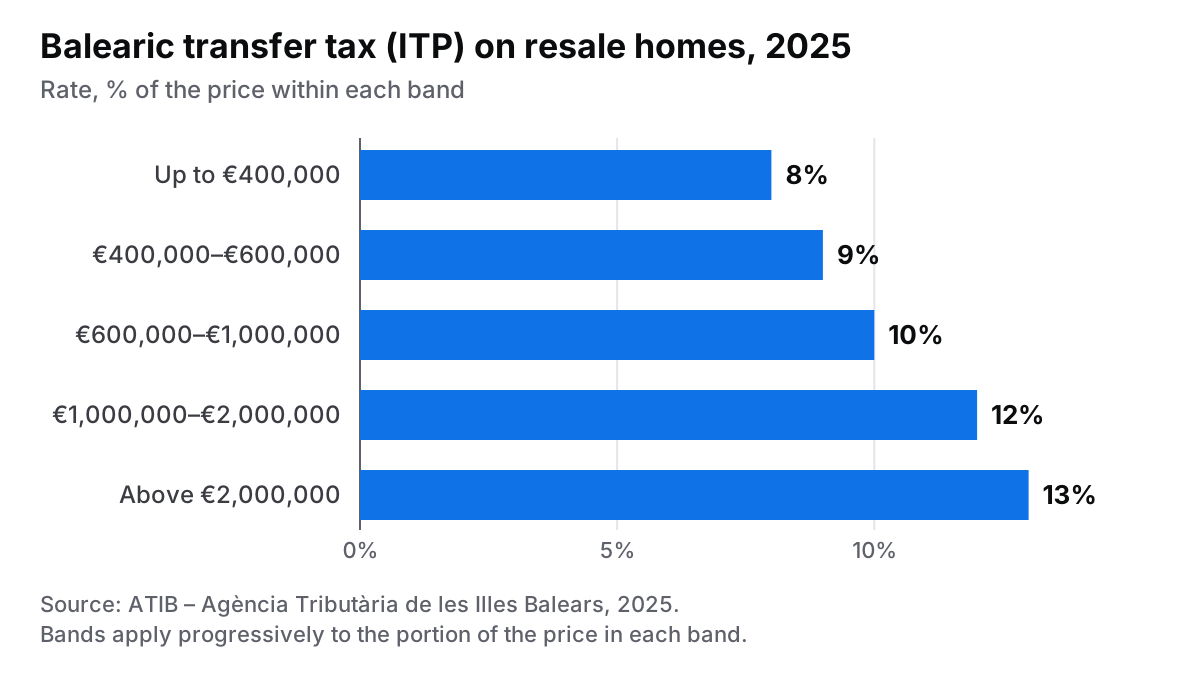
When purchasing a resale property in Artà, buyers must pay the Balearic transfer tax (Impuesto sobre Transmisiones Patrimoniales or ITP). The tax is progressive, calculated across defined price bands according to guidelines set by the Balearic tax agency (ATIB, 2025 tax year):
| Property Value Band | Progressive ITP Rate |
|---|---|
| Up to €400,000 | 8% |
| €400,000 to €600,000 | 9% |
| €600,000 to €1,000,000 | 10% |
| €1,000,000 to €2,000,000 | 12% |
| Over €2,000,000 | 13% |
For new-build residential purchases from a developer, buyers pay 10% VAT (IVA) plus 1.5% Stamp Duty (AJD) instead of ITP. Additional closing costs—including notary fees, land registry fees, and independent legal advice—typically total 2% to 3% of the purchase price. All non-Spanish citizens must obtain an NIE (Número de Identificación de Extranjero) prior to signing the deed. For step-by-step guidance on completion procedures, consult our guide to buying property in Spain.
To view accurate price movements, average values per square metre, and sales trends for Artà, check the live data ticker embedded at the top of this page.
Can you let a property in Artà to holidaymakers?
Offering short-term holiday rentals in Mallorca requires a valid ETV licence (Estancias Turísticas en Viviendas) issued by the Consell de Mallorca. Following the Balearic moratorium on tourist beds, new holiday-let licences are restricted in many areas. Buyers intending to operate a short-let property should only target homes with an active, legally transferable licence, which must be verified by an independent lawyer prior to paying a deposit.
Furthermore, under national legislation applicable across Spain from 1 July 2025, any short-term or holiday rental listing advertised on online platforms must display an official registration number (Registro Único) obtained through the Land Registry (BOE, Real Decreto 1312/2024).
Residential long-term leases are governed by national residential tenancy rules. Landlords evaluating return strategies can read about Spain’s 2023 Housing Act and what it changed for landlords and explore wider market context in our analysis of owning a rental property in Mallorca and Ibiza.
Residency and non-resident buyers after the end of the golden visa
Property ownership in Spain does not grant automatic residency rights to non-EU citizens, including British nationals following Brexit. Non-resident owners are subject to the standard Schengen limit of 90 days within any rolling 180-day window.
Spain officially discontinued its real estate investor visa (the so-called Golden Visa) on 3 April 2025 (BOE, Ley Orgánica 1/2025). Non-EU buyers wishing to reside in Artà full-time must apply for alternative residency pathways through Spanish consular channels, such as the Non-Lucrative Visa or Digital Nomad Visa.
How to research Artà prices and listings with CASAFARI
Real estate professionals, private investors, and prospective buyers can monitor live municipal prices and market trends using CASAFARI Area Insights, which powers the data ticker on this page.
For real estate professionals working in the Balearic market, CASAFARI provides a comprehensive toolkit:
- Property Sourcing to see every Artà listing across portals and agencies, consolidating duplicated listings into a single clean record.
- Automated valuations to evaluate individual home prices against comparable active and sold listings.
- Detailed insights for estate agencies representing sellers, explored further in our guide on how to sell a property in Mallorca.
Developers and real estate tech teams can integrate municipal and district-level metrics directly into their applications by reading the Area Insights developer documentation (in English), or explore the interface firsthand on the CASAFARI platform.
Frequently asked questions
Can I get a holiday-let licence for a property in Artà?
Obtaining a new holiday-let licence in Artà is difficult due to the Balearic moratorium on tourist beds managed by the Consell de Mallorca. Buyers seeking holiday-rental income should look for properties that already possess a valid, transferable ETV licence and have a lawyer confirm its legal standing before signing a contract. Additionally, all short-term holiday listings in Spain require an official registration number from the national single register (Registro Único) to be legally advertised.
How far is Artà from Palma airport?
Artà is located about an hour’s drive from Palma de Mallorca Airport (PMI) via the Ma-15 main road through Manacor. The coastal area of Colònia de Sant Pere takes approximately 15 minutes longer by car. While public TIB buses connect Artà town to Palma and nearby coastal areas, owning a car is recommended for most residents.
What taxes do I pay when buying a house in Artà?
Resale home purchases in Artà attract Balearic transfer tax (ITP), which applies progressively on a sliding scale from 8% up to €400,000 to 13% for property value portions above €2,000,000 (ATIB, 2025). Buyers of brand-new properties pay 10% VAT (IVA) plus 1.5% Stamp Duty (AJD). Buyers should also budget 2% to 3% for notary, legal, and registry fees.
Can a UK citizen buy property in Artà and live there?
UK citizens can freely buy real estate in Artà, but property ownership does not confer Spanish residency. Under Schengen rules, non-EU passport holders can stay visa-free for up to 90 days in any 180-day period. Spain’s investor golden visa ended on 3 April 2025 (BOE, Ley Orgánica 1/2025), so UK buyers planning to live in Mallorca full-time must secure a standard residency visa, such as a Non-Lucrative Visa.