ALCUDIA PROPERTY GUIDE
Seaside region rich in its historical, cultural and ecological heritage, paradise of the future
On a Tuesday morning in Alcúdia, market stalls fill the narrow stone streets enclosed within fourteenth-century walls. Three kilometres away, the waterfront promenade of Port d’Alcúdia prepares for another coastal season. Covering 60.01 km², the municipality of Alcúdia is home to 21,683 residents according to INE population figures for Balearic municipalities as of 1 January 2024. For prospective buyers in 2026, evaluating property here requires balancing local geography against Balearic property transfer tax (ITP) rates ranging from 8% to 13%, alongside strict regional regulations on holiday-let licences.
Where is Alcúdia, and how accessible is the north coast?
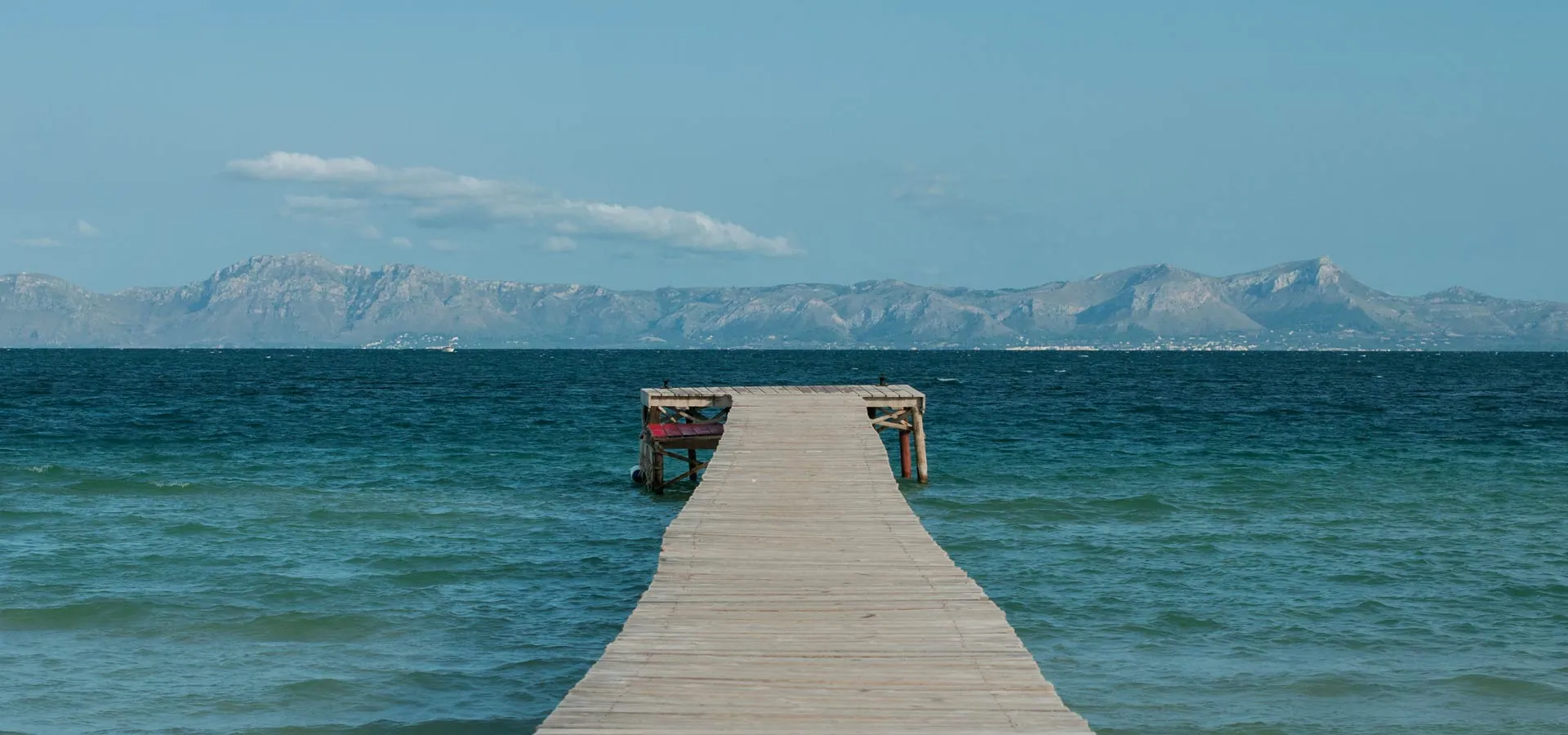
Situated in northern Mallorca, the municipality occupies a peninsula set between two large marine inlets: the Bay of Pollença to the north-west and the Bay of Alcúdia to the south-east. It borders the neighbouring municipalities of Pollença, Sa Pobla and Muro, extending towards its northernmost tip at Cap des Pinar.
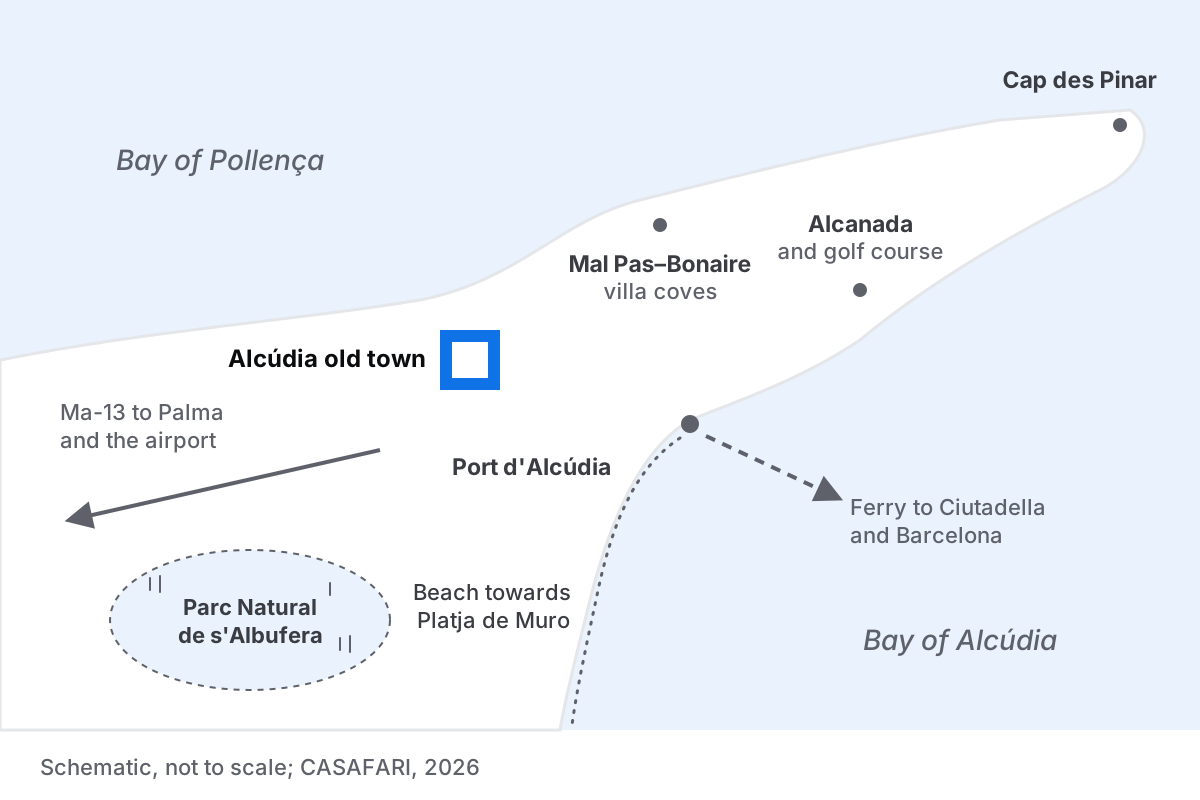
Road access across the island connects Alcúdia directly to Palma and its international airport via the Ma-13 motorway. Public bus services link the main settlements across the region, while Port d’Alcúdia functions as Mallorca’s primary northern harbour, maintaining regular ferry routes to Menorca and mainland Spain. This year-round port infrastructure provides maritime connectivity that sets Alcúdia apart from purely seasonal coastal districts.
Towns and villages of the municipality of Alcúdia
While international listings frequently use ‘Alcudia’ or ‘Puerto de Alcudia’, the municipality in the Raiguer region comprises several distinct residential zones, each serving different lifestyle preferences.
Alcúdia Old Town
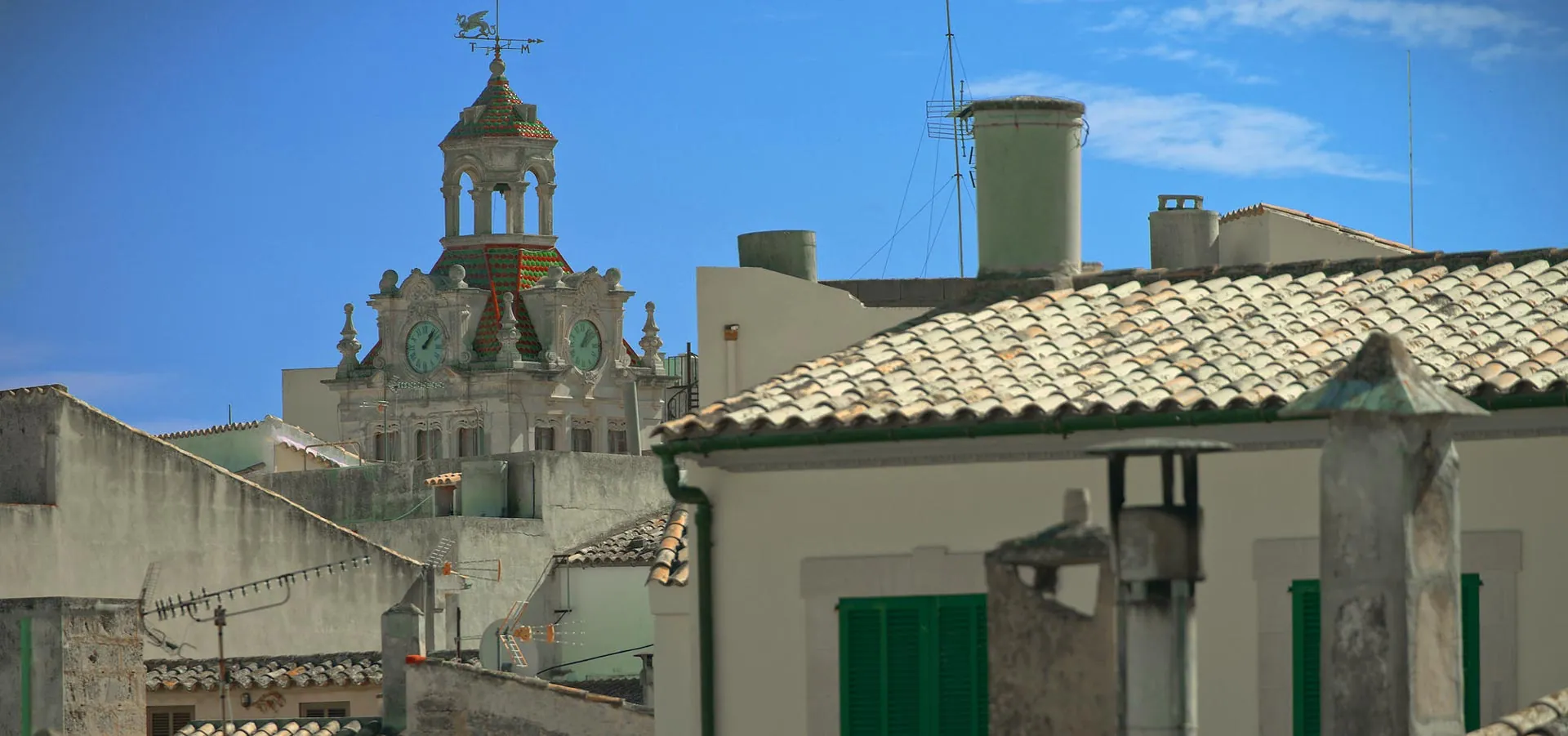
Enclosed by medieval defensive walls, the historic town centre sits just inland from the coast, adjacent to the ancient Roman remains of Pollentia. Traditional stone townhouses (casas de poble) line its pedestrian streets. As the administrative hub, the old town offers municipal services, schools and year-round commercial activity.
Port d’Alcúdia
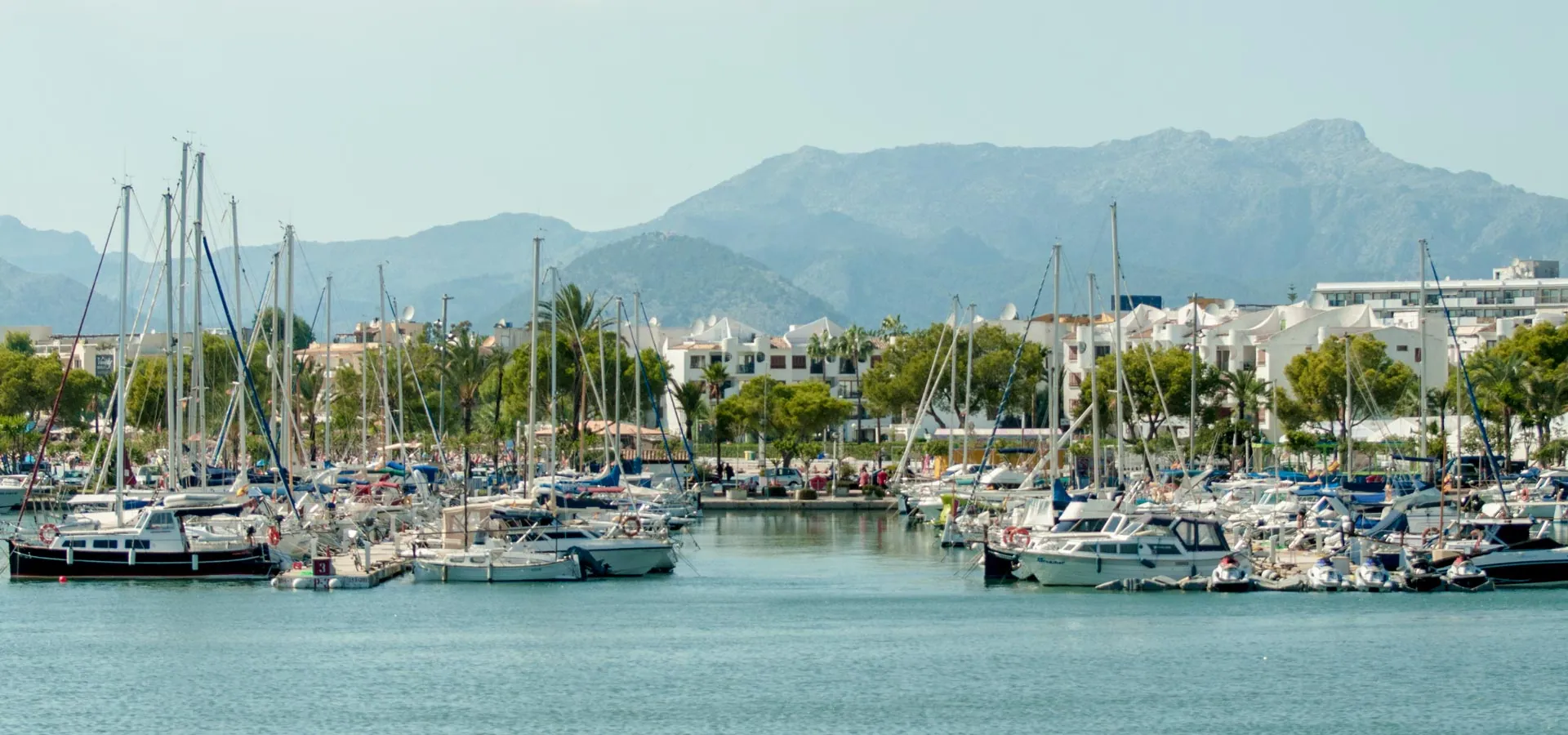
Stretching around the bay, Port d’Alcúdia combines a working harbour and marina with an extensive beachfront strip extending southwards toward Platja de Muro. The property stock consists predominantly of apartments and commercial spaces, forming the core area for seasonal holiday rentals and coastal apartments.
Mal Pas–Bonaire and Alcanada
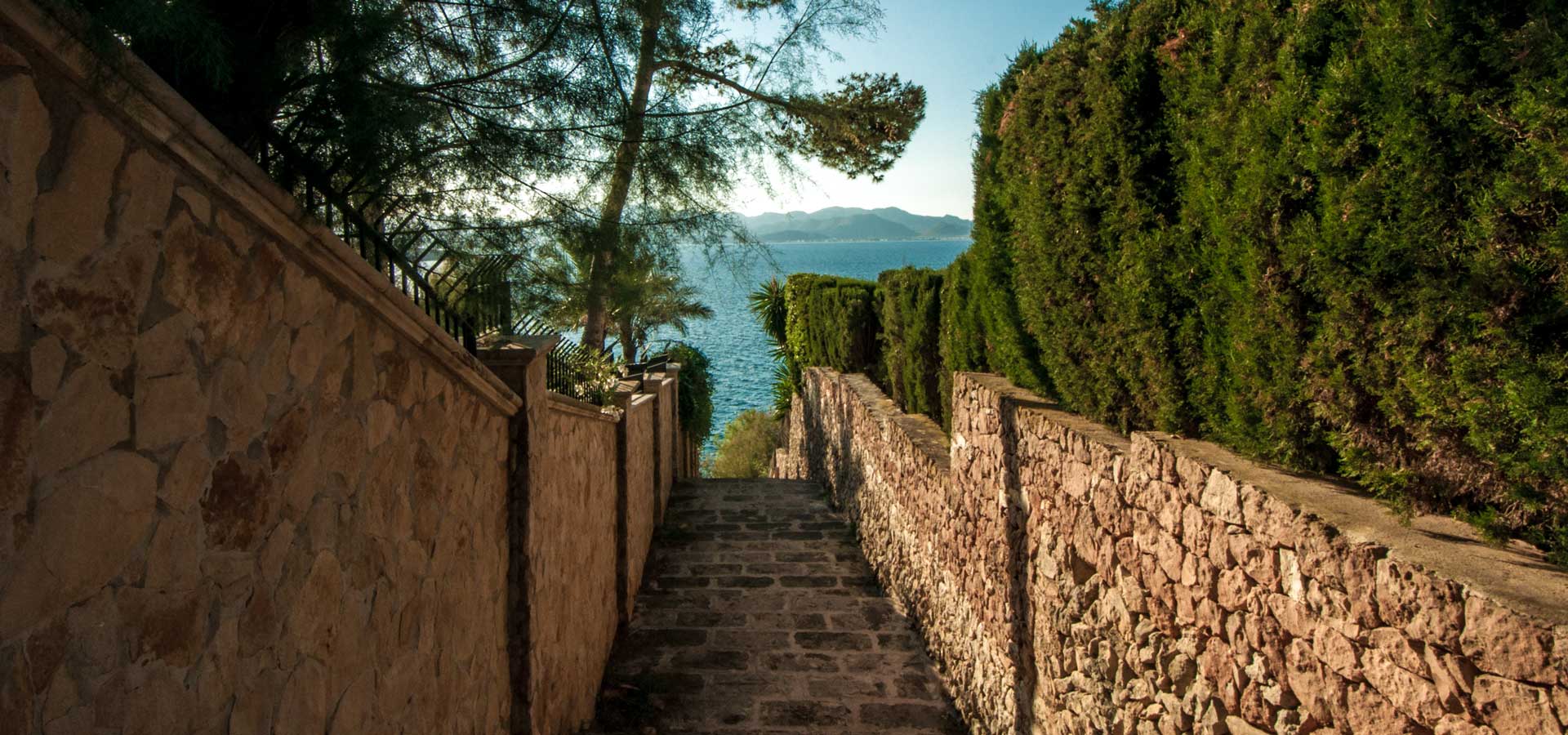
Located on the northern side of the peninsula along the Bay of Pollença, Mal Pas–Bonaire is a low-density residential district characterized by detached villas and secluded coves. Further east lies Alcanada, recognized for its coastal golf course and lighthouse islet. These coastal residential enclaves contain some of the peninsula’s most private properties.
Rural surroundings
To the south-west, rural land extends toward the boundary with Sa Pobla and the margins of Parc Natural de s’Albufera. Strict environmental protections govern building activity near this protected wetland, preserving the surrounding countryside.
What does buying in Alcúdia cost in tax and fees?
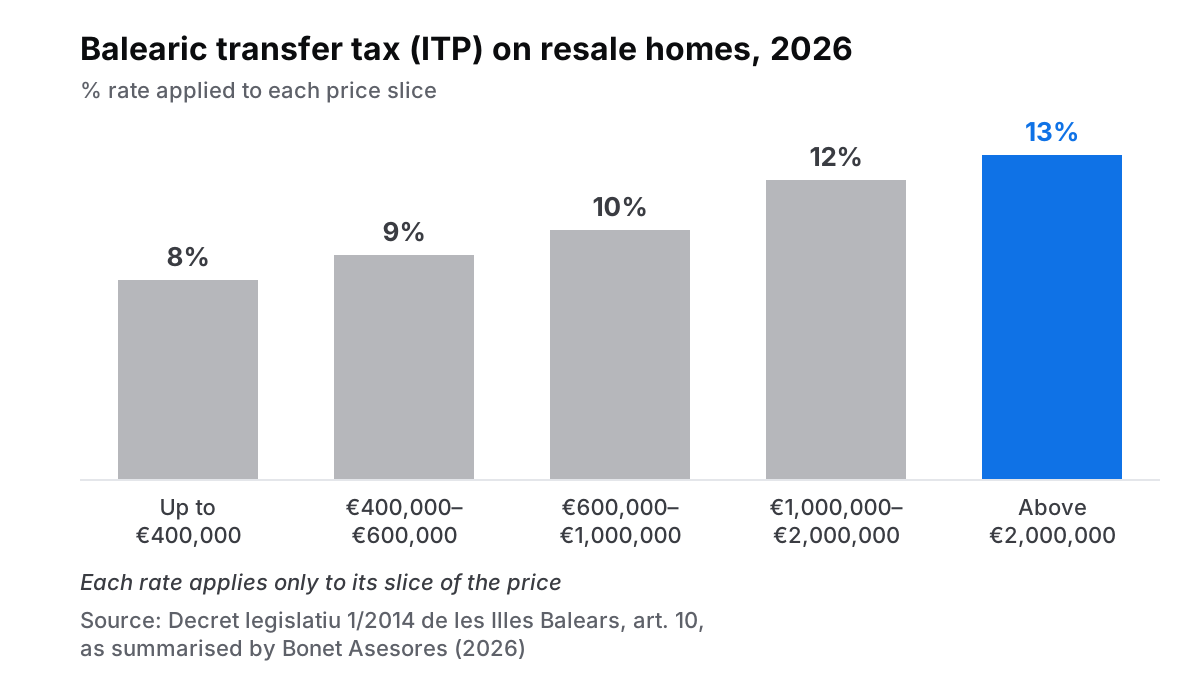
When purchasing a resale residential home in Mallorca, buyers pay Property Transfer Tax (Impuesto sobre Transmisiones Patrimoniales or ITP). The Balearic Islands apply a progressive tax scale based on price brackets, as outlined in the Balearic ITP scale for 2026:
- Up to €400,000: 8%
- From €400,000 to €600,000: 9%
- From €600,000 to €1,000,000: 10%
- From €1,000,000 to €2,000,000: 12%
- Above €2,000,000: 13%
Each percentage applies strictly to the portion of the purchase price falling within that specific band. For example, purchasing a resale home valued at €700,000 results in the following ITP calculation:
- 8% on the first €400,000 = €32,000
- 9% on the next €200,000 = €18,000
- 10% on the final €100,000 = €10,000
- Total ITP payable: €60,000
Buyers must complete self-assessment and payment within one month of signing the public deed of purchase (escritura). Additional acquisition costs include notary fees, Land Registry filing costs and legal representation. Property owners also incur ongoing annual obligations, including local property tax (Impuesto sobre Bienes Inmuebles or IBI) and non-resident income tax. You can review the step-by-step guide to buying property in Spain for a breakdown of legal transactions.
Can you let your Alcúdia home to tourists? The ETV rules in 2026
To operate a residential property as a short-term holiday rental in Mallorca, the dwelling must hold an official tourist rental licence (Estancia Turística en Viviendas or ETV), which registers specific guest places (plazas).
According to the Balearic moratorium on new tourist-rental places, the regional government introduced a moratorium freezing new application approvals across the Balearic Islands on 11 February 2022.
In March 2026, the Consell de Mallorca’s March 2026 release of 1,069 tourist-rental places was announced through the Consorci Borsa d’Allotjaments Turístics (CBAT). This temporary allocation window opened for seven days starting 23 March 2026, and final admitted applications have since been published. Because allocations occur in restricted windows, prospective buyers should not assume new licences can be created freely.
During legal due diligence, buyers intending to generate holiday-rental income should confirm whether the target property holds an existing, valid ETV registration, verify how many places are recorded, and check whether the licence legally transfers with the property ownership under current zoning regulations. Alternatively, long-term or seasonal leasing remains unaffected by ETV allocations. Read more on owning a rental property in Mallorca.
Living in Alcúdia all year: schools, services and winter months
Alcúdia maintains an established permanent community of 21,683 residents (INE, 2024). While resort areas near the harbour experience seasonal closures between November and March, the old town and core residential districts retain daily commercial activity, medical primary care, and municipal facilities throughout the year.
Local education includes state primary and secondary schools within the municipality. Families seeking international curriculum schools typically look towards Palma and the south-west, factoring the daily commute into their location decisions.
Non-EU residents acquiring property must take into account the 90/180-day Schengen zone stay limit if planning seasonal residence. Those preparing a listing or valuation can review how to sell a property in Mallorca.
How agents and investors read the Alcúdia market with CASAFARI
While aggregate market pricing offers a general starting point, real estate professionals require localized data to analyze real estate activity across micro-zones.
Using Area Insights for the Alcúdia market, agents track available supply, historical pricing dynamics, and distribution across property types. When assessing a specific villa in Mal Pas or an apartment in Port d’Alcúdia, advisors can obtain a valuation with real closing prices through Comparables to establish current valuations.
Developers seeking integration details can consult the Area Insights developer documentation (in English) or try CASAFARI on the platform to analyze real estate trends.
Frequently asked questions
Can I get a holiday-let licence for a property in Alcúdia?
New tourist-rental places across Mallorca have been frozen under a Balearic moratorium in force since 11 February 2022. While the Consell de Mallorca released a temporary pool of 1,069 places in March 2026 through the Consorci Borsa d’Allotjaments Turístics (CBAT), application windows are short and strictly limited. Buyers seeking to run a short-term holiday rental should purchase a property that already holds a valid, transferable ETV licence and verify its registered capacity prior to contract exchange.
What tax do I pay when buying a house in Mallorca?
When purchasing a resale residential property in Mallorca, buyers pay Balearic Property Transfer Tax (ITP) on a progressive scale. The rate starts at 8% on the first €400,000, rising to 9% up to €600,000, 10% up to €1,000,000, 12% up to €2,000,000, and 13% for any amount above €2,000,000. Buyers must settle this tax within one month of executing the public purchase deed, alongside notary, Land Registry, and legal fees.
Is Alcúdia nice to live in all year?
Alcúdia is well suited for year-round living, supported by a permanent population of 21,683 residents (INE, January 2024). The walled old town and main residential areas of Port d’Alcúdia offer year-round shops, primary health centres, state schools, and weekly markets. Although seasonal resort businesses close during the winter months between November and March, core municipal services and ferry connections operate throughout the year.
What is the difference between Alcúdia and Port d’Alcúdia?
Alcúdia old town is an inland medieval settlement featuring historic townhouses, defensive walls, administrative services, and year-round living. Port d’Alcúdia lies along the coast, anchored by a marina, passenger ferry terminal, and apartment developments along the main beach. Nearby residential areas such as Mal Pas–Bonaire and Alcanada cater to low-density detached villa housing along the Bay of Pollença.