
SALAMANCA PROPERTY GUIDE
The centre of prestige, high fashion and nineteenth-century boulevards
Positioned as Spain’s premier luxury enclave, Madrid’s Salamanca district (District 04) recorded an average apartment asking price of €11,660 per square metre in Q3 2026, marking a 1.2% year-on-year increase from €11,520 in Q3 2025 according to CASAFARI Area Insights. Meanwhile, average monthly asking rents stood at €33.1 per square metre in Q3 2026, down 4.3% from €34.6 a year prior, reflecting a mature market balancing prime capital preservation with evolving rental regulations.
Where is the Salamanca district and how is it connected?
Covering 539.24 hectares (5.39 km²) immediately north-east of Madrid Centro and north of Retiro Park, the Salamanca district is home to 149,778 registered residents (Ayuntamiento de Madrid, August and December 2025). As detailed in our Madrid property market guide, the district is bounded by Paseo de Recoletos and Paseo de la Castellana to the west, Calle de Alcalá and O’Donnell to the south, the M-30 ring road to the east, and María de Molina / Avenida de América to the north.
The western half owes its grand character to the nineteenth-century Ensanche urban expansion spearheaded by José de Salamanca y Mayol, Marquis of Salamanca, featuring an orthogonal grid and wide tree-lined boulevards. Public transport connections are exceptional, with six Metro lines (2, 4, 5, 6, 7 and 9) serving key stations like Serrano, Velázquez, Goya, Retiro and Avenida de América, alongside the Recoletos Renfe Cercanías hub (lines C1, C2, C7, C8, C10) and the 24-hour EMT Exprés Aeropuerto bus connecting directly to Adolfo Suárez Madrid-Barajas.
How do the six barrios of Salamanca compare for buyers and residents?
Salamanca’s character shifts visibly across Calle de Francisco Silvela, which divides the historic nineteenth-century grid to the west from the denser twentieth-century residential quarters to the east. Understanding this urban geography is essential when evaluating properties across the district’s six administrative barrios:
- Recoletos (87.31 ha) and Castellana (77.34 ha): Form the ultra-prime core and the famed ‘Golden Mile’ along Calle de Serrano, Ortega y Gasset and Claudio Coello. These neighbourhoods feature luxury flagship boutiques, diplomatic residences, private banks, and classical architecture bordering Retiro Park.
- Goya (77.03 ha) and Lista (52.02 ha): Offer high-density commercial and residential convenience anchored by Calle de Goya, El Corte Inglés, and the Movistar Arena (Palacio de Deportes), providing strong liquidity for multi-bedroom apartments.
- Fuente del Berro (85.26 ha) and Guindalera (160.28 ha): Represent the quieter, more domestic pockets stretching to the M-30. Guindalera, the largest barrio by surface area, mixes early-twentieth-century low-rise homes (colonias) with modern blocks and more accessible entry ticket sizes.
Architecture, housing stock and who is buying in Salamanca
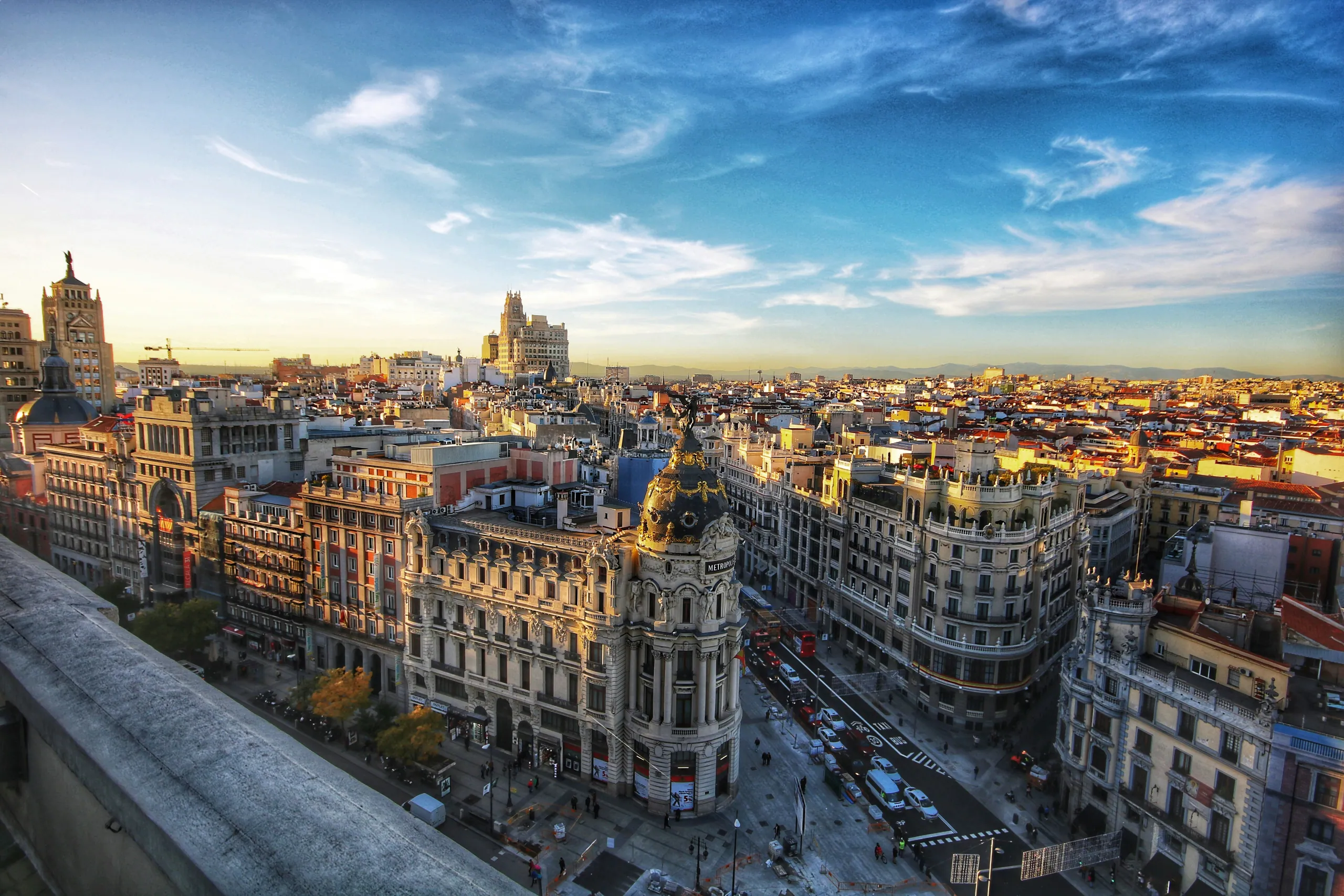
The architectural identity of Recoletos, Castellana and Goya rests on their turn-of-the-century and Belle Époque fincas clásicas. These buildings boast ornate wrought-iron balconies, carved stone façades, grand carriage entrances (portales señoriales), resident concierges (porteros), and ceiling heights exceeding 3.5 metres. Buyers must distinguish between exterior flats (piso exterior), which face the street with multiple balconies and command substantial premiums, and interior courtyard flats (piso interior).
Demand is driven by a resilient mix of affluent Spanish families, European executives, and a steady influx of Latin American wealth from Mexico, Colombia, Peru, Venezuela and the United States seeking euro-denominated capital preservation. Concurrently, institutional developers actively acquire unrenovated 200–400 m² floorplates or entire buildings for luxury turn-key repositioning.
What do CASAFARI’s market figures show for Salamanca in 2026?
Based on CASAFARI Area Insights data queried on 25 October 2026 for location id 11760, the average asking price for apartments for sale in Salamanca reached €11,660 per square metre in Q3 2026, compared to €11,520 in Q3 2025 (+1.2% year-on-year). These figures represent asking prices derived from indexed property listings (with outliers excluded) and do not reflect closing prices. On the rental side, the average asking rent stood at €33.1 per square metre per month in Q3 2026, down 4.3% from €34.6 in Q3 2025.
While Salamanca remains the apex of Spanish residential pricing, the modest 1.2% annual growth in asking prices and the 4.3% correction in asking rents indicate a market digesting prior rapid appreciation. Valuers and buyer’s agents reconcile these asking figures against closing prices recorded by the Consejo General del Notariado and verified client transactions using CASAFARI’s property valuation and market study tool.
Taxes, residency and short-let rules every buyer must know
Navigating Salamanca real estate requires close attention to recent Spanish regulatory changes. As outlined in the Comunidad de Madrid regional tax portal, property transfer tax (Impuesto sobre Transmisiones Patrimoniales, ITP) on resale homes is levied at a flat general rate of 6% (with a 10% rebate on the tax quota for primary residences up to €250,000), while new builds incur 10% statutory VAT plus 0.75% stamp duty (AJD).
Non-EU buyers should note that Spain permanently abolished its real estate Golden Visa on 3 April 2025 under Organic Law 1/2025, as announced by the official notice on the abolition of the Golden Visa. Residency must now be pursued via alternative legal avenues such as the Digital Nomad Visa or Non-Lucrative Visa. Additional considerations for international buyers are detailed in our guide to buying property in Spain.
Wealth tax rules also apply: Madrid levies its regional version of the state Temporary Solidarity Tax on Large Fortunes for estates exceeding approximately €3.7 million, and non-residents pay wealth tax on net Spanish assets above €700,000. Finally, investors targeting short-term rentals must navigate Madrid’s Plan RESIDE, in force since 22 September 2025, which bans dispersed tourist apartments in residential buildings within historic Salamanca (APE 00.01), restricting them elsewhere to ground or first floors with independent street entrances, subject to mandatory three-fifths homeowner association approval.
How real estate professionals and investors analyse Salamanca with CASAFARI
Because prime Salamanca properties are frequently cross-marketed by multiple agencies at varying asking prices or quietly adjusted over time, tracking market reality demands specialised tooling. Acquisitions teams rely on CASAFARI Property Sourcing to deduplicate portal listings, audit complete price histories, and monitor days on market down to the street level.
Retail investors examining footfall and catchment dynamics along Calle de Serrano and Calle de Goya utilise site selection in Spain with Claro AI and Location Intelligence. To examine granular property records and live market analytics directly, professionals can sign in to the CASAFARI platform Console to explore Salamanca market data (in English) or consult the CASAFARI Area Insights API and MCP documentation (in English).
Frequently asked questions
Which is the best neighbourhood to buy property in Salamanca, Madrid?
The ideal neighbourhood depends strictly on your investment objective. Recoletos and Castellana represent the ultra-prime choice for classical architecture, prestige, and proximity to Retiro Park and the Golden Mile. Goya and Lista offer excellent commercial vitality and high liquidity for mid-sized apartments, whereas Guindalera and Fuente del Berro east of Calle de Francisco Silvela provide quieter residential streets and lower entry prices per square metre.
Can you get a tourist licence for a flat in Salamanca, Madrid under Plan RESIDE?
For standard apartments in residential buildings located within Salamanca’s historic core (designated under Madrid’s APE 00.01 zone), no tourist licences are available. Plan RESIDE, in force since 22 September 2025, prohibits dispersed tourist apartments there, permitting short-term lets only in entire hospitality buildings. In the outer residential stretches outside APE 00.01, tourist lets are strictly limited to ground- or first-floor units with independent street entrances, and require express three-fifths approval from the building’s homeowners’ association.
What are the property purchase taxes in Madrid for foreign buyers?
Foreign buyers pay the exact same statutory acquisition taxes as domestic buyers in the Region of Madrid. Resale residential properties incur a 6% Property Transfer Tax (ITP), which is among the lowest rates in Spain, while newly built homes are subject to 10% statutory VAT plus 0.75% Stamp Duty. Non-resident owners must also account for annual wealth tax liabilities on net Spanish assets exceeding €700,000, or regional solidarity tax thresholds for larger estates.
Is the Spanish Golden Visa still available when buying property in Madrid?
No, Spain permanently abolished its real estate Golden Visa pathway on 3 April 2025 under Organic Law 1/2025. Purchasing residential or commercial property in Salamanca no longer grants residency rights. Non-EU nationals wishing to reside in Spain must utilise alternative legal pathways, such as the Digital Nomad Visa, the Non-Lucrative Visa, or standard work and professional permits.
What should buyers know about interior versus exterior flats in Salamanca?
Buyers must distinguish between ‘piso exterior’ units, which face the street with multiple balconies and command substantial premiums, and ‘piso interior’ flats that look out onto internal courtyards. These exterior flats are highly sought after for their aesthetic and natural light, reflecting the grand character of the district’s nineteenth-century and Belle Époque architecture.
Who are the primary investors active in the Salamanca real estate market?
Demand remains resilient, driven by a mix of affluent Spanish families, European executives, and a steady influx of wealth from Latin American countries like Mexico, Colombia, Peru, and Venezuela, alongside the United States. Concurrently, institutional developers are actively acquiring large floorplates or entire buildings for high-end, turn-key repositioning.