
BARCELONETA PROPERTY GUIDE
Barcelona’s former fishing quarter located on the shores of the Mediterranean
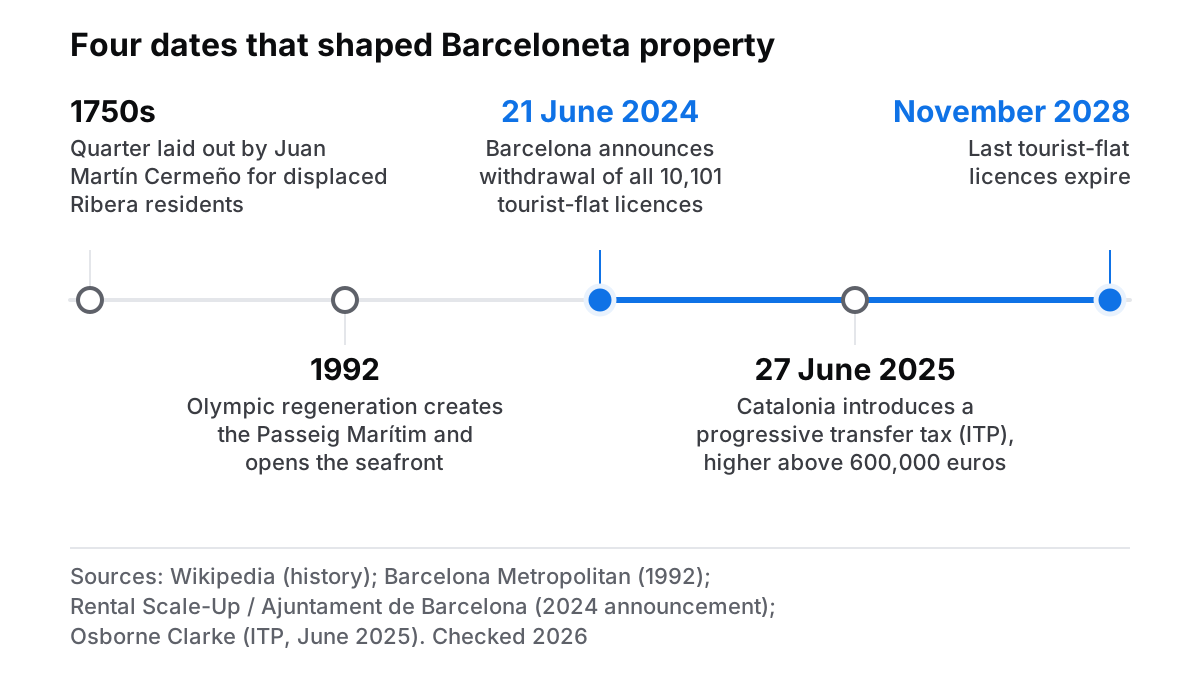
On a Saturday morning along Carrer de Sant Carles, green timber shutters swing open above a street so narrow two pedestrians can barely walk abreast. At the end of the lane, sunlight reflects off the Mediterranean Sea. Barceloneta, Barcelona’s historic 18th-century seafront quarter at the eastern edge of Ciutat Vella, offers a grid of compact flats just minutes from the water and the Gothic Quarter. Buying property here is a play on coastal lifestyle and architectural scarcity rather than short-term rental yields, as Barcelona announced on 21 June 2024 that all 10,101 tourist-apartment licences across the city will be revoked by November 2028.
Why buy a flat in Barceloneta?
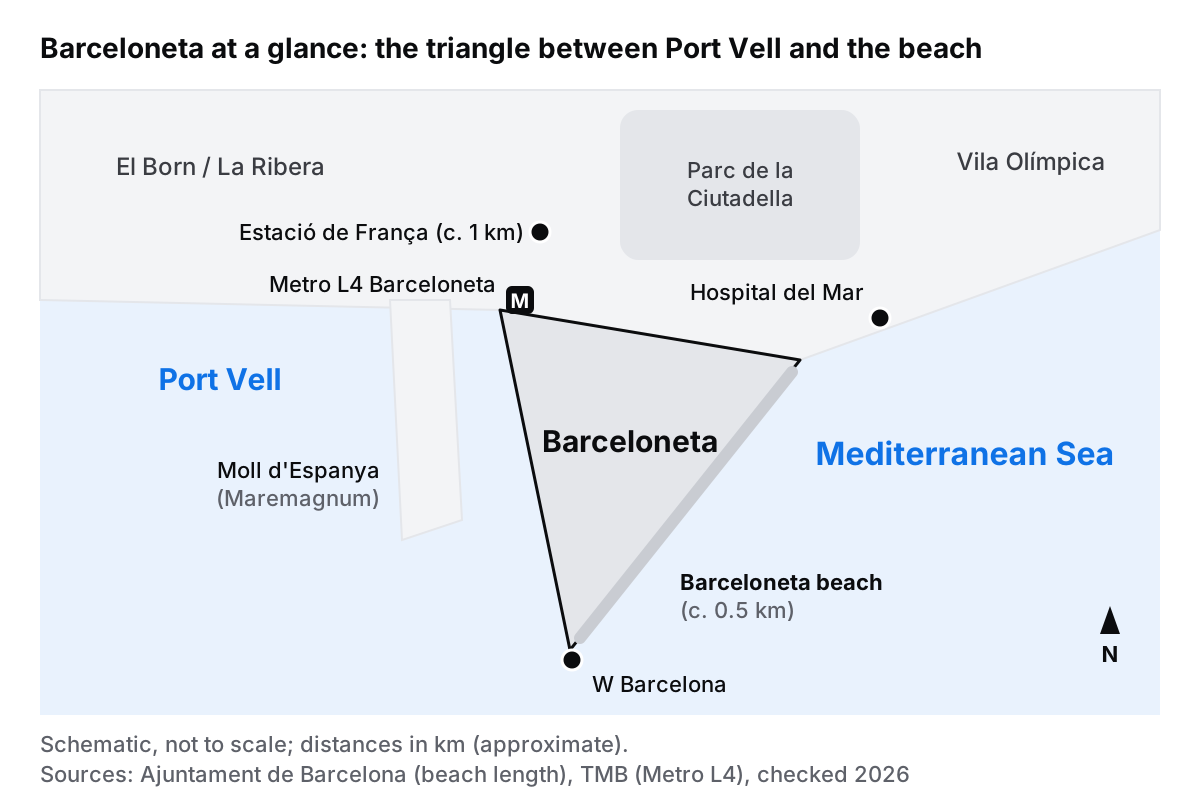
Barceloneta forms a triangular peninsula bounded by Port Vell to the west, the Mediterranean Sea to the east, and Vila Olímpica to the north-east, placing it right next to El Born and the Barri Gòtic. According to historical records on the history of La Barceloneta, the layout was planned in the 1750s by military engineer Juan Martín Cermeño to rehouse residents of La Ribera who were displaced by the construction of the Ciutadella military fortress.
Today, buyers in Barceloneta include long-time local families, international second-home owners seeking coastal urban living, and buy-to-let investors looking at long-term residential leases. Rather than relying on static price figures, real estate professionals and buyers can explore live supply, pricing, and days on market via Area Insights for Barceloneta. For broader context on the municipality, see our Barcelona area guide.
What is it like to live in Barceloneta?
The neighbourhood’s urban plan created a uniform grid of long, narrow streets. Historically, these blocks were divided into small housing units known as quarts de casa. While many buildings have been modernised or merged over the centuries, the original low-rise character remains intact. Many flats feature small wrought-iron balconies and natural light streaming from both ends of the street, though prospective buyers should note that traditional stairwells are tight and lift installations are relatively rare. Fully renovated flats with lift access command a clear premium among overseas buyers.
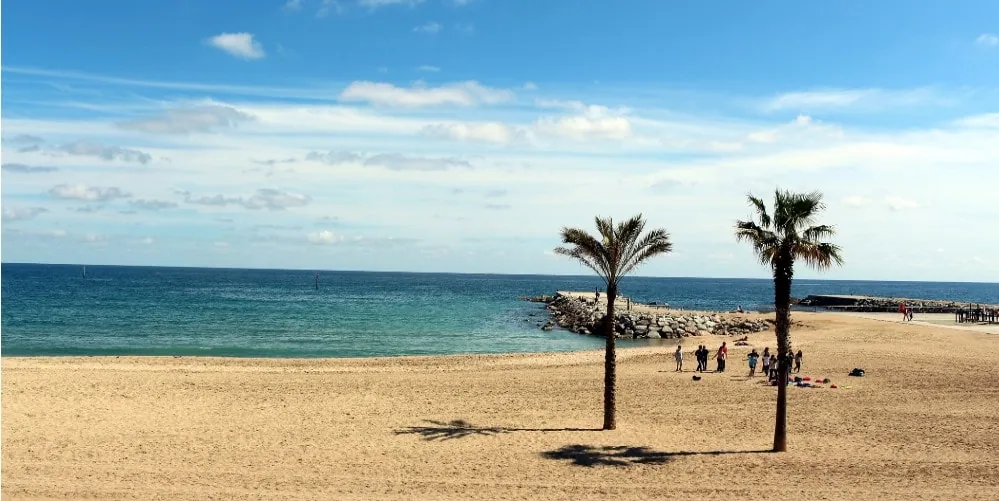
The adjacent waterfront is central to daily life. Contrary to popular belief, Barceloneta beach was not built for the 1992 Olympic Games; as noted by the Ajuntament de Barcelona on Barceloneta beach, this roughly half-kilometre stretch of sand is one of the city’s oldest beaches. The 1992 Olympic regeneration created the wide Passeig Marítim promenade and opened up the coastal strip to the rest of the city.
Residents enjoy immediate access to neighbourhood essentials, including fresh stalls at Mercat de la Barceloneta, greenery at Parc de la Barceloneta, and aquatic sports at Club Natació Barcelona (founded in 1907) and Club Natació Atlètic-Barceloneta, alongside the municipal Espai de Mar facility. Medical care is close by at Hospital del Mar on the Passeig Marítim, while local schooling options include Escola Alexandre Galí for primary pupils and Institut Joan Salvat-Papasseit for secondary students. For retail and entertainment, the Maremagnum shopping complex and the Aquàrium lie just across the footbridge at Moll d’Espanya in Port Vell.
How well connected is Barceloneta?
Barceloneta metro station on line L4 (yellow) sits at the northern apex of the quarter, providing quick underground transit into the city centre at Jaume I or Urquinaona, and further north towards Passeig de Gràcia. For regional and national rail connections, Estació de França is located roughly one kilometre away—about a 10-minute walk from most streets in the grid.
Extensive bus routes and dedicated cycle corridors line the Passeig Marítim and Passeig de Joan de Borbó. Most residents rely on walking, cycling, or public transport, as street parking within the tight 18th-century grid is limited.
Can you let a Barceloneta flat to tourists?
Short-term holiday lets are no longer a viable long-term investment strategy in Barceloneta. As reported by industry sources on Barcelona’s plan to end tourist-flat licences by 2028, Mayor Jaume Collboni announced on 21 June 2024 that the city will revoke all 10,101 existing tourist-apartment licences when their current permits expire in November 2028. Furthermore, Ciutat Vella has operated under a strict moratorium on new holiday flat permits for several years.
Buyers evaluating real estate in Barceloneta should model returns exclusively on long-term residential letting, mid-term corporate stays, or personal occupancy. Landlords who intend to rent to full-time residents must also comply with Catalonia’s rent control measures in designated “strained market” zones. To understand how national legislation affects property management, review Spain’s 2023 Housing Act and rent regulation.
What taxes and rules apply when buying in Barceloneta?
When buying a resale flat in Barceloneta, buyers pay Property Transfer Tax (ITP, Impuesto sobre Transmisiones Patrimoniales). As detailed by legal advisers at Osborne Clarke on Catalonia’s new transfer-tax scale and coverage in Spanish Property Insight on the June 2025 ITP increase, Catalonia replaced its previous two-band ITP rate with a progressive tax scale effective 27 June 2025. Purchases above 600,000 euros face higher tax liabilities, with elevated rates applied to large property holders (gran tenedor). For new-build developments, buyers pay 10% VAT (IVA) plus Catalan Stamp Duty (AJD), alongside standard notary, land registry, and legal fees.
Foreign buyers require a Spanish tax identification number (NIE) before completing a transaction. Buyers from non-EU countries, including the UK following Brexit, must keep in mind the 90-day limit per 180-day period for stays in the Schengen Area without a residence permit. For a complete breakdown of the legal purchasing procedure, refer to our step-by-step guide to buying property in Spain and our explainer on how the contract and escritura work in Spain.
Where to eat in Barceloneta
Barceloneta’s dining scene ranges from casual beachside chiringuitos to iconic seafood dining institutions. At the southern tip of the Nova Bocana stands the striking W Barcelona hotel. Nearby, the Sant Sebastià cable-car tower houses Torre d’Alta Mar, which serves Mediterranean cuisine elevated high above the port. Along Passeig de Joan de Borbó, long-established restaurants such as Suquet de l’Almirall specialise in traditional Catalan seafood stews (suquet) and rice dishes. Inside the neighbourhood, the lively counters at Mercat de la Barceloneta serve daily catches straight from the local fish auction.
Life in Barceloneta resolves into simple seaside rhythms: fresh grilled fish, coastal walks along the Mediterranean, and historic narrow streets. To analyse pricing, evaluate listing distribution, or perform a property valuation in Barceloneta, explore Comparables and market study for a specific flat or try CASAFARI on platform.casafari.com. Developers and data teams can also consult the Area Insights API documentation (in English) for direct integration.
Frequently asked questions
Is Barceloneta a good place to buy property in Barcelona?
Barceloneta is ideal for buyers seeking a vibrant coastal lifestyle or stable long-term residential yields, given its position along the beach and adjacent to Ciutat Vella. However, it is no longer suitable for short-term holiday letting, as Barcelona will expire all 10,101 tourist licences by November 2028. Because the 18th-century housing stock consists of small flats where lifts are uncommon, renovated properties with modern amenities carry high demand.
Can I rent out a flat in Barceloneta to tourists?
No new tourist-apartment licences are being issued in Barceloneta, and existing licences will be revoked by November 2028 under the municipal plan announced on 21 June 2024. Long-term residential renting is permitted, though property owners must navigate Catalonia’s rent caps in designated strained housing zones. Investors should verify licence status on the municipal register and seek legal advice before acquiring any property advertised with tourist licensing.
What taxes do I pay when buying a flat in Barceloneta?
For resale property, buyers pay Catalan Property Transfer Tax (ITP), which moved to a progressive rate structure on 27 June 2025 with higher rates applying to valuations above 600,000 euros and large property holders. On new-build property, buyers pay 10% VAT plus Catalan Stamp Duty (AJD). Additional costs include notary fees, land registry fees, and legal fees, which usually total between 10% and 13% of the purchase price.
How do I get around from Barceloneta without a car?
Barceloneta station on Metro line L4 connects directly to central stops like Jaume I and Urquinaona in under ten minutes. Regional and commuter rail services operate from Estació de França, located approximately one kilometre on foot from the heart of the grid. Most daily errands, beaches, and dining spots are easily reachable on foot or via the cycle lanes along Passeig Marítim, making private vehicle ownership unnecessary.