
CANYET – BONAVISTA PROPERTY GUIDE
A Perfect Gateway from the Hustle and Bustle of the City
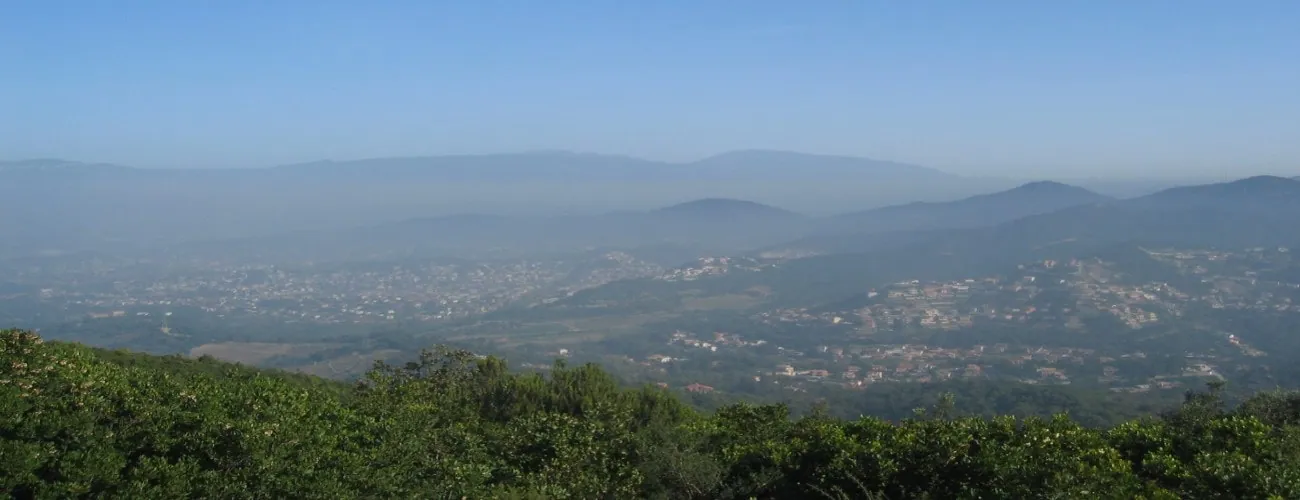
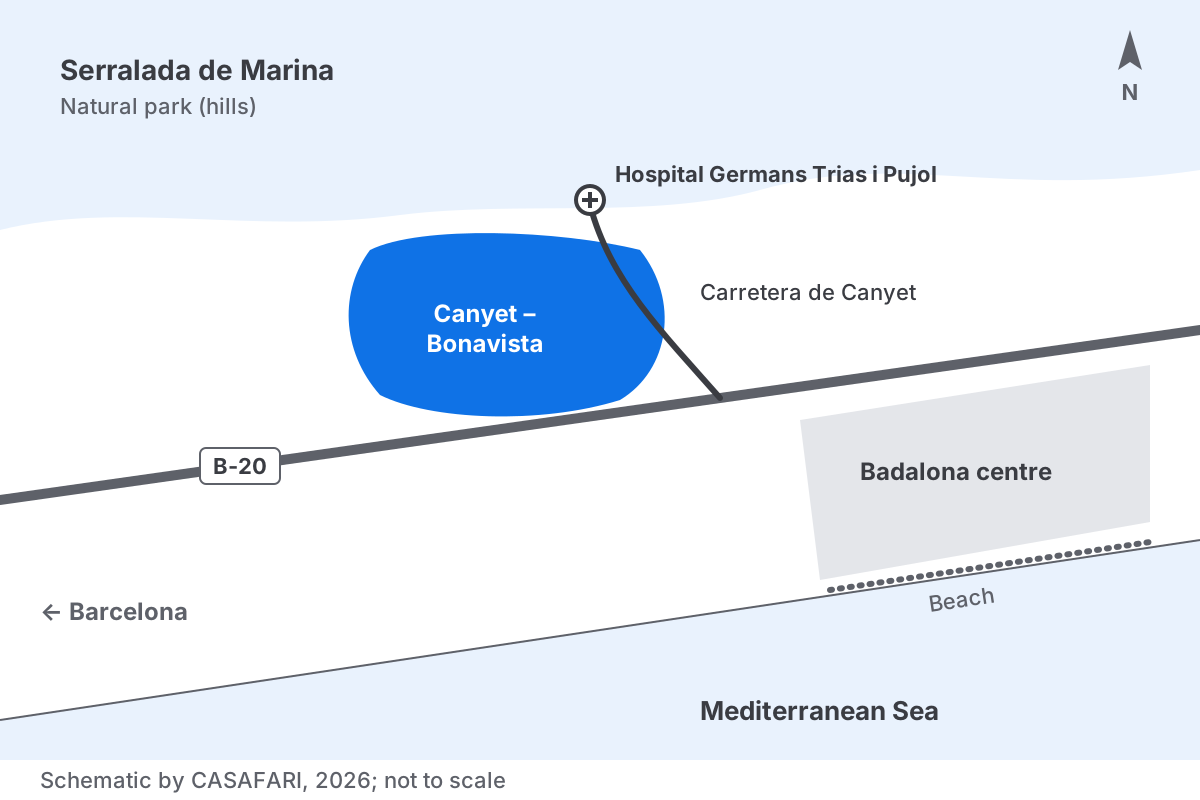
Canyet and Bonavista are two adjoining hillside neighbourhoods in the north-west of Badalona, situated along the edge of the Serralada de Marina natural park just beyond Barcelona’s city boundary. Reached along the Carretera de Canyet, these residential areas offer detached and semi-detached houses with gardens, peaceful surroundings, and direct road and public transport connections towards central Barcelona.
Why buyers look past central Barcelona to Canyet and Bonavista
Imagine spending three Augusts in a compact apartment off Carrer de Sants in Barcelona, listening to mopeds beneath the balcony, before seeking space, birdsong, and a garden. Canyet and Bonavista represent that quieter alternative without leaving the Barcelona metropolitan sphere. Positioned in north-west Badalona along the slopes of the Serralada de Marina, the area trades central city bustle for green hills and detached housing stock.
The Carretera de Canyet forms the spine of the neighbourhood, climbing toward the slopes where Hospital Universitari Germans Trias i Pujol—known locally as Can Ruti—is located at the top. Housing ranges from low-rise apartments to semi-detached villas and generous single-family homes with private gardens, making it a rare micro-market for buyers seeking land near Barcelona. To explore granular listing trends across this hillside zone, real estate professionals and private buyers consult Area Insights, CASAFARI’s neighbourhood-level market data.
How do you get from Bonavista to Barcelona and the airport?
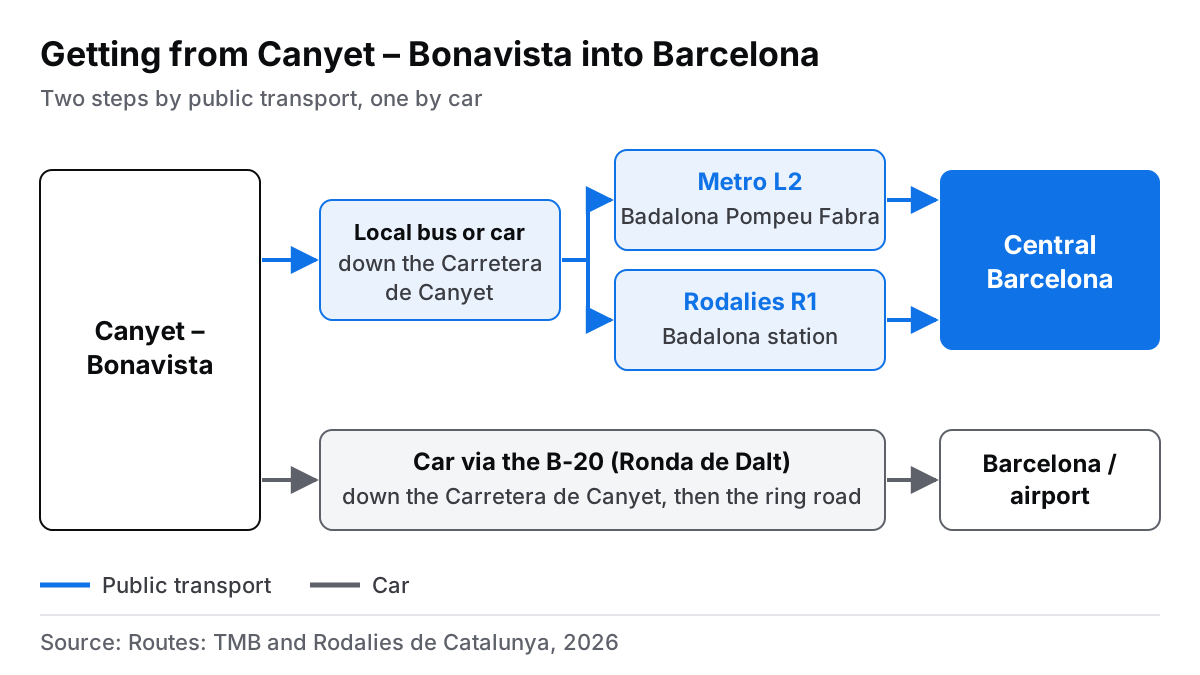
Connecting from Canyet and Bonavista into central Barcelona relies on a simple two-stage transport system or direct road links. Local TMB and TUSGSAL buses run along the Carretera de Canyet, connecting the upper hills and hospital area down to the city centre of Badalona. From there, commuters connect to Barcelona via the Rodalies R1 train line at Badalona station or line L2 of the Barcelona metro at Badalona Pompeu Fabra terminus.
For motorists, the nearby B-20 highway (Ronda de Dalt) and C-31 provide rapid routes across the metropolitan region. Barcelona–El Prat airport is located on the south-west side of Barcelona and is accessible via the B-20 and B-10 highways, though travel times vary according to peak traffic hours. Daily amenities are available locally along the Carretera de Canyet and in central Badalona, backed by the major medical complex at Hospital Universitari Germans Trias i Pujol.
Getting to know the neighbourhood
Beyond its residential streets, Canyet is anchored by the natural contours of the Parc de la Serralada de Marina (Diputació de Barcelona). Managed by the local provincial network, this expansive park borders Canyet, offering walking trails and mountain-biking paths with panoramic views across the coastline.
Tucked into the Vall de Betlem north-west of Canyet stands Sant Jeroni de la Murtra, a 15th-century Gothic Hieronymite monastery known for its quiet cloister. Down towards the shore, approximately five kilometres from the hills of Canyet, Badalona offers expansive sandy beaches and sea access. Equestrian enthusiasts can visit Hípica Badalona, an equestrian riding centre located right in Canyet. For cultural heritage, the Museu de Badalona and the Roman city of Baetulo display preserved Roman bathhouses and underground streets dating back to the 1st century BC.
A taste of Catalan life in Badalona
Living in Badalona provides an authentic immersion in Catalan culture and civic traditions. The focal point of the local calendar is the Festes de Maig, celebrated each spring in honour of the city’s patron saint, Sant Anastasi. On the night of 10 May, the tradition of the Cremada del Dimoni sees a giant wooden effigy burned on the beach, drawing thousands of residents to the seafront.
The city also maintains a lively arts scene. Autumn brings the FILMETS Badalona Film Festival, an international short film event hosted at the historic Teatre Zorrilla, alongside year-round theatrical productions at Teatre Principal. Food culture spans traditional seafood dining along the coastline to regional gastronomy in neighbouring Santa Coloma de Gramenet.
What international buyers should check before buying in Badalona
Navigating a property transaction in Catalonia requires careful planning around local legislation, taxes, and conveyancing processes. Buyers who are unfamiliar with Spanish property purchases can consult our guide to buying property in Spain for a complete overview.
Key statutory and financial details for buyers include:
- Transfer Tax (ITP): Second-hand property purchases in Catalonia are subject to Property Transfer Tax (Impost sobre Transmissions Patrimoniats or ITP), administered by the Generalitat de Catalunya. Catalonia reformed its ITP scale in June 2025 to a progressive framework starting at a 10% base rate. Verify applicable tax bands directly with the Agència Tributària de Catalunya on transfer tax.
- Abolition of the Golden Visa: Spain’s investor residence permit for real estate purchases was officially abolished with effect from April 2025 under Ley Orgánica 1/2025, published in the Boletín Oficial del Estado. Non-EU buyers must now utilise alternative residence visa routes, though a Spanish NIE (Número de Identificación de Extranjero) remains mandatory to complete a purchase.
- Holiday Let Licences and Rental Regulations: Under Catalonia’s Decret llei 3/2023, new tourist-use licences (HUT) in declared stressed housing municipalities require a specific town-planning permit from the local authority. Because Badalona is designated as a stressed residential market area under national Housing Act 12/2023, rent caps apply to standard residential tenancies, and tourist licences are tightly regulated. Check guidelines with the Generalitat de Catalunya housing department on tourist-let licences and read what Spain’s 2023 Housing Act changed for landlords.
- Legal Due Diligence: Prior to placing a deposit, ensure your legal representative conducts thorough checks on the property’s land registry extract (nota simple), ownership title, and cadastral reference. Read the contract and the escritura explained for detail on title deeds.
For agents pricing hillside homes with non-standard characteristics, CASAFARI’s Valuation & Market Study provides comparable pricing data across Badalona. Developers looking to integrate real-time market data directly into internal workflows can review the Area Insights developer documentation. To experience the platform firsthand, try CASAFARI on the platform.
Frequently asked questions
Is Badalona a good place to live for someone moving from the UK?
Badalona is Catalonia’s third-largest city, offering Mediterranean beaches, distinct local neighbourhoods, and direct Rodalies train and metro links into Barcelona. Canyet and Bonavista form its greenest hillside district, ideal for families seeking houses with gardens rather than urban apartments. Catalan is the primary everyday language in public institutions, while central Barcelona remains easily accessible for work or international schooling.
How far is Canyet – Bonavista from Barcelona city centre?
Canyet and Bonavista sit in north-west Badalona, just beyond the Barcelona municipal boundary near the Serralada de Marina park. Travel into central Barcelona is straightforward via local buses down the Carretera de Canyet to Badalona Pompeu Fabra metro station or Badalona Rodalies train station. Motorists connect directly to Barcelona and the airport via the B-20 highway.
Can I let a property in Badalona as a holiday rental?
Short-term holiday lets in Catalonia require a tourist licence (HUT) from the Generalitat de Catalunya. In Badalona, which is designated as a stressed housing area under national Housing Act 12/2023, obtaining new tourist licences is strictly limited and subject to town-planning permits under Decret llei 3/2023. Long-term residential leases are also subject to regional rent cap rules, so prospective landlords should verify regulations with the Ajuntament de Badalona before purchasing.
What taxes do I pay when buying a second-hand home in Catalonia?
When buying a resale property in Catalonia, buyers pay Property Transfer Tax (ITP) administered by the Agència Tributària de Catalunya, which follows a progressive scale starting at a 10% base rate. Additional costs include notary fees, land registry fees, and legal charges, while new-build homes incur 10% VAT plus stamp duty (AJD). Buyers require a Spanish NIE number, and note that the real estate golden visa was abolished in April 2025.