
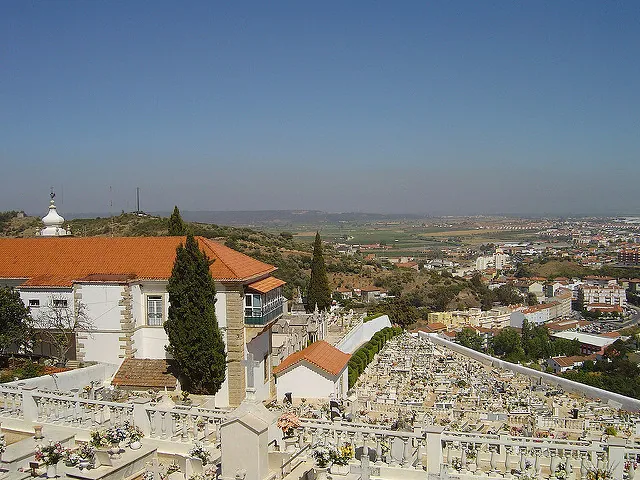
ALENQUER PROPERTY GUIDE
Idyllic rural beauty from the mountains to the Tejo
Alenquer is a rural municipality of about 44,000 residents in the Lisbon surroundings, situated approximately 45 km north of the capital along the A1 motorway. Best known for its DOC wines and the Serra de Montejunto, property in Alenquer is dominated by detached houses, historic quintas and village homes rather than apartment blocks. Real estate professionals and buyers use regional data to assess pricing and market indicators across the municipality’s distinct topographies.
Where is Alenquer and how do you get there?
Alenquer occupies a strategic position on the northern boundary of the Lisbon metropolitan area. The municipality stretches from the Tagus floodplain near Carregado in the south to the heights of the Serra de Montejunto in the north, with the Rio Alenquer flowing through the historic centre towards the Tagus River.
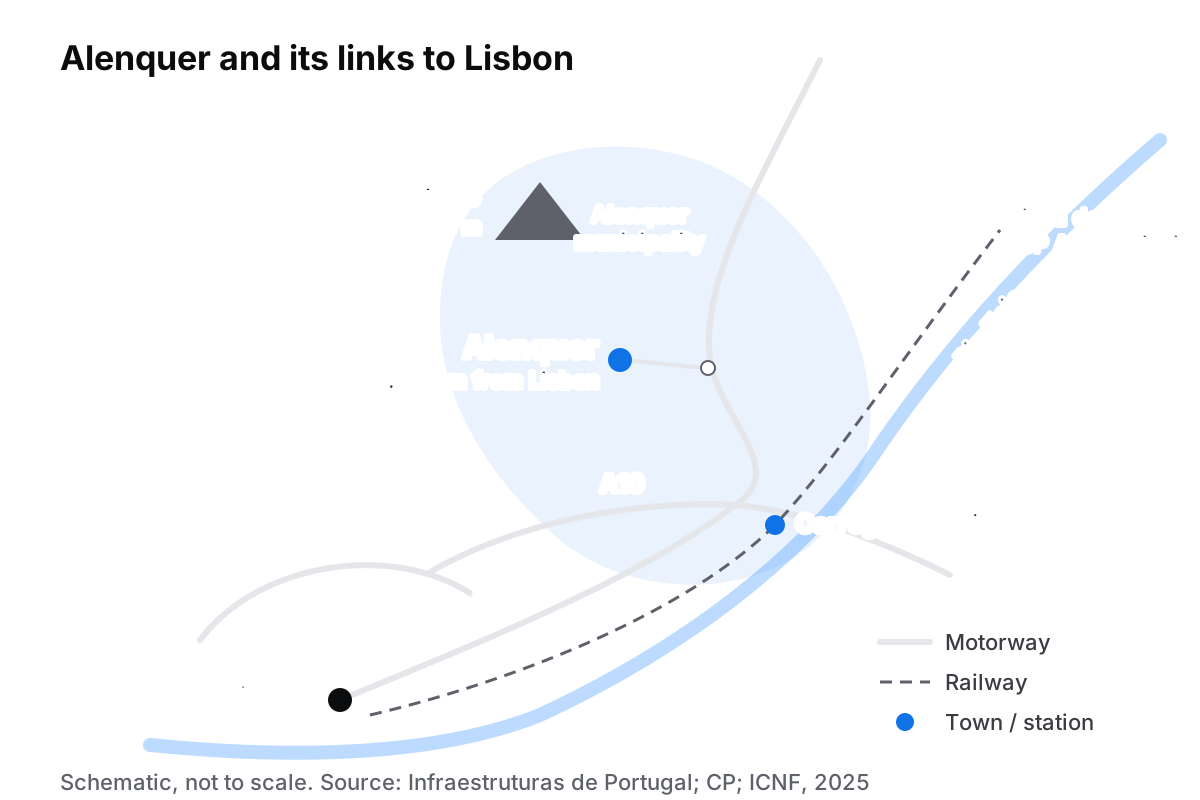
Road connections to the capital are direct. The A1 (Lisbon–Porto) motorway has a dedicated Alenquer interchange, while the A10 motorway links the area to the CREL (A9) ring road and the western corridor. According to network operator Infraestruturas de Portugal, the drive to central Lisbon is roughly 45 km and takes around 40 to 45 minutes outside rush-hour traffic.
Rail connection to Lisbon is provided by Carregado railway station in the southern portion of the municipality. Served by CP – Comboios de Portugal’s suburban Azambuja line, direct train services connect commuters to major Lisbon hubs including Oriente and Santa Apolónia. The town centre of Alenquer itself does not have a train station, so residents typically park at Carregado or use regional bus connections.
For international flights, Lisbon Airport remains the primary gateway. While the nearby village of Ota was once proposed as a potential site for a new airport, the Portuguese government formally designated Campo de Tiro de Alcochete for the future airport infrastructure in May 2024, as confirmed by the Governo de Portugal.
What the municipality is made of: 11 freguesias, two landscapes
Following the national administrative restructuring established by Lei n.º 11-A/2013, the municipality is divided into 11 freguesias (parishes), as documented by the Câmara Municipal de Alenquer. The municipality’s population stood at approximately 44,000 residents during the INE Censos 2021.
The town of Alenquer, comprising the parish union of Santo Estêvão e Triana, forms the historic core. It is built across amphitheatrical hills, giving rise to its traditional nickname Presépio de Portugal (the Nativity scene of Portugal) due to the way its whitewashed buildings climb the hillside in tiers.
Geographically and economically, Alenquer offers two distinct environments:
- The Southern Corridor: Centred around Carregado along the A1 motorway, this flat landscape houses one of the primary logistics and industrial hubs of the Lisbon region. Residential property here includes modern apartment buildings and semi-detached developments suited for commuters.
- The Northern and Western Countryside: Parishes such as Abrigada, Aldeia Galega da Merceana, Cadafais, Olhalvo, Ota and Ventosa feature rolling vineyard hills, olive groves and traditional farmhouses (quintas). This rural area is where international buyers predominantly focus their search.
Montejunto, the Tejo and the Convento de São Francisco
Alenquer’s landscape is anchored by the Serra de Montejunto, a mountain ridge rising to 666 metres along the northern border. Designated as a Paisagem Protegida (protected landscape) under national conservation standards managed by the ICNF, Montejunto creates a microclimate that shelters the valleys below and provides extensive trails for hiking and cycling.
Historical landmarks reflect Alenquer’s long role in Portuguese heritage. The Convento de São Francisco was founded in 1222 by Infanta D. Sancha, daughter of King Sancho I, making it recognized as the first Franciscan house established in Portugal, according to municipal heritage records from the Câmara Municipal de Alenquer. The humanist scholar Damião de Góis was born in Alenquer in 1502; his memory is preserved locally at the secondary school that bears his name.
Wine: what DOC Alenquer means for a buyer
Alenquer is an established Denominação de Origem Controlada (DOC) wine region situated within the broader Lisboa wine area, regulated by the Instituto da Vinha e do Vinho. Mountain protection from harsh Atlantic winds allows red grape varieties to ripen exceptionally well, giving the local wine industry a solid reputation.
For property buyers interested in vineyards or country estates, understanding land use designations is essential:
- Land Classification: Rural estate land in Portugal is often classified as rústico (agricultural/rural) in the official caderneta predial (tax register).
- Planning Restrictions: Portions of rural plots may fall under National Agricultural Reserve (RAN) or National Ecological Reserve (REN) protections, which restrict new building development.
- Purchasing Advice: Acquiring an existing licensed residential building (artigo urbano) within a quinta avoids planning complications associated with building on unzoned agricultural land. Buyers should always verify municipal land-use plans (PDM) with the local council.
For specialized valuations of rural estates where comparable market transactions are limited, tools such as Comparables for market valuation help agents and investors assess real pricing indicators.
Pintar e Cantar dos Reis: the night the town paints its walls
Every year on the night of 5 January leading into Epiphany on 6 January, Alenquer observes the traditional Pintar e Cantar dos Reis. Local groups walk through the streets painting traditional symbols and hearts on house façades while singing customary festive verses to householders.
This tradition remains a cherished aspect of community life, highlighting the municipality’s distinct cultural identity within easy reach of urban Lisbon.
Buying in Alenquer as a non-resident: what has changed since 2023
Foreign nationals, whether from EU or non-EU countries, face no legal restrictions on purchasing real estate in Portugal. Buyers require a Portuguese tax identification number (NIF) issued by the Portal das Finanças, and non-EU residents must appoint a local fiscal representative. Reviewing our guide to buying property in Portugal provides a comprehensive step-by-step overview of conveyancing procedures.
Recent legislative updates have altered the investment landscape:
- Golden Visa (ARI): Direct property acquisitions no longer qualify for residency by investment, as the real estate route was formally closed on 7 October 2023 under Lei n.º 56/2023, published in the Diário da República.
- Tax Regimes: The Non-Habitual Resident (NHR) tax status closed to new applicants on 1 January 2024 via Lei n.º 82/2023. It was replaced by the narrower IFICI incentive aimed strictly at scientific research and technological innovation.
- Short-Term Rentals (Alojamento Local): Under Decreto-Lei n.º 76/2024 enacted in November 2024, the national extraordinary CEAL tax was revoked and fixed licence expiration dates were eliminated. Registration (RNAL) remains mandatory, and municipal councils hold authority over local regulatory zones.
- Transaction Costs: Buyers pay progressive Transfer Tax (IMT) and Stamp Duty (Imposto do Selo) fixed at 0.8% of the purchase value. Since August 2024, buyers aged 35 or under purchasing a primary residence may qualify for IMT and Stamp Duty exemptions under Decreto-Lei n.º 48-A/2024. Municipal property tax (IMI) is set annually by each council between 0.3% and 0.45% of taxable value.
Investors looking at why investors keep looking at Portugal often choose Alenquer for its combination of accessible pricing and proximity to the capital. Real estate professionals sourcing properties across multiple listing platforms can utilize Property Sourcing to identify available inventory, or evaluate regional market trends using Area Insights for Alenquer and its freguesias. Software engineers building custom analytical tools can also review the Area Insights API documentation in English.
To explore comprehensive market analytics and property valuation tools for Alenquer, try Area Insights on the CASAFARI platform.
Frequently asked questions
How far is Alenquer from Lisbon and what is the commute like?
Alenquer is located approximately 45 km north of Lisbon. By car, the journey takes roughly 40 to 45 minutes outside rush hour via the A1 motorway or the A10 connecting to the CREL ring road. Commuters using public transport can take CP suburban trains on the Azambuja line from nearby Carregado station directly into Lisbon’s Oriente and Santa Apolónia stations.
Can foreigners buy property in Alenquer, Portugal?
Yes, EU and non-EU citizens can acquire property in Alenquer under identical legal terms as Portuguese nationals. Buyers must obtain a Portuguese tax number (NIF) prior to signing the promissory contract. Note that real estate purchases no longer qualify for the Golden Visa program following legal changes in October 2023.
Is Alenquer a good place to buy a quinta or vineyard?
Alenquer is an established DOC wine region protected by the Serra de Montejunto, making its rural northern and western parishes popular for purchasing country houses and vineyards. Buyers should inspect the municipal land-use plan (PDM) and tax register (caderneta predial) to confirm land classifications (rústico vs. urbano) and check for agricultural reserve protections before purchasing.
Can I run a short-term let (Alojamento Local) in Alenquer?
Short-term holiday lets are permitted subject to obtaining an official RNAL registration number and complying with municipal regulations. National legal updates in late 2024 removed the CEAL tax levy and returned control of licensing rules to municipal authorities. Property owners should confirm local requirements with the Câmara Municipal de Alenquer before establishing an operation.