
Where can I see comparables with real closing prices?
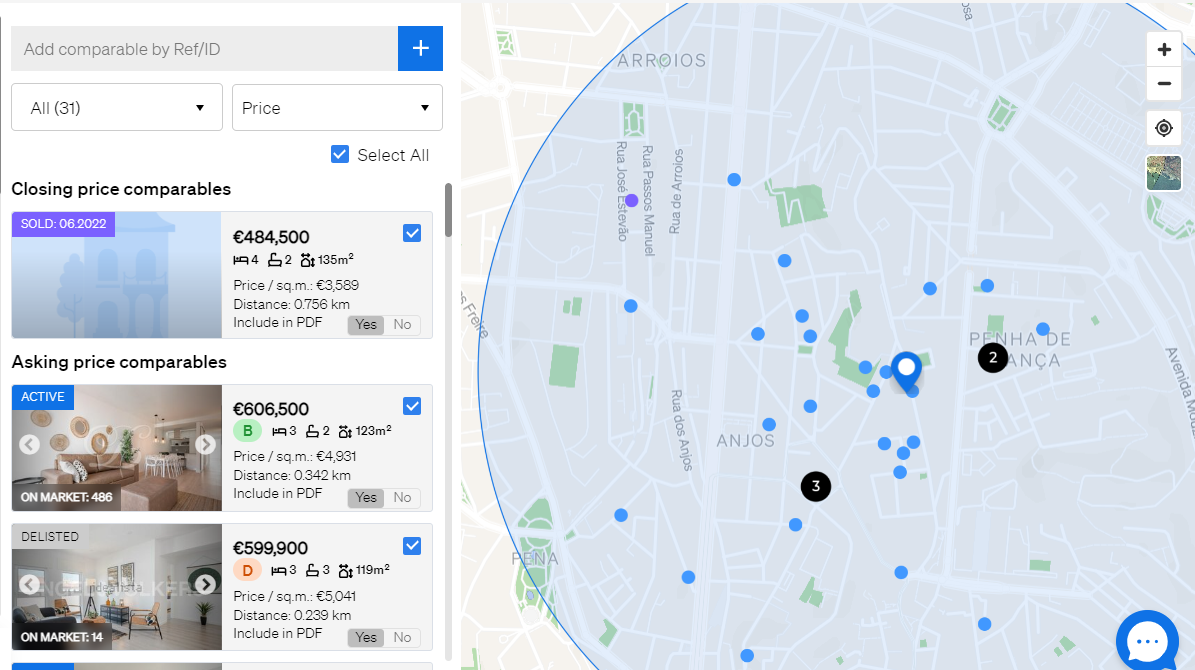
Open your valuation in the Property Valuation (CMA) tool and go to the Evaluation tab, where comparables with real closing prices are marked with a purple "closing price" tag. These prices come from official records or trusted transaction data in your market.
- Log in to your CASAFARI account at https://www.casafari.com/login.
- From the main menu, open the Property Valuation (CMA) tool.
- Enter the property address, postcode or cadastral reference to start your valuation.
- Go to the Evaluation tab to see the list of comparables used in the analysis.
- Look for comparables marked with the purple closing price tag.
Use closing prices in your report
Comparables with real closing prices make your valuation more credible, especially in negotiations or client reports. After you have reviewed or adjusted your comparables:
- Click Customise.
- Export your report as a PDF or share it via SmartLink.
Good to know
- You do not need to add these comparables yourself. Comparables with actual transaction prices are added to the list automatically as soon as the valuation algorithm detects them.
- They are shown in purple on both the map and the list.
- If you have questions about comparables or closing price data, contact support@casafari.com or go to Help Center > Contact Us inside the platform.
Where the closing prices come from
Registered transaction prices come from official sources: Notariado in Spain, INE in Portugal, DVF in France, Agenzia delle Entrate in Italy and RCN in Poland and Statistik Austria in Austria. The same prices appear in Market Study, where the average closing price of an area sits next to asking prices, and in Property History, which lists the registered sales around the property in Spain, France, Italy and Poland.
If you want to see how comparables with closing prices, Market Study and Property History work together in one valuation, CASAFARI’s Valuation & Market Study page walks through the whole tool, from the first comparable to the shared report.
Last updated: