VALLDEMOSSA REAL ESTATE GUIDE
Region enriched with romantic atmosphere and sense of heritage
The municipality of Valldemossa in Mallorca’s UNESCO-protected Serra de Tramuntana covers 42.93 km² and is home to 2,038 residents, according to the INE municipal register (2025). Situated 19 to 20 km north of Palma via the Ma-1110, Valldemossa offers a highly constrained real estate market characterised by strict rural conservation policies, heritage village houses, and prime mountain fincas, attracting discerning international buyers seeking long-term value.
Why do international buyers choose the municipality of Valldemossa?
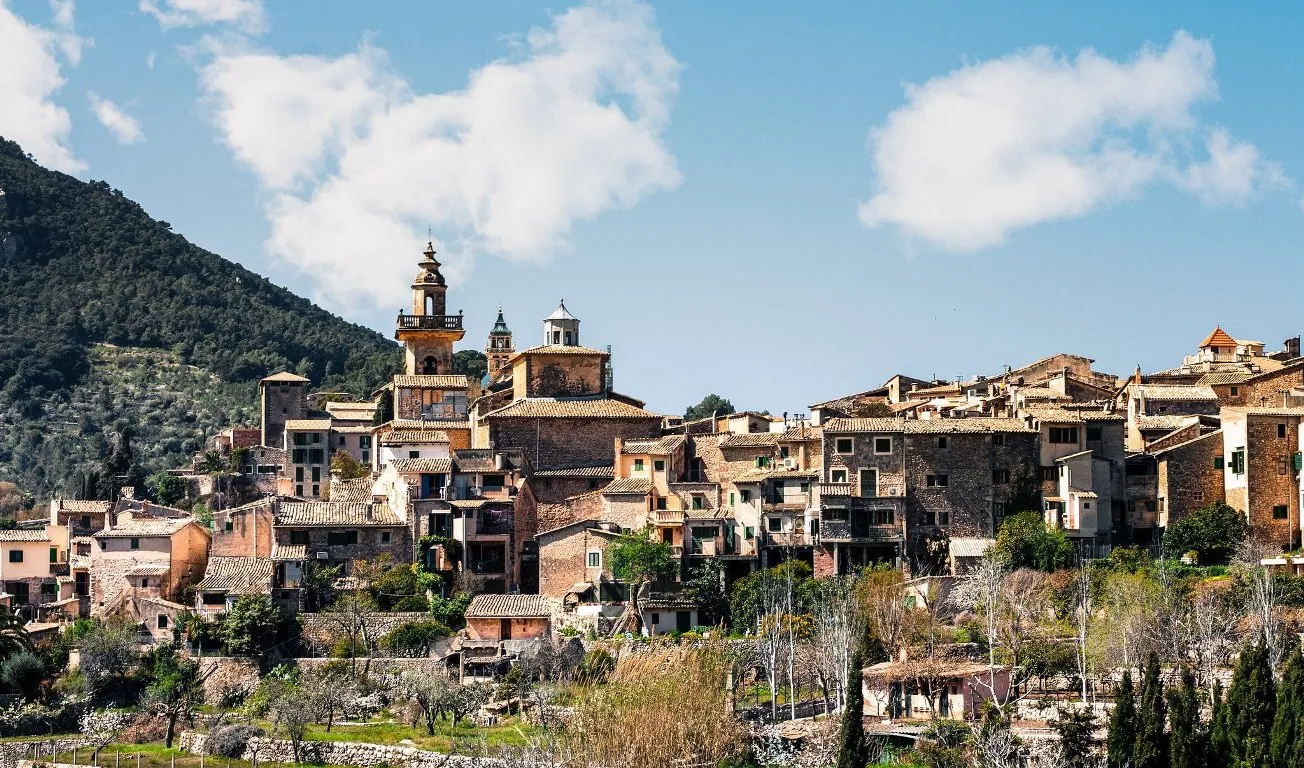
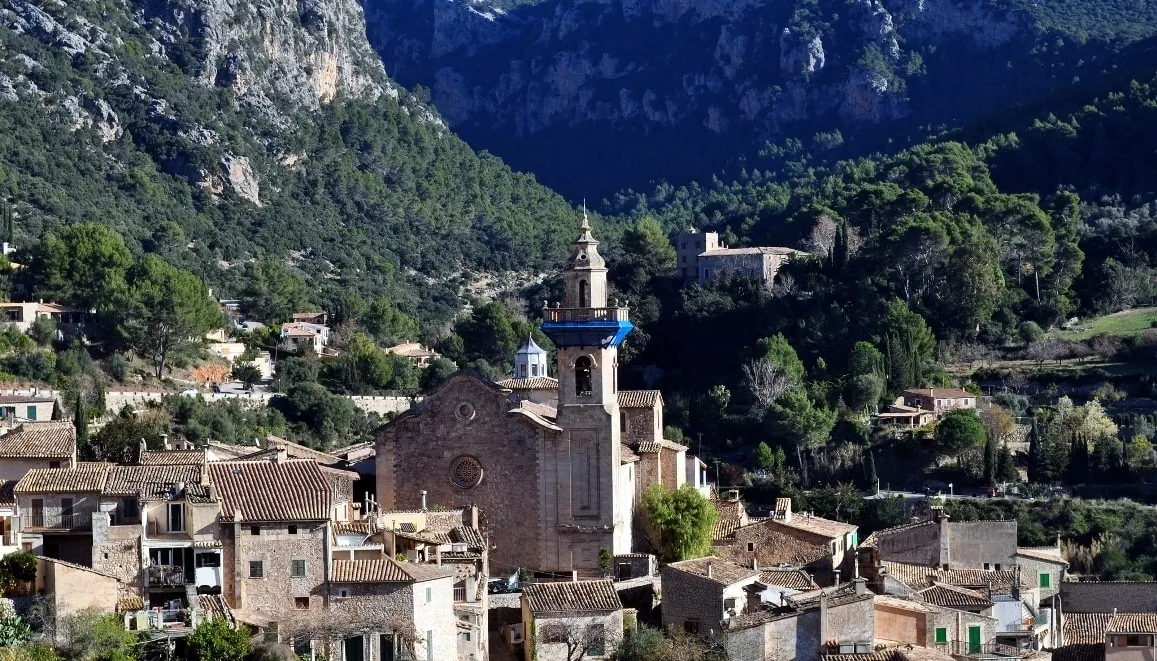
Nestled in a high valley of the Serra de Tramuntana mountain range, Valldemossa has long held a unique position in the Balearic property market. Its historic aesthetic—defined by honey-coloured stone facades, terracotta roof tiles, and narrow pedestrianised lanes—is steeped in cultural heritage. The landmark Royal Charterhouse (Real Cartuja), where composer Frédéric Chopin and writer George Sand spent the winter of 1838–1839, remains an enduring cultural symbol of the village.
Beyond its historic appeal, Valldemossa offers a distinct microclimate, with summer temperatures often several degrees cooler than the coastal plains of Mallorca. Despite its private mountain setting, the municipality is only a 20-minute drive from Palma, making it an appealing option for permanent residents, second-home owners, and international professionals who require proximity to capital services while desiring rural retreat.
For real estate professionals and private investors evaluating opportunities, analyzing hyper-local pricing dynamics in high-demand Tramuntana locations requires accurate data tools. You can explore market dynamics directly using CASAFARI Area Insights or review the CASAFARI Area Insights technical documentation (in English) for integration options.
Towns, villages and residential enclaves of the Valldemossa region
Although the municipality spans 42.93 km², residential supply in Valldemossa is concentrated within a few distinct micro-markets, each presenting different architectural styles, legal considerations, and buyer profiles.
- Valldemossa Village (Historic Centre): The main settlement features traditional townhouses (casas de pueblo) and character apartments along cobblestone streets. Properties here often feature stone arches, interior courtyards, and exposed wooden beams. Many require sympathetic restoration in compliance with municipal heritage conservation rules.
- Port de Valldemossa (Sa Marina): Located at the base of a steep, winding road down the coastal cliffs, this secluded fishing enclave consists of a small harbour and coastal homes. Properties here are rarely listed and appeal to buyers seeking immediate sea access on Mallorca’s west coast.
- George Sand and Son Ferrandell Urbanisations: Situated on the elevated outer slopes of the village towards Deià, these established residential urbanisations feature detached single-family villas set on generous private plots. These residences frequently provide open mountain views and modern amenities unavailable within the village core.
- Rural Fincas and Historic Estates (Posesiones): Scattered across the agricultural terraces surrounding the village, large rural fincas and historical posesiones represent the pinnacle of the local luxury market. Set among ancient olive and almond groves, these extensive holdings command premium market attention.
Estate agents and buying advisors sourcing listings across these tightly held enclaves can streamline off-market and portal searches using CASAFARI Property Sourcing, while our property valuation and market study tool provides precise baseline comparisons for non-standard village homes.
Transport, connectivity and international schools near Valldemossa
Valldemossa benefits from straightforward road connections to the main transport hubs of Mallorca:
- Road Links: The municipality is located 19 to 20 km north of central Palma via the Ma-1110 highway. The drive passes the Parc Bit technology park and the main campus of the University of the Balearic Islands (UIB), reaching Palma and Son Espases Hospital in 20 to 25 minutes.
- Public Transit: Public transportation is operated by TIB (Transport de les Illes Balears, October 2026), with line 203 connecting Palma’s Estació Intermodal and Son Espases Hospital directly to Valldemossa in roughly 30 minutes, before continuing along the scenic coast to Deià, Sóller, and Port de Sóller.
- International Education: Families relocating to Valldemossa have convenient access to reputable international schools. Escola Global International School sits along the direct commute at Carretera de Valldemossa km 7.4 (Parc Bit, Palma), offering British and Spanish curricula for ages 2 to 18 (directory data, July 2026). Additional options within a 25-to-30-minute drive include Baleares International College (BIC) in Sant Agustí and Sa Porrassa, as well as Agora Portals International School in Calvià.
Property taxes, planning laws and residency rules in Valldemossa (2025–2026)
Navigating real estate transactions in Valldemossa requires careful attention to Balearic tax frameworks and regional land-use legislation.
Balearic Property Transfer Tax (ITP)
When acquiring resale residential property in Valldemossa, buyers pay the Balearic Islands Property Transfer Tax (Impuesto sobre Transmisiones Patrimoniales - ITP), which operates on a progressive scale calculated by the Agència Tributària de les Illes Balears (ATIB, October 2026):
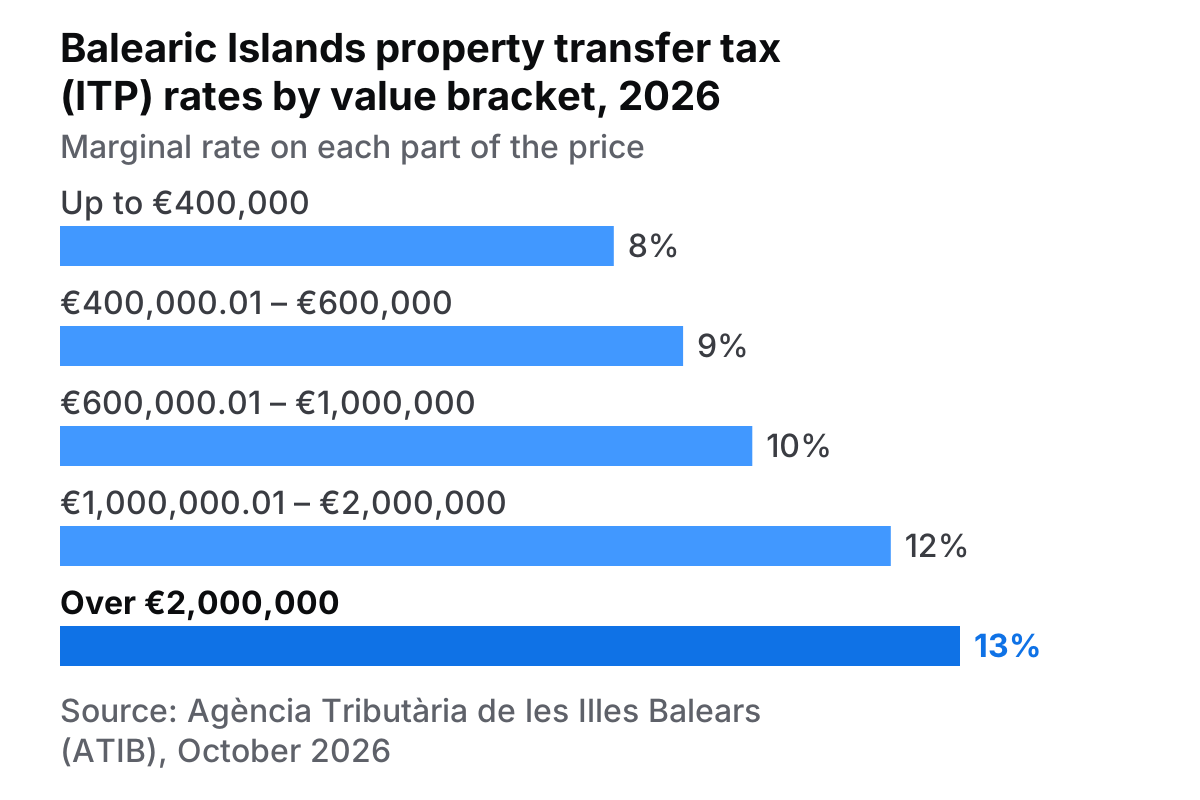
- Up to €400,000: 8%
- €400,000.01 to €600,000: 9%
- €600,000.01 to €1,000,000: 10%
- €1,000,000.01 to €2,000,000: 12%
- Over €2,000,000: 13%
Reduced rates apply for primary residences, including a 4% general rate and up to 100% exemption for first-time buyers under 30 purchasing a primary home valued up to €331,859.70 in Mallorca. For a broader overview of legal formalities, consult our guide to the Spanish property purchase contract and escritura.
Wealth Tax Thresholds
Under Balearic Law 12/2023 (applicable in 2025 and 2026), the wealth tax (Impuesto sobre el Patrimonio) minimum exempt threshold stands at €3,000,000 per individual (ATIB, August 2026). Taxable net assets exceeding this threshold are subject to progressive regional rates ranging from 0.28% to 3.45%.
Strict Rural Building Rules (ANEI)
Much of the surrounding countryside in Valldemossa falls within Natural Areas of Special Interest (Áreas Naturales de Especial Interés - ANEI) under the Plan Territorial Insular de Mallorca (PTIM) and Law 6/1997 (Consell de Mallorca, January 2025). On protected ANEI land, new residential construction is strictly prohibited. Uncatalogued traditional buildings are limited purely to structural conservation and maintenance works, preventing expansion or new footprints.
Holiday Rental Licences (ETV) and Residency Rules
Holiday rentals are subject to tight restrictions across Mallorca. The island maintains a strict total cap of 115,000 holiday rental places. Under Balearic Decree-Law 4/2025 (11 April 2025), new tourist rental licences (ETV) in multi-family apartment buildings are prohibited across the region. Prospective investors aiming for short-let rental income must identify detached single-family properties that already hold a valid, transferable ETV licence.
Furthermore, non-EU investors should note that Organic Law 1/2025 (2 January 2025) permanently repealed Spain’s real estate Golden Visa programme effective 3 April 2025. Non-EU citizens purchasing property in Valldemossa now utilise alternative residency avenues, such as the Non-Lucrative Visa or the Digital Nomad Visa.
Whether you are acquiring a mountain estate or selling a property in Mallorca, accessing unified real estate intelligence ensures well-informed decision-making. To explore market data across Mallorca, sign in to the CASAFARI platform.
Frequently asked questions
Can you get a holiday rental licence (ETV) for a property in Valldemossa?
Obtaining a new holiday rental licence (ETV) in Valldemossa is strictly limited under Balearic regulations. Mallorca operates under a cap of 115,000 tourist places, and Decree-Law 4/2025 of 11 April 2025 bans new ETV licences for apartments or multi-family buildings across the Balearic Islands. Investors seeking short-let rental income must acquire a detached single-family home that already possesses an existing, valid ETV licence or meets strict municipal zoning criteria.
How much is Property Transfer Tax (ITP) when buying a home in Valldemossa?
Property Transfer Tax (ITP) on resale properties in Valldemossa follows the progressive scale set by the Agència Tributària de les Illes Balears (ATIB, October 2026). The tax starts at 8% on the first €400,000, rising to 9% up to €600,000, 10% up to €1,000,000, 12% up to €2,000,000, and 13% on any portion above €2,000,000. Reduced rates or exemptions apply to qualifying primary residence purchases.
Is the Spanish Golden Visa still available for property buyers in Mallorca?
No, the Spanish Golden Visa programme for real estate investors has been abolished. Under Organic Law 1/2025 of 2 January 2025, Spain permanently ended investor residency visas linked to purchasing €500,000 or more in real estate, effective from 3 April 2025. Non-EU buyers relocating to Valldemossa now pursue alternative non-investment visas, such as the Non-Lucrative Visa or Digital Nomad Visa.
What are the building restrictions on rural fincas (ANEI) in Valldemossa?
Rural land surrounding Valldemossa is heavily protected as a Natural Area of Special Interest (ANEI) under the Plan Territorial Insular de Mallorca (PTIM) and Law 6/1997. New residential construction is prohibited on ANEI land, and existing traditional rural structures without a municipal catalogue entry are strictly limited to maintenance and structural preservation work. Buyers must verify the exact planning status and municipal catalogue entries of any rural finca before purchase.