
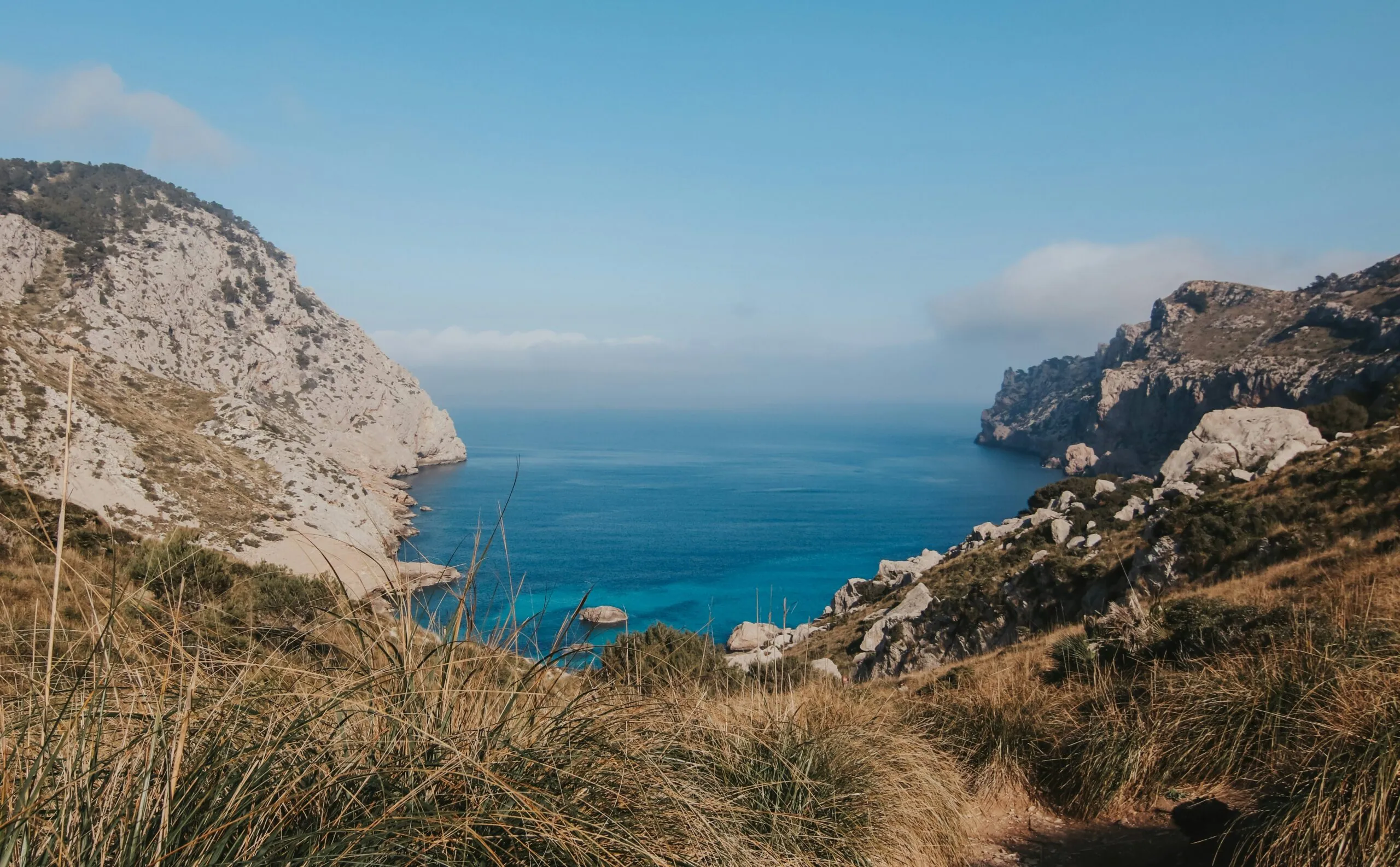
Standing in Colònia de Sant Jordi on Mallorca’s southern tip, looking out across the sea, buyers often ask about the long grey island on the horizon. That is Cabrera, the primary island of the Parque Nacional Marítimo-Terrestre del Archipiélago de Cabrera. State-owned since 1916 and protected as a national park since 1991, Cabrera contains no private property and no housing market. The opportunities for real estate lie entirely along the gateway coast facing it.
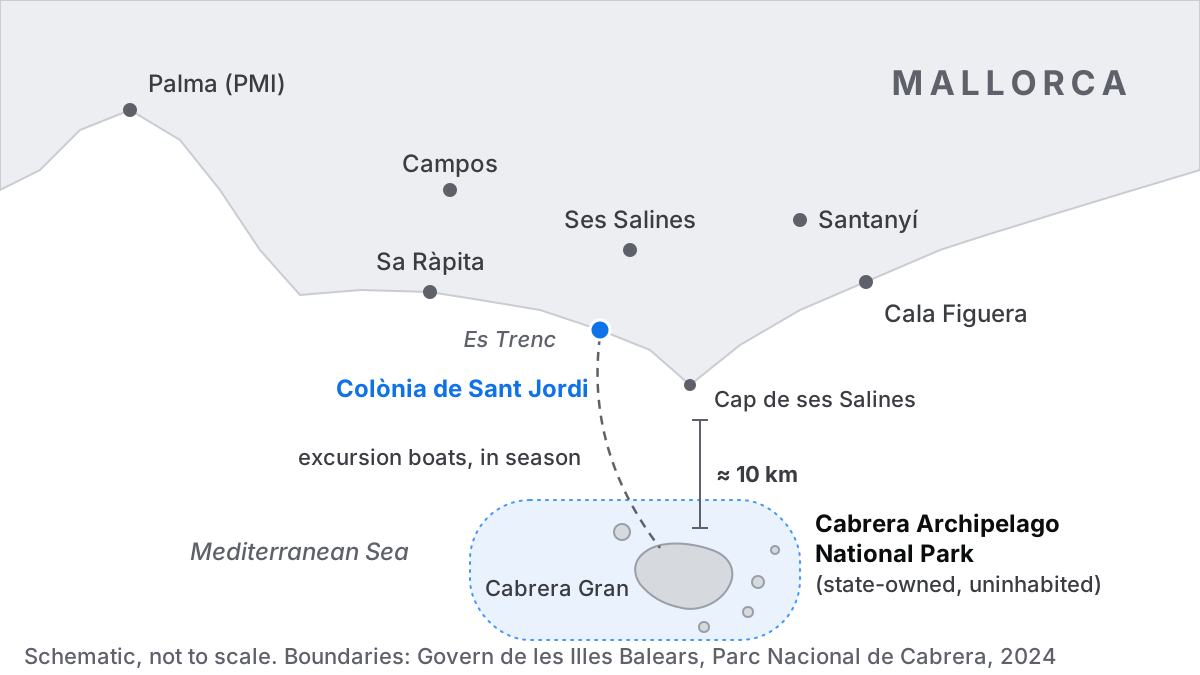
What is the Cabrera Archipelago and why does it matter to a Mallorca buyer?
The Parque Nacional Marítimo-Terrestre del Archipiélago de Cabrera is a cluster of 19 islands and islets located roughly 10 km south of Cap de ses Salines. Managed by the Govern de les Illes Balears following a regional transfer of authority in 2009, the park is entirely public land.
Because the archipelago is state-owned, no villas, apartments, or plots exist for private acquisition. The population consists exclusively of park service personnel, researchers, and temporary personnel. For real estate investors, Cabrera acts as a permanent environmental buffer that protects the southern horizon. The primary port connecting Mallorca to the archipelago is Colònia de Sant Jordi, located within the municipality of Ses Salines.
From corsair base to prison island: the history that shaped Cabrera
During the 14th century, Cabrera’s deep natural harbour served as a tactical haven for Barbary corsairs raiding the Balearic trade routes. To counter these incursions, local authorities constructed a stone castle around 1410 overlooking the harbour entrance, using signal fires to warn watchtowers along the Mallorcan coastline.
Following the Battle of Bailén in July 1808, several thousand French prisoners of war were transferred to Cabrera between 1809 and 1814 under severe conditions. A stone monument erected in 1847 stands near the shore in commemoration. In 1916, the Spanish State expropriated the entire archipelago for military defence purposes, preventing commercial development and preserving the ecosystem until its formal park designation.
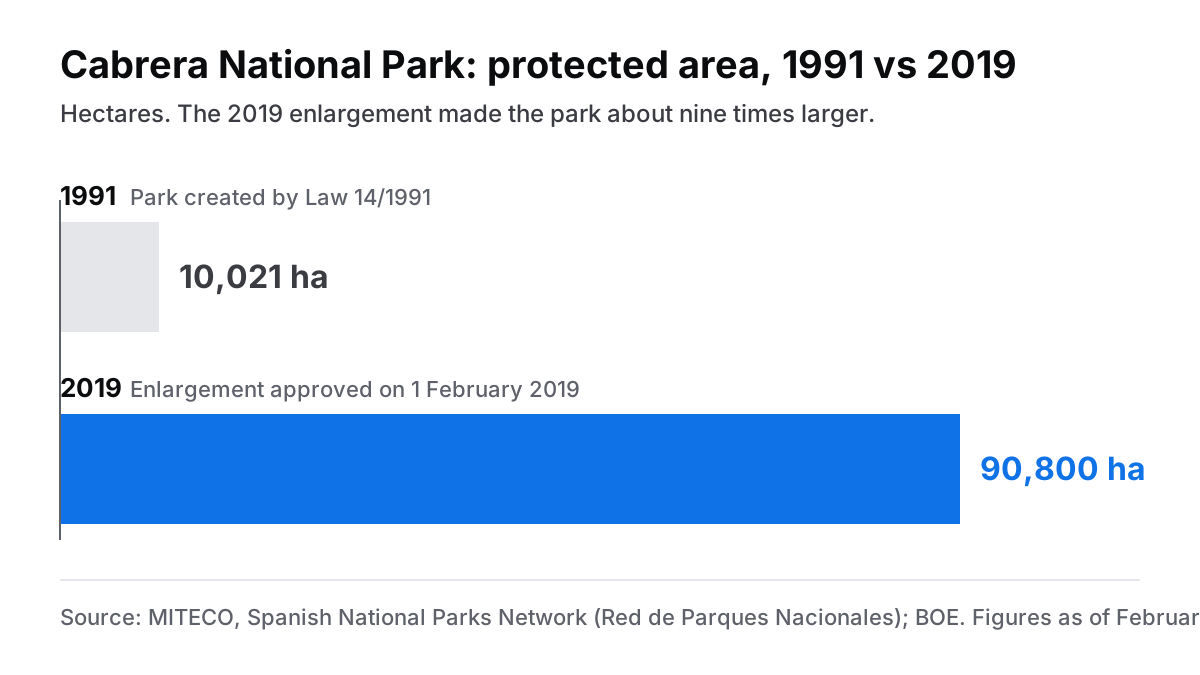
How big is the national park, and what changed in 2019?
Spain established the national park under Ley 14/1991 in April 1991, covering an initial surface area of 10,021 hectares focused primarily on the central island and surrounding waters. In February 2019, the Spanish Council of Ministers approved an extension published by MITECO, expanding the park area to approximately 90,800 hectares.
This expansion established Cabrera as the largest national park in Spain and the largest marine national park in the western Mediterranean. The marine ecosystem protects extensive Posidonia oceanica meadows, deep-water corals, endemic Balearic wall lizards, and critical nesting habitats for seabirds.
How do you visit Cabrera, and what are the rules?
Commercial excursion boats operate regularly between April and October from the harbour at Colònia de Sant Jordi. Most day tours include a coastal circuit of Cabrera Gran, time to explore the 15th-century castle, and a stop at the Cova Blava (Blue Cave) on the return leg when sea conditions permit.
- Private vessels: Anchoring on the seabed is strictly prohibited throughout the park. Maritime visitors must reserve a fixed mooring buoy in advance through the Govern de les Illes Balears booking service.
- Overnight accommodation: Camping and private rentals are forbidden. The only overnight facility is the Refugi de Cabrera, a small public lodge managed by the park authority that requires advance booking.
- Regulations: Recreational fishing, hunting, plant collection, and unpermitted scuba diving are prohibited.
Where do people actually buy when they say ‘near Cabrera’?
Buyers seeking proximity to the archipelago focus on the southern coastline directly facing the park:
- Colònia de Sant Jordi & Ses Salines: The direct gateway to Cabrera, offering coastal apartments, townhouses, and sea-view residences near Es Trenc beach.
- Sa Ràpita & Ses Covetes (Campos): Positioned near the Salobrar de Campos wetlands, featuring detached villas and marine-oriented properties.
- Santanyí & Cala Figuera: Characterised by traditional golden sandstone architecture, historic fincas, and coastal rias.
The combination of landward building restrictions and Cabrera’s offshore protection ensures long-term coastal preservation along this corridor. Real estate professionals evaluating pricing trends and listing activity across these municipalities can use Area Insights for Ses Salines, Campos and Santanyí or run a comparative market analysis using a valuation and market study with comparables.
What does a foreign buyer need to know about taxes, residency and holiday letting on the south coast?
Acquiring real estate along Mallorca’s south coast requires an understanding of regional regulations:
- Property Purchase Tax: Resale transactions attract Balearic Transfer Tax (ITP) managed by the Agència Tributària de les Illes Balears (ATIB). New-build properties are subject to 10% IVA plus regional Stamp Duty (AJD).
- Residency: Spain’s investor residence permit (“Golden Visa”) program was formally abolished on 3 April 2025 pursuant to Ley Orgánica 1/2025. Non-EU citizens buying property require a Spanish NIE and remain subject to standard Schengen restrictions (90 days per 180-day period) unless holding alternative residency status.
- Holiday Lettings: Short-term tourist rentals require an ETV licence under Balearic tourism laws. Regional regulations and municipal planning frameworks apply strict conditions on new licensing. Learn more about owning a rental property in Mallorca before committing to an investment model.
For a full overview of legal procedures, review the steps of buying property in Spain. Property owners planning an exit strategy can also consult how to sell a property in Mallorca.
Understanding regional constraints helps buyers make informed decisions along Mallorca’s southern shore. To explore live listings, market analytics, and professional valuation tools across the Balearic Islands, open the CASAFARI platform.
Frequently asked questions
Can you buy property on Cabrera island?
No. The entire Cabrera archipelago is public land owned by the Spanish State following military expropriation in 1916 and was designated a national park in 1991. There is no private housing, no freehold land, and no residential real estate market on the islands. Buyers seeking views of Cabrera look exclusively at the facing coast of Mallorca, including Colònia de Sant Jordi, Ses Salines, Campos, and Santanyí.
How do you get to Cabrera from Mallorca?
Visitors reach Cabrera via commercial excursion boats operating daily during the main season from the port of Colònia de Sant Jordi in the municipality of Ses Salines. Private boaters may navigate to the island but must book a designated mooring buoy in advance through the Balearic regional government service. Anchoring on the seabed within the national park is strictly prohibited.
Can you stay overnight on Cabrera?
Overnight stays are strictly limited to the Refugi de Cabrera, a small public refuge operated by the park authority that must be booked well in advance. Alternatively, private boaters with an official overnight buoy permit may sleep aboard their vessels in Es Port harbour. Camping, commercial hotels, and private holiday rentals do not exist anywhere within the archipelago.
Is Cabrera the largest national park in Spain?
Yes. Following a marine expansion approved by the Spanish government in February 2019, the park grew from its original 1991 footprint of 10,021 hectares to approximately 90,800 hectares. This expansion made Cabrera the largest national park in Spain and the largest marine national park in the western Mediterranean.