
NEW GOLDEN MILE PROPERTY GUIDE
Beachside properties with front line views of the sea
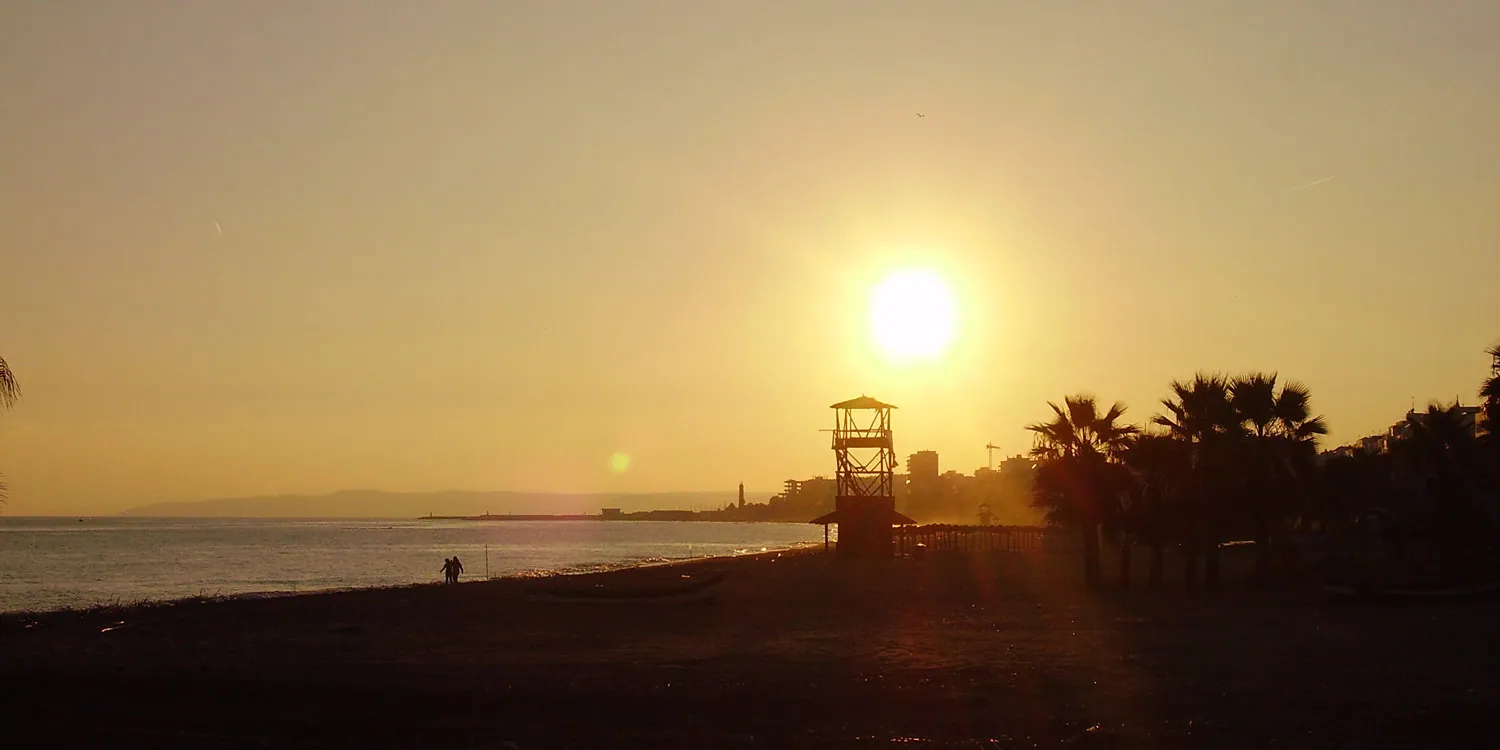
Standing on a beachside terrace in Costalita, the view extends along the Mediterranean towards Gibraltar. The beachside New Golden Mile is the coastal strip of Estepona municipality lying south of the A-7 highway, positioned between Estepona town to the west and San Pedro de Alcántara to the east. Renowned for frontline complexes like Menara Beach and Torre Bermeja, the stretch is tracked live in Area Insights.
Where the New Golden Mile is, and why ‘beach side’ matters
Geography on property portals can occasionally confuse buyers. According to the municipal map of the Ayuntamiento de Estepona, the New Golden Mile forms the eastern coastal corridor of Estepona municipality. It is bounded by Estepona town and marina to the west, and San Pedro de Alcántara (within Marbella municipality) to the east.
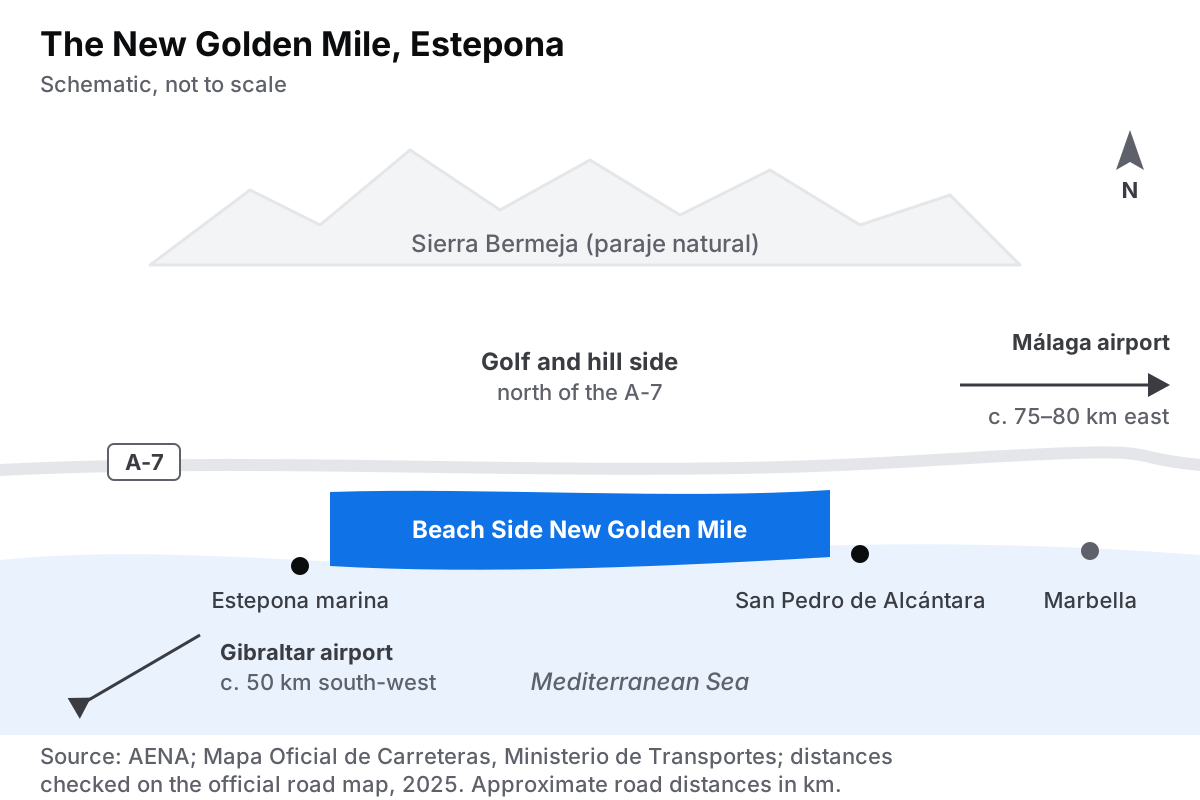
The dual carriage route of the A-7 serves as the primary geographical divider. ‘Beach side’ refers exclusively to the land lying south of the A-7, where residential developments sit within walking distance of the Mediterranean shoreline. The area north of the highway rises into the foothills, housing established golf courses and hillside developments.
The term ‘New Golden Mile’ was originally adopted by developers to reference Marbella’s established Golden Mile. However, the architectural density along Estepona’s stretch is distinct: low-rise gated urbanisations embedded in manicured subtropical gardens, avoiding the high-rise profile seen in older resort towns. Professionals and investors analyzing stock, transaction volumes, and pricing trends across these precise coastal coordinates use Area Insights to extract live market data.
What has changed since this guide was first written
Several key regulatory, environmental, and commercial changes affect property owners along the New Golden Mile:
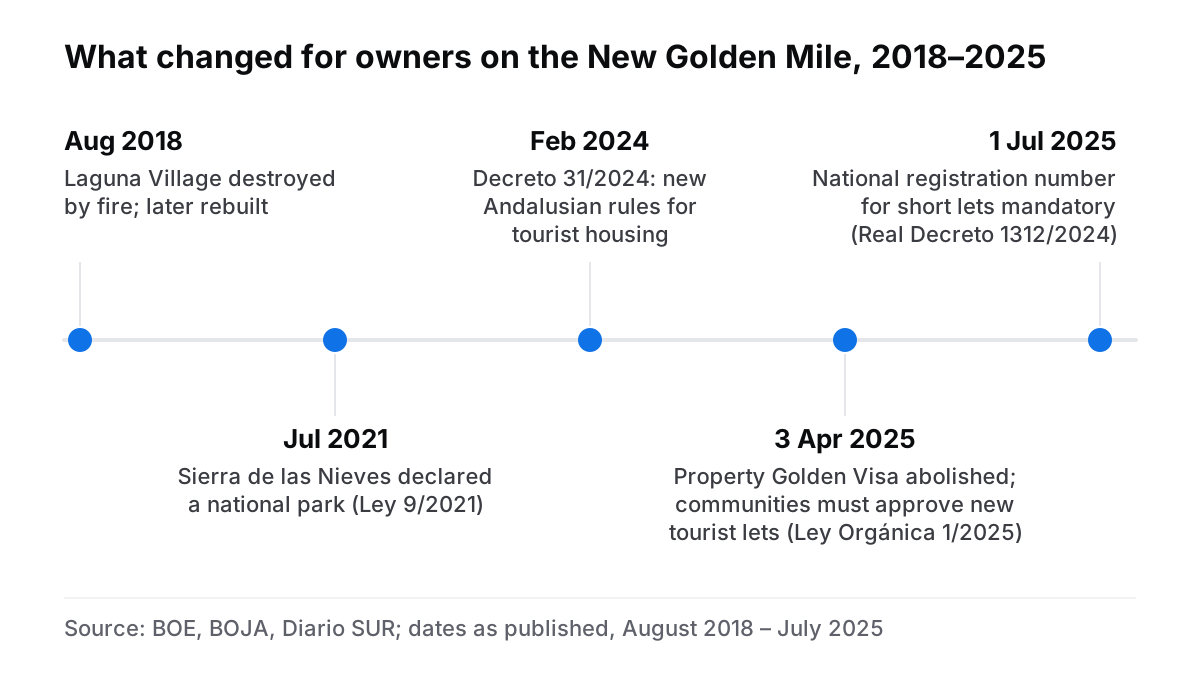
- Natural surroundings: The mountain backdrop of Sierra Bermeja is protected as the Paraje Natural Los Reales de Sierra Bermeja. The official national park in Málaga province is Sierra de las Nieves, established by Ley 9/2021.
- Commercial centres: The beachfront commercial complex Laguna Village, which was destroyed by fire in August 2018, has since been completely rebuilt and reopened, returning upscale dining and beach amenities to the western end of the strip.
- Residency regulations: The Spanish property Golden Visa (investor residency permit via a €500,000 real estate purchase) was formally abolished on 3 April 2025 under Ley Orgánica 1/2025.
- Short-let requirements: Holiday lets are regulated by the Andalusian regional decree Decreto 31/2024. Since 3 April 2025, new tourist rentals require explicit approval from the community of owners (three-fifths majority) under the amended Ley de Propiedad Horizontal. Furthermore, mandatory registration with the national Ventanilla Única Digital came into effect on 1 July 2025.
The frontline complexes: Menara Beach, Costalita, Torre Bermeja, Mar Azul and Bahía de la Plata
Five frontline and beachside urbanisations established the reputation of the New Golden Mile:
- Menara Beach: Designed by architect Melvin Villarroel, this development features distinctive Moorish architectural elements, water features, and landscaped gardens stepping down to the beach.
- Costalita: An Andalusian village-style development situated beside El Saladillo beach, known for expansive swimming pools and direct coastal footpath access.
- Torre Bermeja: Recognisable by its deep terracotta walls and grounds, offering high-spec communal facilities and beachfront security.
- Mar Azul: Structured in a V-shaped floor plan designed to orientation-maximise sea views across its beachfront footprint.
- Bahía de la Plata: A boutique residential scheme located closer to Estepona town, offering private plunge pools and contemporary coastal finishes.
Because newer residential developments have been constructed along this strip over the past decade, property valuations vary depending on construction age, maintenance standards, and community fees. Real estate professionals use Comparables to cross-reference historical listings and recent valuations within specific urbanisations.
Getting there: airports, the AP-7 and the absence of a train
Transport along the coastal corridor is primarily road-based:
- Málaga–Costa del Sol Airport (AGP): Located roughly 75 to 80 km east via the AP-7 toll motorway or A-7 coastal highway. Driving time is approximately 60 minutes outside peak peak summer traffic. Flight schedules and passenger advice are published by AENA.
- Gibraltar Airport (GIB): Positioned roughly 50 km to the south-west, providing an alternative entry point for UK connections.
- Public transport: Rail infrastructure does not extend to Estepona. The local Málaga Cercanías C-1 line ends at Fuengirola. Transit along the New Golden Mile depends on private cars, taxis, and interurban bus services running along the A-7 highway.
Estepona marina at the western end and San Pedro’s boulevard to the east form the two primary commercial anchors serving the strip.
Everyday life: beaches, golf, schools and the hills
Residents on the beach side of the New Golden Mile have direct access to a quiet stretch of coastline. Beaches such as El Saladillo, Costalita, Guadalmansa, and Bahía Dorada host traditional chiringuitos and contemporary beach clubs along the coastal path (Senda Litoral).
Golf courses situated in the immediate vicinity include El Paraíso Golf Club, Atalaya Golf & Country Club, El Campanario Golf, Estepona Golf, and La Resina Golf & Country Club.
For families, international schooling options are located nearby. Atlas American School of Málaga serves the Estepona area, while Laude San Pedro International College and Aloha College sit a short drive away on the Marbella side.
Inland outdoor recreation includes hiking and nature trails in the Los Reales de Sierra Bermeja natural area, as well as equestrian sport at the Escuela de Arte Ecuestre Costa del Sol.
Buying and letting here: taxes, residency and short-let rules in brief
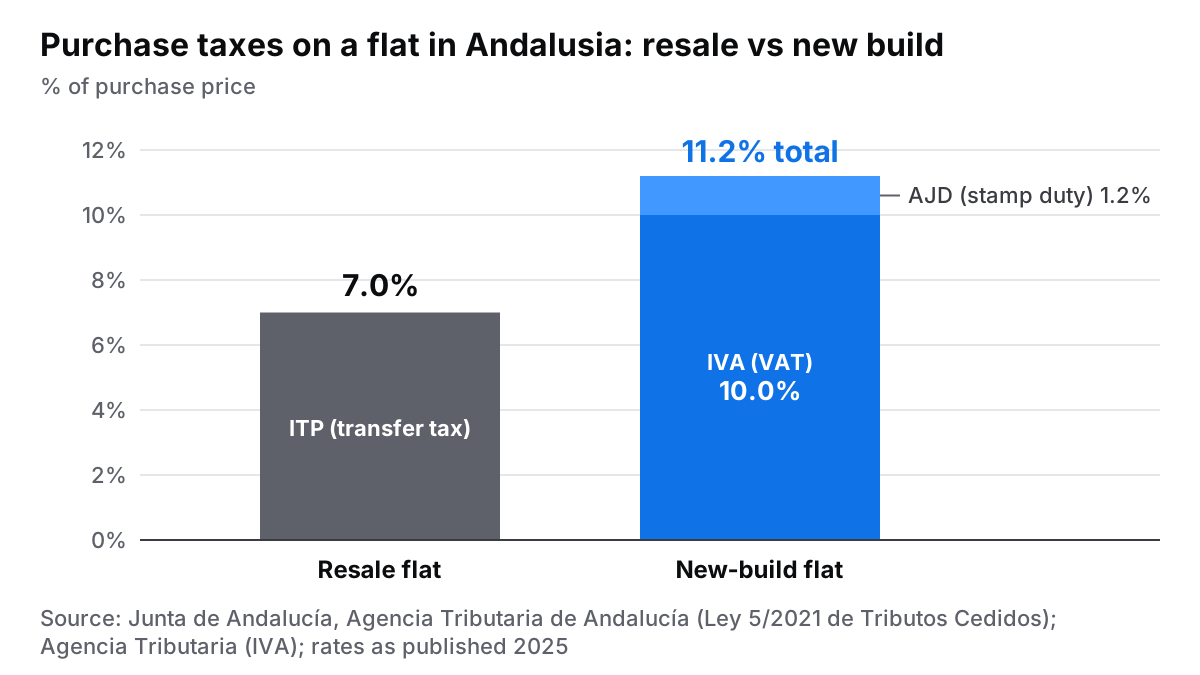
When purchasing residential property in Andalusia, transaction taxes depend on whether the property is a resale or new development:
- Resale properties: Subject to Property Transfer Tax (ITP) at a flat rate of 7%, as established by the Agencia Tributaria de Andalucía.
- New builds: Subject to 10% Value Added Tax (IVA) plus 1.2% Stamp Duty (AJD).
Ongoing ownership costs include local property tax (IBI), garbage collection fees, non-resident income tax (19% for EU/EEA residents, 24% for non-EU residents including UK citizens), and community fees. Community costs in frontline developments with extensive security, indoor pools, and grounds are higher than average.
Following the repeal of the property Golden Visa, non-EU buyers planning extended stays must apply for alternative residency visas, such as the non-lucrative or digital nomad visa. Without residency, non-EU nationals remain subject to the Schengen limit of 90 days within any 180-day period. For detailed guidance on purchase procedure, consult our guide to buying property in Spain.
Landlords intending to operate holiday lets must comply with regional and national frameworks, including mandatory property registration and community consent. Learn more about landlord obligations in our summary of what the Housing Act changed for landlords. Buyers and investors should always consult a qualified Spanish legal representative and gestor prior to completing a purchase.
Real estate agencies, valuations teams, and investors can access real-time market data across Estepona and the Costa del Sol directly through platform.casafari.com or explore Area Insights documentation.
Frequently asked questions
Where exactly is the New Golden Mile in Estepona?
The New Golden Mile refers to the coastal stretch of Estepona municipality situated between Estepona town and marina to the west and San Pedro de Alcántara in Marbella to the east. The ‘beach side’ specifically designates the territory lying south of the A-7 trunk road, offering direct access to beaches such as El Saladillo, Costalita, and Guadalmansa. Notable frontline complexes located along this strip include Costalita, Menara Beach, Torre Bermeja, Mar Azul, and Bahía de la Plata.
How far is the New Golden Mile from Málaga airport?
Málaga–Costa del Sol airport is located roughly 75 to 80 km east of the New Golden Mile, which takes approximately one hour by car via the AP-7 toll motorway or A-7 highway. Gibraltar airport is closer, sitting around 50 km to the south-west. Public rail services on the Cercanías C-1 line terminate at Fuengirola, meaning travel to and from the New Golden Mile relies on road transport and interurban buses.
Can I rent out my New Golden Mile apartment on Airbnb?
Short-term tourist rentals require registration with the Andalusian tourist housing registry under Decreto 31/2024 and a national registration number through the Ventanilla Única Digital. Additionally, for properties listed after 3 April 2025, express approval by a three-fifths majority of the owners’ community is legally required under the amended Ley de Propiedad Horizontal. Non-resident property owners pay income tax on rental earnings at 19% for EU/EEA residents or 24% for UK and other non-EU residents.
Is the Spanish Golden Visa still available if I buy on the New Golden Mile?
No, the residency-by-investment scheme based on a €500,000 property purchase was officially abolished on 3 April 2025 by Ley Orgánica 1/2025. Non-EU citizens, including UK residents, looking to spend extended time in Spain must apply for standard visas such as the non-lucrative or digital nomad visa. Without a valid visa or residency permit, non-EU nationals are restricted to the standard Schengen limit of 90 days within any 180-day period.