
PARQUE DAS NAÇÕES PROPERTY GUIDE
Modern and stylish area in Lisbon
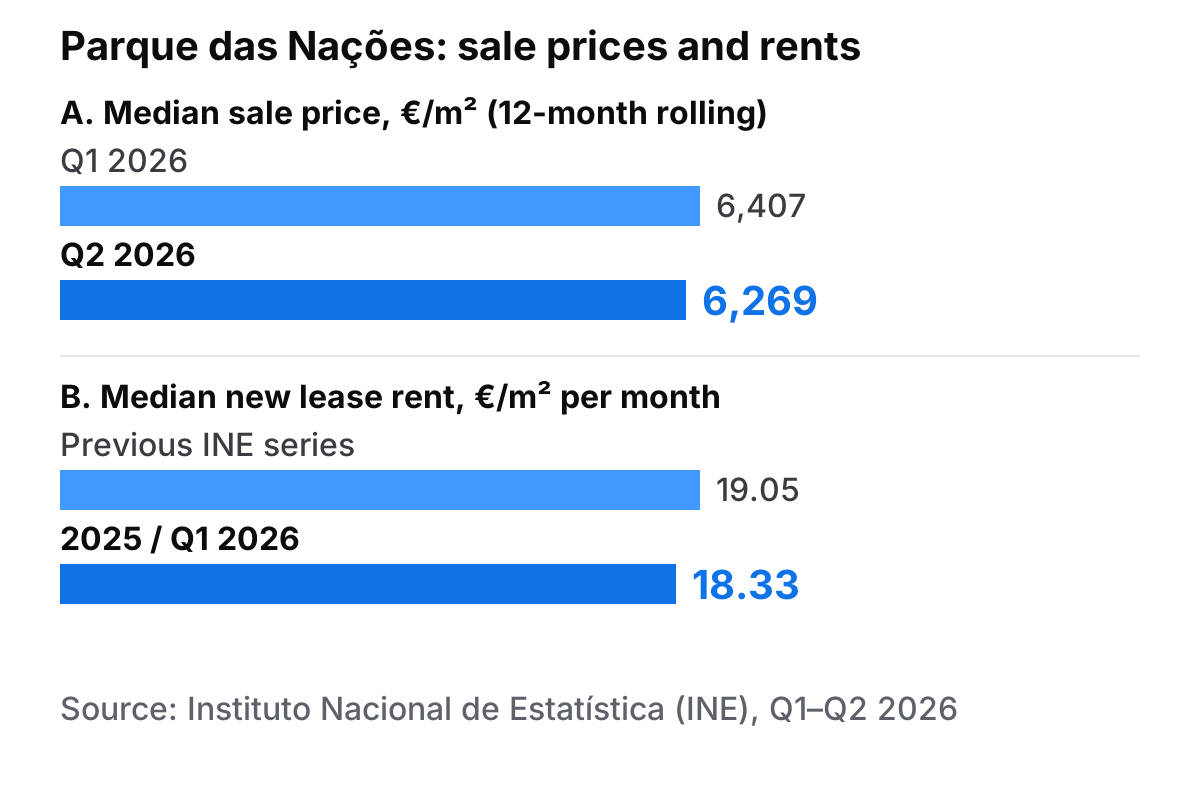
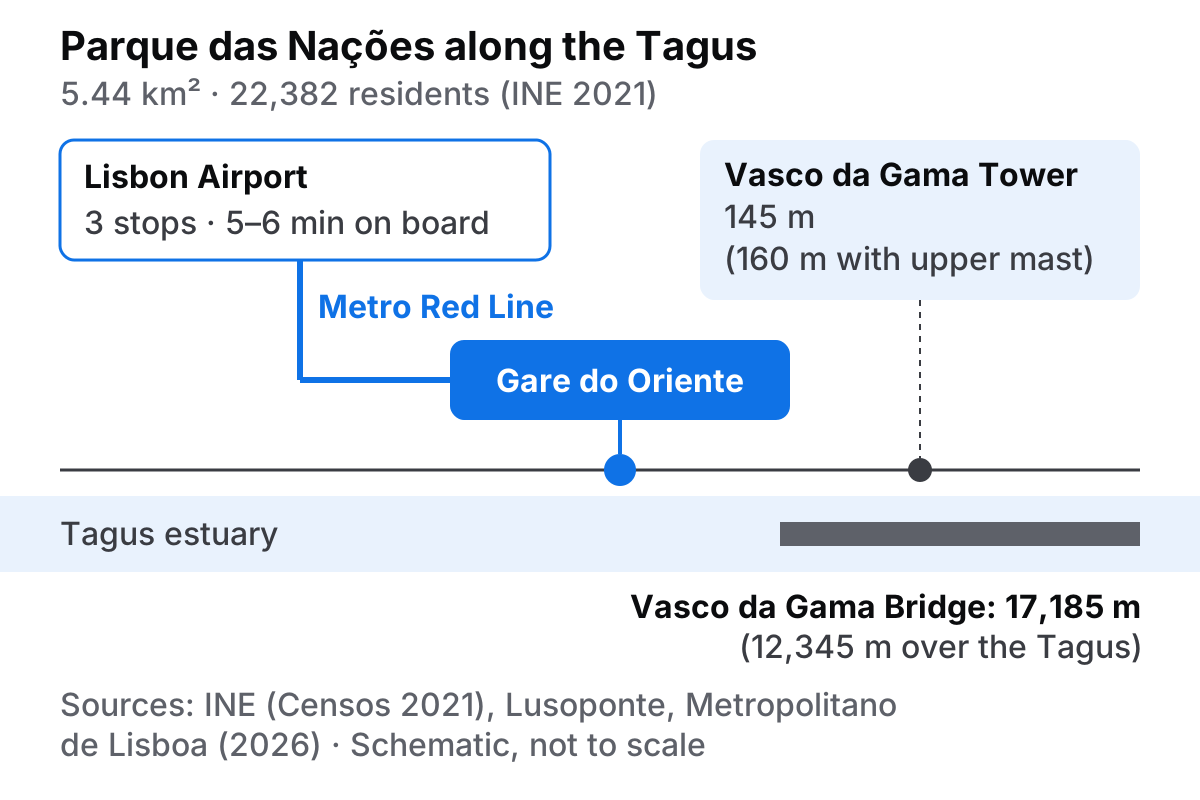
Parque das Nações is Lisbon’s contemporary master-planned riverfront district, covering 5.44 km² with 22,382 residents along the Tagus estuary. Built for Expo ‘98, it offers underground parking, flat promenades, and direct transport links, including a six-minute metro ride to Lisbon Airport. According to the Instituto Nacional de Estatística (INE) housing price statistics (Q2 2026), the median residential sale price in Parque das Nações reached €6,269/m² over the 12 months ending Q2 2026.
Why invest in a Parque das Nações property?
Transformed from a neglected industrial marshland into a modern urban centre for the 1998 Lisbon World Exposition (Expo ‘98), Parque das Nações represents a unique real estate profile in Lisbon. Home to 22,382 residents across 5.44 km² according to INE Censos 2021 data, the parish offers wide arterial avenues, manicured urban parks, and five linear kilometres of reclaimed riverfront.
Market metrics reflect steady demand from both national executives and international buyers. INE data for the 12 months ending Q2 2026 placed the median residential sale price in the parish at €6,269/m², following a peak of €6,407/m² in Q1 2026. On the residential rental side, new lease contracts recorded a median rate of €18.33/m² per month during 2025 and Q1 2026.
For buy-to-let investors, understanding local municipal framework changes is critical. Following Lisbon City Council’s November 2025 revision of the Municipal Regulation for Alojamento Local (RMAL), the central district of Parque das Nações – Centro was classified as an absolute containment zone, prohibiting new short-term holiday let registrations. Consequently, investor strategies in the parish have firmly shifted towards long-term residential leases and high-yield corporate housing. Real estate professionals and private investors benchmarking local pricing and yield performance use CASAFARI Area Insights to evaluate micro-location data alongside our comprehensive guide to buying property in Portugal.
What are the perks of living in Parque das Nações?
Daily life in Parque das Nações combines the infrastructure of a modern suburb with the vitality of a coastal capital. Unlike Lisbon’s historic quarters, the entire district was designed with continuous, step-free pedestrian promenades, dedicated cycling lanes, and manicured green spaces that stretch alongside the Tagus estuary. Residents enjoy easy access to the Vasco da Gama shopping centre, the Parque das Nações Marina, and numerous outdoor cafes overlooking the water.
Connectivity across Lisbon and internationally is a major draw for expat families and frequent business travellers. The multi-modal Gare do Oriente transport hub, designed by Spanish architect Santiago Calatrava, links express Alfa Pendular and Intercidades trains, regional buses, and the Lisbon Metro Red Line. From Oriente station, passengers reach Lisbon Airport (Aeroporto) in just 5 to 6 minutes on board across three stops.
Healthcare and schooling facilities within immediate reach are among the finest in the city. The parish houses the private CUF Descobertas Hospital alongside various specialized medical clinics. Educational choices include Colégio Pedro Arrupe within the parish, Cesário Verde International School, Cambridge School, and United Lisbon International School located right on the southern border with Marvila, which provides an English-medium international curriculum through to the International Baccalaureate (IB) Diploma.
Positioned on the eastern waterfront, Parque das Nações provides straightforward access to historic central districts like Baixa, Chiado, Alfama, and Mouraria, while directly bordering the neighbouring eastern riverfront in Beato and Marvila—Lisbon’s rapidly expanding creative and technology corridor.
Modern architecture and Tagus river views
The architectural landscape of Parque das Nações stands in stark contrast to the Pombaline buildings of historic Lisbon. Housing stock comprises late-1990s and 2000s residential condominiums built to contemporary European standards. Standard structural amenities include underground garage parking, multiple lift cores, high-grade acoustic insulation, integrated climate control, and wide private terraces with open views across the Tagus.
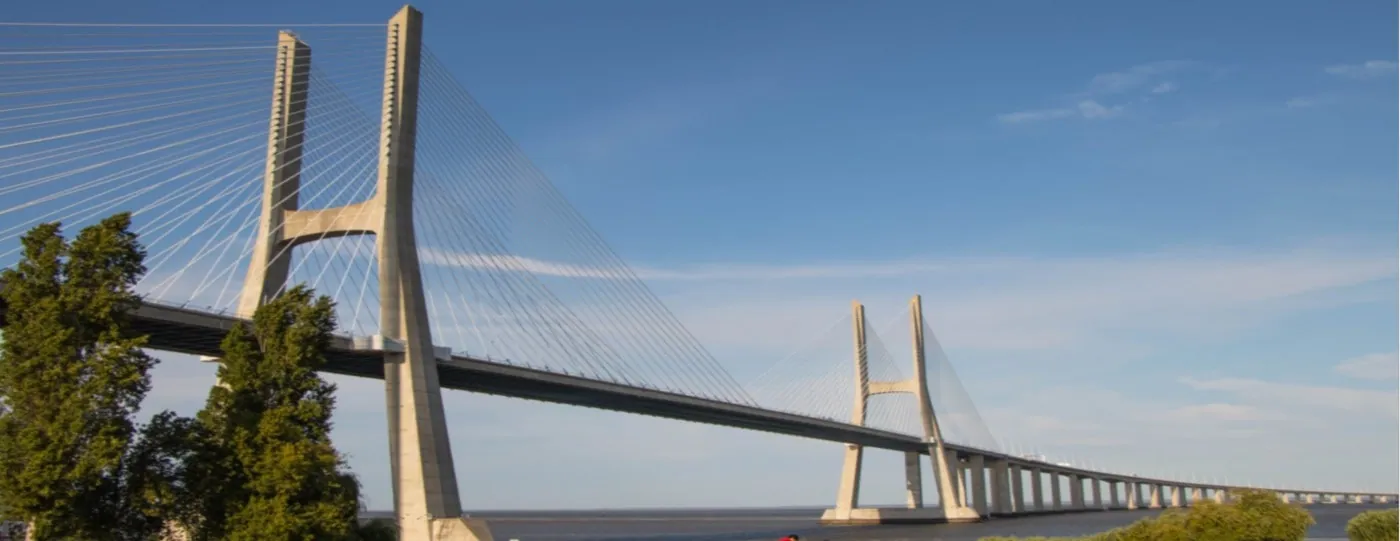
Landmark public structures define the skyline along the riverfront. Notable works include Álvaro Siza Vieira’s Pavilhão de Portugal with its signature draped concrete canopy, the 145-metre Vasco da Gama Tower (reaching approximately 160 metres with its upper mast), and the Vasco da Gama Bridge. Stretched across the Tagus estuary, the bridge measures 17,185 metres in total length, including 12,345 metres of viaducts and bridge structures over water, according to Lusoponte technical specifications for the Vasco da Gama Bridge.
When evaluating riverfront condominiums versus inland blocks, buyers and real estate professionals rely on a precise property valuation and market study to benchmark square-metre pricing against verified historical transactions.
Culture, concerts and dining by the Tagus
Parque das Nações serves as one of Lisbon’s primary entertainment and cultural destinations. Key venues inside the parish include the family-oriented Pavilhão do Conhecimento science museum, the Oceanário de Lisboa, Casino Lisboa, and MEO Arena—Lisbon’s premier indoor concert venue, which officially reverted from the name Altice Arena to MEO Arena on 1 February 2024.
Cultural experiences extend smoothly along the riverfront corridor. Further west along the Tagus in Belém, the Centro Cultural de Belém houses the MAC/CCB Museum of Contemporary Art and Architecture Centre, which reopened in October 2023. Lisbon’s culinary reputation remains world-class, with the MICHELIN Guide Portugal 2026 selection featuring two-star establishments such as José Avillez’s Belcanto in Chiado and Henrique Sá Pessoa’s flagship restaurant at Páteo Bagatela.
Whether analyzing residential rental yields or searching for a modern waterfront home, you can sign in to CASAFARI to explore live property data in Parque das Nações and access real-time market insights.
Frequently asked questions
Can you get an Alojamento Local (short-term rental) licence in Parque das Nações?
Under the Municipal Regulation for Alojamento Local (RMAL) approved by Lisbon City Council in November 2025, the central neighbourhood of Parque das Nações – Centro is classified as an absolute containment zone. This status prohibits the registration of new short-term rental (AL) licences within the core zone. Consequently, real estate investors in Parque das Nações overwhelmingly target stable long-term family leases or mid-term corporate lets.
How long does it take to get from Parque das Nações to Lisbon Airport?
A direct trip on the Lisbon Metro Red Line (Linha Vermelha) from Oriente station to Aeroporto station takes between 5 and 6 minutes on board across just three stops. Including typical station waiting times, the total journey time is approximately 10 minutes. By car or taxi, the short drive via Avenida de Berlim or the Segunda Circular covers roughly three kilometres.
Which international and private schools are near Parque das Nações?
Residents have access to several esteemed educational institutions, including Colégio Pedro Arrupe, located directly within the parish, alongside Cesário Verde International School and Cambridge School. Just on the southern border in Marvila sits United Lisbon International School, which offers an English-language curriculum through to the International Baccalaureate (IB) Diploma.
What makes Parque das Nações apartments different from homes in historic Lisbon?
Built predominantly following the Expo ‘98 master plan, apartments in Parque das Nações feature modern construction standards rarely found in historic quarters such as Alfama or Baixa. Most developments offer underground garage parking, multi-car storage, step-free lift access, integrated air conditioning, and high energy ratings. Buildings are positioned along wide, flat riverfront promenades, offering expansive Tagus views and private balconies.