
Amarante offers a compelling combination of granite heritage, Vinho Verde vineyard landscapes and accessible housing prices in the Porto district. Situated on the river Tâmega under an hour from Porto via the A4 motorway, this UNESCO Creative City provides a countryside alternative to coastal real estate for homebuyers, renovators and international investors seeking long-term value.
Why buy property in Amarante, Portugal?
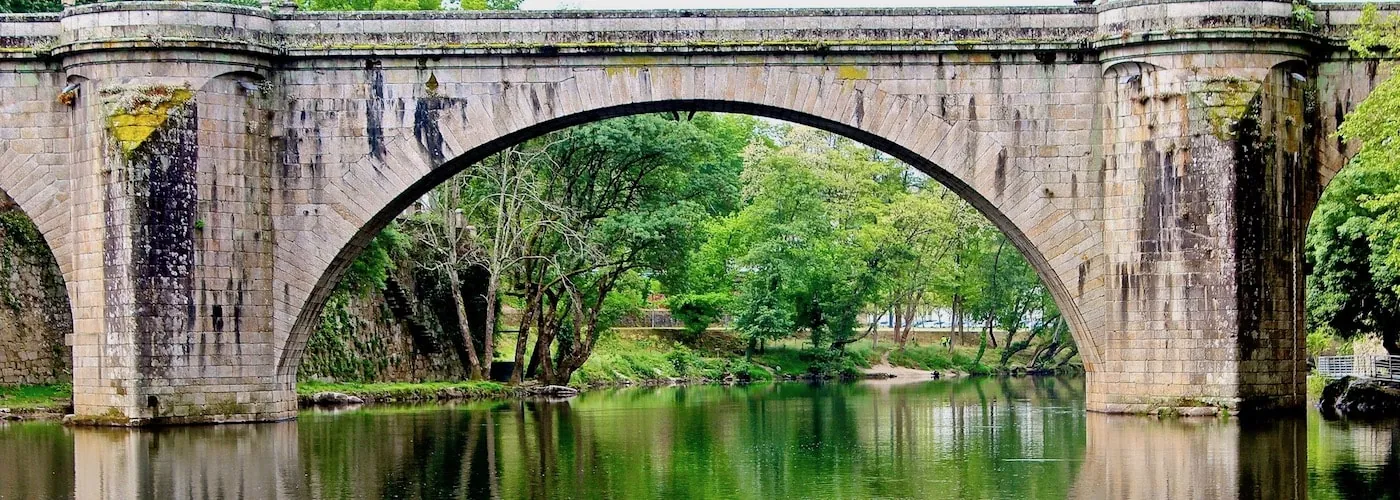
Standing on the 18th-century São Gonçalo bridge at dusk, watching the river Tâmega flow past granite balconies with the Serra do Marão rising behind, reveals why Amarante holds a distinct appeal within the Porto district. The municipality attracts buyers seeking space, architectural character and country living within easy driving distance of northern Portugal’s economic capital. Whether sourcing a historic townhouse for sensitive restoration or a rural quinta with working vineyards, buyers find a significant price advantage over Porto city and coastal locations alongside strong lifestyle appeal.
Where is Amarante and how do you get there?
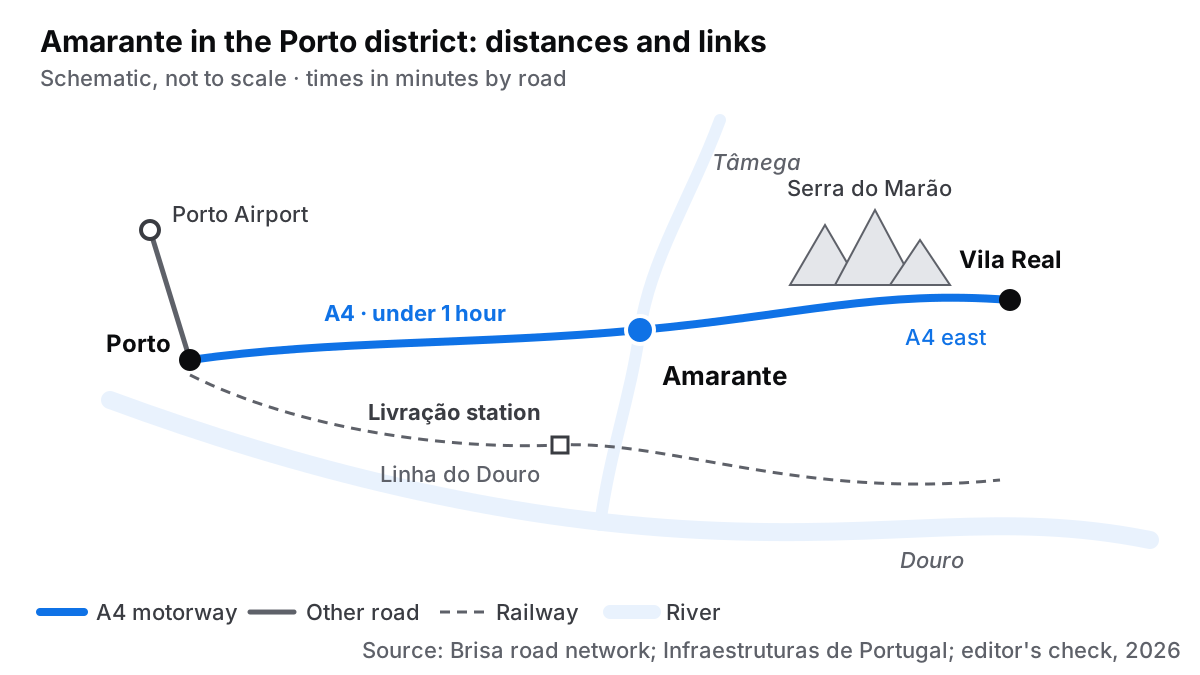
Amarante sits roughly 60 kilometres east of Porto in the Tâmega e Sousa sub-region. By car, the A4 motorway connects Amarante to central Porto and Francisco Sá Carneiro Airport in under an hour.
Passenger rail service on the former Linha do Tâmega ceased in 2009; the nearest operational railway station is now at Livração on the Linha do Douro, connecting onwards to Porto. Regular intercity coach services also link Amarante to Porto and neighbouring inland cities. This transport network establishes Amarante as a viable commuter base, seasonal retreat or gateway to the Douro valley.
What is life in Amarante like?
The municipality comprises 26 parishes (freguesias) following administrative consolidation, as recorded by the Câmara Municipal de Amarante. With a resident population of just over fifty thousand recorded by INE Censos 2021, Amarante balances historic culture with everyday infrastructure.
Architectural landmarks include the Igreja e Mosteiro de São Gonçalo, the ruined Solar dos Magalhães and Casa da Cerca. Designated a UNESCO Creative City of Music in 2017, the town celebrates rich artistic roots—it is the birthplace of modernist painter Amadeo de Souza-Cardoso, whose works reside in the local Museu Municipal Amadeo de Souza-Cardoso, and poet Teixeira de Pascoaes. Annual cultural highlights center on the Festas de São Gonçalo, celebrated on the first weekend of June. For essential services, residents rely on municipal health facilities, regional healthcare at the Centro Hospitalar do Tâmega e Sousa in Penafiel, primary and secondary schools, and local retail centers.
Vinho Verde, the Marão and local outdoor life
Amarante is one of the nine officially designated sub-regions of the Vinho Verde DOC, supervised by the Vinho Verde wine commission. The Portuguese word verde translates to “young” rather than green, describing wines produced to be enjoyed fresh.
Outdoor activity centers on the Serra do Marão mountain range for hiking and cycling, river leisure along the Tâmega, and local sports facilities. Golfers have access to the Amarante Golf Clube in Fregim, featuring an 18-hole, par-68 course designed by Jorge Santana da Silva against a mountain backdrop.
What does the Amarante property market look like?
Rather than high-density urban developments, Amarante offers diverse housing formats. Stock ranges from historic granite townhouses in the town center requiring restoration to modern apartments constructed from the 1980s onward, rural quintas with attached vineyard acreage in peripheral parishes, and detached family homes near Fregim.
To review live price statistics, average costs per square metre and historical market trends for the region, see the live market figures above. Real estate professionals and institutional investors can compare Amarante with neighbouring municipalities in Area Insights or request a valuation and market study for a specific Amarante property. Technical teams can also reference the Area Insights developer documentation (in English) for direct API integration. For broader market context, see why investors keep choosing Portugal and consult which areas CASAFARI data covers.
Taxes, residency and short-let rules in 2026
International buyers looking at Portuguese real estate should note key regulatory parameters:
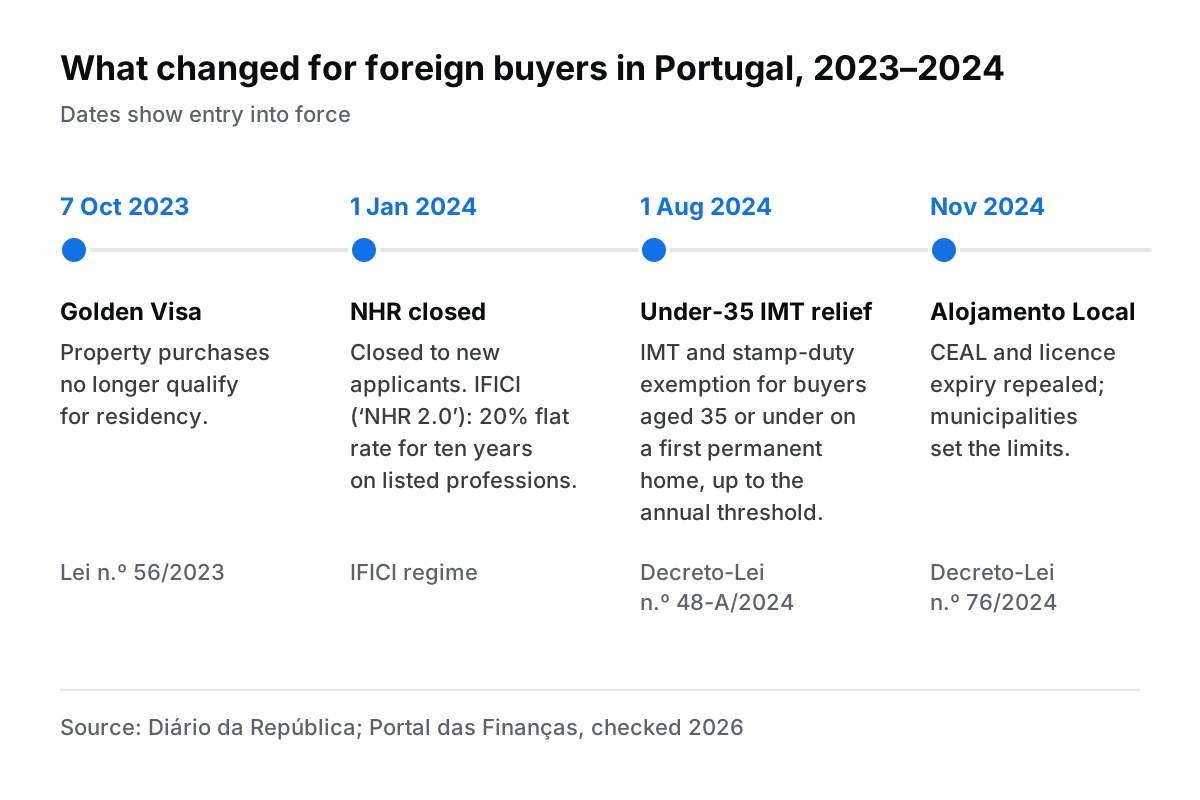
- Golden Visa (ARI): Property acquisition no longer confers residence status. Under Lei n.º 56/2023 (Mais Habitação), effective October 2023, the real estate investment route to the Golden Visa was abolished. Foreign buyers may still purchase property without restriction, but residency must be pursued through non-lucrative (D7), digital nomad (D8) or fund investment pathways.
- Tax Status (NHR & IFICI): The original Non-Habitual Resident (NHR) regime closed to new applicants on 1 January 2024. It was succeeded by the IFICI regime, which offers a 20% flat tax rate on qualifying Portuguese employment and self-employment income for ten years, restricted to specific scientific, academic and high-value technical professions outlined by the Portal das Finanças.
- Transaction Taxes & Exemptions: Buying costs include IMT (Municipal Property Transfer Tax) and Stamp Duty (Imposto de Selo) at 0.8%, alongside legal and notary fees. Under Decreto-Lei n.º 48-A/2024, buyers aged 35 or under purchasing a primary permanent residence benefit from an exemption from IMT and stamp duty up to the statutory cap. Detailed transaction steps are set out in our step-by-step guide to buying property in Portugal.
- Annual Municipal Tax (IMI): Municipalities set annual IMI rates between 0.3% and 0.45% of the property’s taxable asset value (VPT).
- Short-Let Licensing (Alojamento Local): Regulations were updated under Decreto-Lei n.º 76/2024, repealing the extraordinary contribution (CEAL) and five-year licence expirations while returning licensing controls to municipal councils. Investors planning holiday lets should verify current municipal registry guidelines with the Câmara Municipal.
To explore comprehensive market listings or analyze current property inventory across Portugal, open the CASAFARI platform.
Frequently asked questions
Is Amarante a good place to buy property in Portugal?
Amarante suits buyers seeking historic granite architecture, Vinho Verde countryside and lower acquisition costs within an hour’s drive of Porto. It appeals particularly to primary residents, renovators and long-term investors. However, buyers reliant on direct passenger train connections or seeking high-volume coastal tourism rental yields may find other regions better aligned with their goals.
How far is Amarante from Porto?
Amarante is situated roughly 60 kilometres east of Porto, requiring under an hour by car via the A4 motorway. Francisco Sá Carneiro Airport in Porto serves as the primary international gateway for the region. While passenger train service to Amarante ceased in 2009, the nearest operational station is at Livração on the Linha do Douro, complemented by regional coach connections.
Can I still get a Golden Visa by buying property in Amarante?
No. The real estate pathway for the Portuguese Golden Visa was formally ended by Lei n.º 56/2023 in October 2023. Foreign nationals remain fully entitled to purchase real estate in Amarante, but residency rights must be obtained through alternative routes such as D7 or D8 visas, while tax benefits under IFICI are limited to specific qualifying professions.
Can I rent out a house in Amarante as a holiday let?
Yes, provided you obtain an Alojamento Local (AL) registration from the Câmara Municipal de Amarante. Following Decreto-Lei n.º 76/2024, the extraordinary contribution tax and automatic five-year licence expirations were abolished, leaving local regulation to individual municipalities. Short-term rental income is subject to Portuguese tax regardless of the property owner’s tax residence status.