
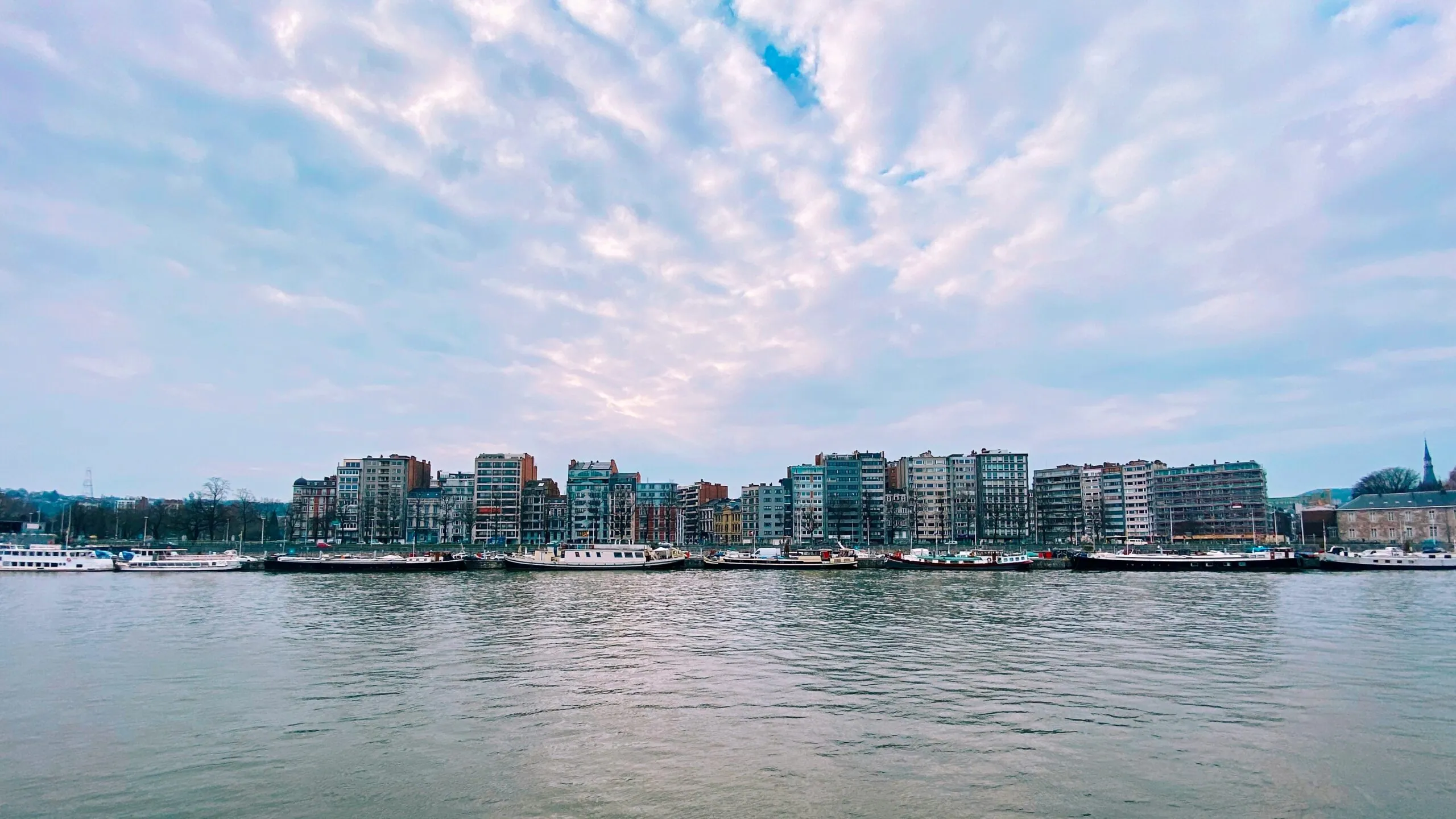
Liège
The Burning City: A Riverside Fusion of Walloon Heritage and Bold Urban Renaissance
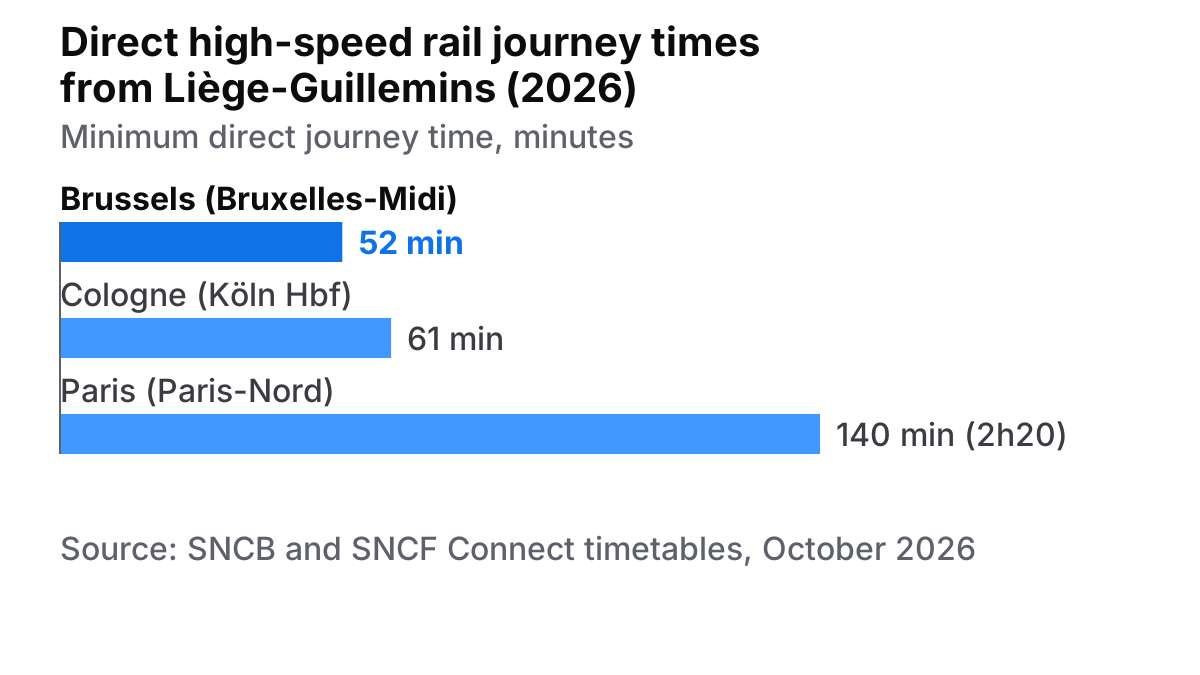
Liège, Wallonia’s economic capital with 198,102 residents (Statbel, January 2026), pairs accessible housing—a municipal median house price of €212,500 in H1 2026—with major infrastructure investments. Now served by the operational T1 tramway launched in April 2025, Europe’s fifth-largest cargo airport, and direct high-speed rail to Brussels in 52 minutes, the city offers steady rental yields for investors navigating Wallonia’s 12.5% buyer registration tax and local rental permit requirements.
Why are residents and investors looking closely at Liège?
Long recognised for its industrial heritage along the Meuse river, Liège has successfully repositioned itself as Wallonia’s primary hub for logistics, biotechnology, and creative industries. This transition has breathed new energy into the urban landscape while preserving the city’s distinctive character and architectural diversity.
Buyers exploring the residential market encounter a rich spectrum of building styles. In prestige quarters like Avroy and Boulevard Piercot, grand 19th-century townhouses with high ceilings and decorative stucco face wide boulevards. Across the river in Outremeuse, Art Deco façades line characterful streetscapes. Meanwhile, contemporary urban regeneration projects, such as the mixed-use Paradis Express development adjacent to the high-speed rail terminal, supply energy-efficient apartments tailored to working professionals.
With a municipal median house price of €212,500 recorded in H1 2026 according to Statbel official property price statistics (H1 2026), Liège remains significantly more accessible than major capital cities across Western Europe, drawing both owner-occupiers and long-term buy-to-let investors.
What is day-to-day life like in La Cité Ardente?
Known affectionatey across Belgium as La Cité Ardente (The Ardent City), Liège is defined by its vibrant public life, deep-rooted culinary traditions, and accessible green sanctuaries.
Sunday mornings traditionally centre around the Marché de la Batte, one of Europe’s oldest open-air markets, stretching along the riverbank. The city’s food culture ranges from freshly baked Liège waffles at iconic spots like Une Gaufrette Saperlipopette to classic Boulets Liégeois served in traditional taverns. Industrial heritage repurposing is best represented by La Grand Poste, a beautifully restored historic postal headquarters that now houses an artisan food hall, local craft brewery, and collaborative workspace.
Green space is seamlessly integrated into urban life. On the island between the Meuse and the Dérivation canal lies Parc de la Boverie, home to the La Boverie fine arts museum. For panoramas over the rooftops, residents tackle the 374 steps of the Montagne de Bueren or explore the Coteaux de la Citadelle, an urban nature park spanning 86 to 90 hectares, of which roughly 40.7 hectares are designated as protected natural heritage by Wallonia.
Cultural offerings are equally robust. Pedestrianised lanes like En Neuvice and Rue Souverain-Pont showcase independent shops, while Outremeuse hosts a weekly antique market at Boulevard de la Constitution. Evenings bring classical productions at the Opéra Royal de Wallonie, contemporary music at Le Reflektor, and lively socialising in the Saint-Léonard and Roture quarters or the historic student district of Le Carré.
How well connected is Liège by rail, tram and air?
Transport infrastructure is one of Liège’s most compelling assets for international residents and commuting professionals. The city’s primary rail hub, Liège-Guillemins—designed by architect Santiago Calatrava—provides high-speed rail connections across Western Europe.
According to official timetables from SNCB and SNCF Connect as of October 2026, direct services reach Brussels-Midi in 52 to 55 minutes, Cologne (Köln Hbf) in 1 hour 1 minute to 1 hour 6 minutes, and Paris-Nord in 2 hours 20 minutes to 2 hours 24 minutes.
Urban mobility within the city received a major upgrade when the Liège Tramway (TEC line T1) officially entered commercial service on 28 April 2025, as documented in the LETEC first-year report on the Liège tramway. The line spans key urban corridors from Sclessin (Standard) through Guillemins and the city centre to Coronmeuse and Bressoux (Liège Expo). Investors should note that original proposals to extend the tramline north to Herstal and south to Seraing were formally cancelled by the Walloon Government in August 2024, which selected dedicated high-frequency bus lanes instead.
For leisure and cross-border excursions, the Dutch border city of Maastricht is just 30 minutes away by car or train, while the Ardennes countryside, the thermal spa town of Spa, and the High Fens (Hautes Fagnes) nature reserve are within easy reach.
Which cultural landmarks and districts define the city?
Liège is structured into distinct districts, each offering a specific urban lifestyle and market profile:
- Le Cœur Historique & L’Hyper-centre: Anchored by the Place Saint-Lambert and the historic Palace of the Prince-Bishops, the central core features Mosan Renaissance landmarks such as the Grand Curtius Museum alongside pedestrian shopping streets. Demand remains constant for well-renovated apartments in period buildings.
- Outremeuse: Set across the Meuse, this historic neighbourhood is famous for its association with writer Georges Simenon and its annual folklore festival in August. It offers a mix of Art Deco apartment blocks, family townhouses, and a strong sense of community.
- Guillemins, Avroy & Piercot: Combining prestige residential avenues with modern economic nodes, Boulevard Piercot and Avenue d’Avroy feature upscale 19th-century properties facing urban parkland. Adjacent to Guillemins station, modern developments like Paradis Express provide contemporary living tailored to international executives and commuters.
What drives Liège’s economy and rental demand?
Liège functions as a key logistics and scientific engine for Belgium, situated at the intersection of major European trade routes.
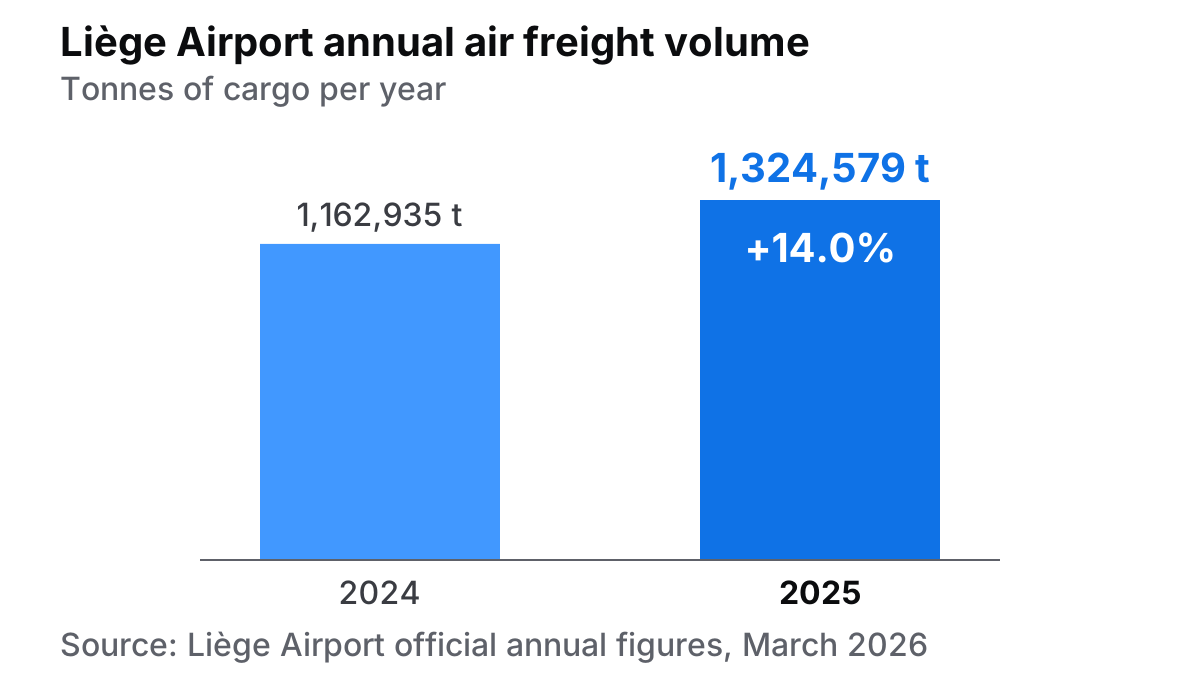
Liège Airport maintained its position as Europe’s 5th-largest air freight hub in 2024 and 2025. Official figures from the airport reported in March 2026 show cargo volumes reached 1,324,579 tonnes in 2025—a 14% increase over the 1,162,935 tonnes handled in 2024, marking the fastest growth rate among Europe’s top freight airports. This air hub is complemented by Liège Trilogiport, a 120-hectare multimodal platform connecting directly to the ports of Antwerp and Rotterdam via the Albert Canal.
In addition to logistics, the regional economy is backed by advanced research and health technology. The Liège Science Park at Sart-Tilman hosts between 80 and nearly 100 technology enterprises, while LégiaPark—located opposite the CHC MontLégia hospital cluster—houses over 35 life-sciences and medical technology companies.
This structural employment base supports stable rental demand from airport executives, researchers, and healthcare professionals. When compared to other major Belgian cities such as Brussels, Antwerp, or Ghent, Liège offers lower entry prices—with municipal median prices standing at €212,500 for houses in H1 2026 and €170,000 for apartments in 2025, according to Statbel figures.
What taxes and regulations govern property investment in Liège?
Navigating property acquisitions in Wallonia requires a thorough understanding of recent tax reforms and municipal regulations.
Walloon Registration Duty Reform (Droits d’enregistrement)
Under the tax framework effective since 1 January 2025 and maintained in 2026, property transfer taxes in Wallonia are differentiated by buyer usage, as detailed in the Notaire.be guide to Walloon registration duties:
- Primary Home Buyers: A reduced registration duty of 3% applies to buyers purchasing their sole, owner-occupied home. To qualify, buyers must register their primary residence (domicile) at the address within three years (five years for building plots or new builds) and maintain it for at least three years.
- Investors & Second Homes: The standard 12.5% rate applies to all buy-to-let acquisitions, second homes, and corporate purchases.
At a broader regional level, real estate figures published by Fednot show that the median house price across the entire Province of Liège reached €238,000 in 2025 (+13.3%), with an average house price of €258,688 recorded in H1 2026.
Student Housing (Kots) & Rental Permits
With over 20,000 students attending the University of Liège (ULiège) and associated colleges, student accommodation (kots) represents a substantial market segment. However, landlord obligations are strictly enforced.
Under the City of Liège rental permit (permis de location) regulations, a mandatory five-year rental permit is required before letting:
- Any collective housing unit featuring shared facilities (such as shared kitchens or bathrooms).
- Any self-contained dwelling with a liveable floor area of 28 m² or less.
Exemptions apply only if the property owner resides in the same building and lets no more than two units to a maximum of four tenants. Properties must comply with official fire safety standards, hold a valid PEB energy performance certificate, and possess prior planning permission if a single-family house has been divided into multiple units.
Short-Term Tourist Rentals (Airbnb)
Property owners planning to operate short-term holiday rentals face strict municipal and regional criteria, outlined by the Tourisme Wallonie planning permission rules for holiday lets:
- Planning Permission: Prior urban planning permission (permis d’urbanisme) for a change of use is required to create a holiday let in an existing building (mandatory across Wallonia since January 2023, unless renting fewer than six rooms within the owner’s primary residence).
- Safety & Registration: Operators must hold a municipal fire safety certificate (ASI/ACS) and register online under the Walloon Tourism Code, which came into full regulatory effect on 1 January 2026 following a six-month transition.
- Local Taxes: Nightly tourist taxes apply at both municipal and provincial levels.
Real estate professionals and private investors evaluate micro-location metrics along new transit corridors like the T1 tram line using specialized market analysis tools. By leveraging CASAFARI Area Insights and targeted Property Sourcing, buyers can identify suitable opportunities, conduct a detailed property valuation and market study, and understand why hyper-localised data matters in real estate when selecting assets.
To start exploring comprehensive property listings, historical transactions, and market analytics across Liège and the Walloon market, sign in to the CASAFARI platform.
Frequently asked questions
What are the property transfer taxes when buying in Liège?
Under the Walloon tax reform in effect through 2026, buyers purchasing a sole, owner-occupied primary residence qualify for a reduced registration duty of 3%, provided they establish their domicile there within three years (five years for new builds) and remain for at least three years. Buy-to-let investors, second-home purchasers, and corporate buyers are subject to the standard 12.5% registration rate according to Notaire.be.
What rules apply to Airbnb and short-term rentals in Liège?
Operating a short-term holiday rental in Liège requires prior urban planning permission for a change of use, unless renting fewer than six rooms inside the owner’s primary residence. Hosts must also secure a municipal fire-safety certificate, complete mandatory online registration with Tourisme Wallonie under the Walloon Tourism Code, and collect local tourist taxes.
Do you need a rental permit to let student housing in Liège?
Yes, a five-year rental permit (permis de location) from the City of Liège is mandatory for any collective student housing with shared facilities or any self-contained flat of 28 m² or less. Landlords must ensure their property meets municipal safety and habitability standards, holds a valid PEB energy certificate, and has legal planning approval for property subdivision.
How does the new Liège tram line affect connectivity and neighbourhoods?
The T1 tram line, which entered commercial service on 28 April 2025, links Sclessin to Coronmeuse and Bressoux via the Liège-Guillemins high-speed train terminal and the city centre. While original plans proposed extending the line to Herstal and Seraing, the Walloon Government cancelled those extensions in August 2024 in favour of dedicated high-frequency bus corridors.